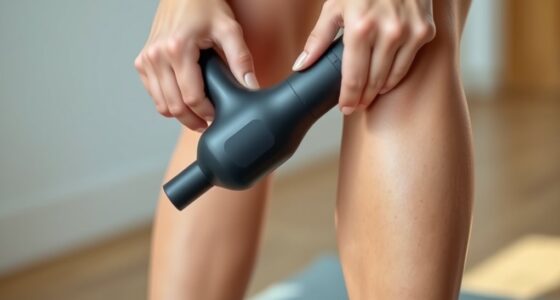
When considering a massage gun during pregnancy, it’s crucial to prioritize safety. Always consult your healthcare provider before use. Choose a lightweight, low-intensity device with soft attachments and avoid high-powered or deep-tissue settings. Focus on external areas like shoulders, upper back, and calves, and steer clear of the belly, lower back, and inner thighs. Use gentle strokes at low settings, limit sessions, and listen to your body. Continuing further can help you learn more about safe practices.
Key Takeaways
- Always consult your healthcare provider before using a massage gun during pregnancy.
- Use low-intensity settings and gentle strokes to avoid overstimulation or discomfort.
- Avoid applying massage guns on the belly, lower back, inner thighs, and areas with swelling.
- Keep the device slightly away from the skin and do not press directly to prevent harm.
- Limit session duration and monitor your body’s response to ensure safe, relaxing use.

Pregnancy can bring relief and comfort challenges, especially when muscle tension and soreness set in. As you navigate these discomforts, you might consider various methods to ease your muscles, and one option gaining popularity is massage therapy. Prenatal relaxation is essential for both your physical and emotional well-being during pregnancy, helping reduce stress, improve sleep, and alleviate discomfort. Massage therapy benefits are well-documented, providing gentle relief from backaches, leg cramps, and neck tension. However, when it comes to using massage guns, safety must be your top priority. While these devices can deliver targeted muscle relief quickly and effectively, they aren’t always suitable for pregnancy without proper precautions.
Before you decide to incorporate a massage gun into your routine, it’s vital to consult your healthcare provider. Not all massage guns are created equal, and some may have settings or features that aren’t safe for pregnant women. Generally, lightweight, low-intensity devices with soft attachments are better choices. You should avoid high-powered, deep-tissue massage guns that apply excessive pressure or vibration. During pregnancy, your body becomes more sensitive, and certain areas—like your belly, lower back, and inner thighs—should be avoided altogether. Using a massage gun on these areas could cause discomfort or even complications. Instead, focus on external muscle groups like your shoulders, upper back, and calves, where gentle massage can promote relaxation without risk.
When using a massage gun, always keep it at a low setting and use it with light, gentle strokes. Don’t press it directly on your skin; instead, hold it slightly away and glide it over muscles. Limit session times to avoid overstimulation, and listen to your body. If you feel any pain, dizziness, or discomfort, stop immediately. Remember, the goal is to enhance prenatal relaxation, not to cause additional stress or strain. It’s wise to avoid using massage guns in areas where blood flow is already increased or where swelling is present, as this could worsen issues like edema. Additionally, understanding caregiver safety considerations can help ensure you’re making informed choices about massage device use during pregnancy.
Frequently Asked Questions
Can Massage Guns Induce Labor During Pregnancy?
Massage guns can’t induce labor during pregnancy. They are designed for muscle relief, but improper use might cause uterine stimulation or discomfort. If you’re nearing your due date, using a massage gun on your belly could potentially trigger labor, but it’s not a safe or recommended method. Always consult your healthcare provider before trying any device that might influence labor or uterine activity.
Are There Specific Massage Gun Models Safe for Pregnant Women?
Yes, there are specific massage gun models considered safer for pregnant women. You should look for devices designed for sensitive use, with adjustable speed settings and gentle percussions. Always opt for safe devices that are recommended by healthcare providers, especially if you’re seeking prenatal massage. Remember, consult your doctor before using a massage gun during pregnancy to guarantee it’s suitable for your unique needs and won’t interfere with your prenatal care.
How Early in Pregnancy Can I Start Using a Massage Gun?
You should wait until after your first trimester before using a massage gun, as about 75% of miscarriages occur in the first 12 weeks. For prenatal safety, consult your healthcare provider first. Massage timing is essential; gentle, low-intensity massage can be safe later in pregnancy, but early on, it’s best to avoid massage guns altogether to prevent any risk to your developing baby.
Can Massage Guns Help With Pregnancy-Related Anxiety?
Massage guns can help with pregnancy-related anxiety by providing effective stress relief and easing muscle tension. When used correctly, they promote relaxation, reduce discomfort, and improve your overall well-being. Just make sure to avoid sensitive areas and consult your healthcare provider before use. Incorporating gentle massage sessions with a massage gun may help you feel calmer and more comfortable during pregnancy.
Are There Any Long-Term Effects of Using Massage Guns While Pregnant?
Using massage guns during pregnancy might not cause long-term effects if used carefully, but you should be cautious. They can promote muscle relaxation and improve circulation temporarily, which may ease discomfort. However, overuse or improper application could lead to muscle strain or circulation issues. Always consult your healthcare provider before frequent use, and avoid sensitive areas to guarantee safety for you and your baby.
Conclusion
As you consider using a massage gun during pregnancy, prioritize safety and listen to your body. For example, imagine feeling relief after a gentle session on your back, but noticing discomfort later; in such cases, stop immediately and consult your healthcare provider. Remember, what works for someone else might not be right for you. Always err on the side of caution and seek professional advice to guarantee both your safety and your baby’s well-being.