To safely use a massage gun on your calves and shins, start with a gentle setting and use a soft attachment. Move the device slowly along your muscles, avoiding direct pressure on bones or sensitive areas. Keep the gun moving steadily and don’t linger too long on any spot. Watch for signs of discomfort, and if you want to learn tips for safe and effective use, keep going.

Get workout gear delivered free with Prime
- Fast, free delivery on millions of items
- Prime Video, Amazon Music and more included
- Member-only deals all year
Key Takeaways
- Choose a soft attachment and warm up muscles before using the massage gun.
- Keep movements slow, steady, and gentle, avoiding excessive pressure on calves and shins.
- Focus on the muscle areas, avoiding direct contact with bones or sensitive spots.
- Limit sessions to a few minutes per area and stop immediately if discomfort or pain occurs.
- Hydrate afterward to support recovery and avoid overstimulation or tissue damage.

Using a massage gun on your calves and shins can provide relief from soreness and improve circulation, but it’s important to do so safely. Your calf muscle, located at the back of your lower leg, often bears the brunt of intense workouts or long periods of standing, leading to tightness and discomfort. Shin soreness, on the other hand, typically manifests as pain along the front of your lower leg and can result from overuse or strain. When applying a massage gun, understanding how to target these areas correctly can make a significant difference in recovery and comfort.
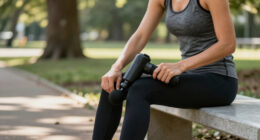
Start by selecting the right attachment, usually a softer or rounded head designed for larger muscle groups. Before you begin, ensure your muscle is warmed up—light stretching or a brief warm shower can prep your calves and shins. When you hold the massage gun, keep it at a low to moderate intensity, especially if you’re new to this type of treatment. Position it gently on your calf muscle, just above the Achilles tendon, and slowly move it along the length of the muscle. Avoid pinching or pressing too hard into the skin, as excessive pressure can cause bruising or irritation.
Choose a soft, rounded attachment and warm up muscles before gentle, low-pressure massage.
For shin soreness, focus on the area along the front of your lower leg, but be cautious around the shin bone (tibia). Keep the gun moving steadily, applying gentle pressure, and avoid lingering too long on any single spot. If you notice pain or discomfort, reduce the intensity or pause. Remember, the goal is to stimulate blood flow and loosen tight tissues, not to cause pain. Using short, controlled passes along the calf and shin helps prevent overstimulation or injury.
Pay attention to your body’s signals. If you feel any sharp pain, numbness, or tingling, stop immediately. Overusing the massage gun or applying too much pressure can worsen soreness or cause tissue damage. It’s best to limit sessions to a few minutes per area and avoid using it directly on the bones or very sensitive spots. Hydrating after your massage can further support recovery by flushing out toxins released from the muscles. Additionally, knowing the proper headphone jacks can ensure you use the right tools for your recovery routines, especially if you prefer listening to music or guided relaxation during your sessions.
Incorporating this tool into your recovery routine can be highly effective if used correctly. Focus on gentle, steady movements and listen closely to how your body responds. With proper technique, you’ll help reduce calf muscle tightness and shin soreness, promoting faster healing and improved performance. Just remember, safety comes first—never force the massage gun into uncomfortable areas, and always start at lower settings before increasing intensity.
Products Worth Considering

Therabody Theragun Prime 6th Generation Deep Tissue Massage Gun, Black

TheraGun Therabody PRO Plus 6-in-1 Deep Tissue Massage Gun, Black

Hyperice Hypervolt Go 3 Percussion Massage Gun with Carry Case
As an affiliate, we earn on qualifying purchases.
Frequently Asked Questions
Can I Use a Massage Gun on Injured or Swollen Calves?
You shouldn’t use a massage gun on injured or swollen calves, as it can worsen inflammation and delay injury management. Instead, focus on swelling reduction methods like ice and elevation. If you’re unsure about your injury, consult a healthcare professional before applying any massage therapy. Using a massage gun improperly on swollen areas can cause pain or tissue damage, so always prioritize safe, appropriate treatment for your calves.
How Long Should I Avoid Using a Massage Gun After a Workout?
You should wait at least 24 to 48 hours after a workout before using a massage gun again. This recovery time helps reduce muscle soreness and prevent injury. If you notice swelling or pain, give your muscles extra time to recover. Using the massage gun too soon can hinder recovery and increase injury risk. Always listen to your body, and if you’re unsure, consult a healthcare professional for injury prevention tips.
Is It Safe to Use a Massage Gun Daily on Calves and Shins?
Yes, using a massage gun daily on your calves and shins can be safe if you keep the massage gun frequency moderate and listen to your body. Incorporate gentle calf massage techniques, avoiding excessive pressure. Limit sessions to about 10-15 minutes, and don’t overdo it, especially if you notice discomfort. Regular use can help reduce soreness and improve circulation, but always prioritize your comfort and consult a professional if needed.
What Pressure Settings Are Recommended for Sensitive Skin Areas?
Remember, “less is more.” For sensitive skin areas, start with the lowest pressure setting on your massage gun. Adjust the pressure gradually, listening to your skin’s response. Use gentle, slow movements to avoid irritation. Always prioritize your comfort, and don’t press too hard—your skin sensitivity needs careful attention. If you feel any discomfort, reduce the pressure immediately to keep your massage safe and effective.
Can Children or Elderly Individuals Safely Use a Massage Gun on Their Calves?
Children and elderly individuals can use massage guns on their calves only with strict child safety and elderly precautions. Always consult a healthcare professional first, especially for seniors or kids with medical conditions. Use the lowest pressure setting and avoid prolonged use. Supervise children closely, and make certain elderly users are comfortable and not experiencing pain or discomfort. Prioritize safety to prevent injury or strain in sensitive populations.
Conclusion
Remember, using a massage gun can boost blood flow and reduce soreness, but safety comes first. Did you know that over 60% of runners experience calf and shin pain at some point? By following proper techniques, you can enjoy relief without risking injury. Always start with gentle pressure, stay on each area for a few seconds, and listen to your body. With mindful use, your calves and shins will thank you for the care!