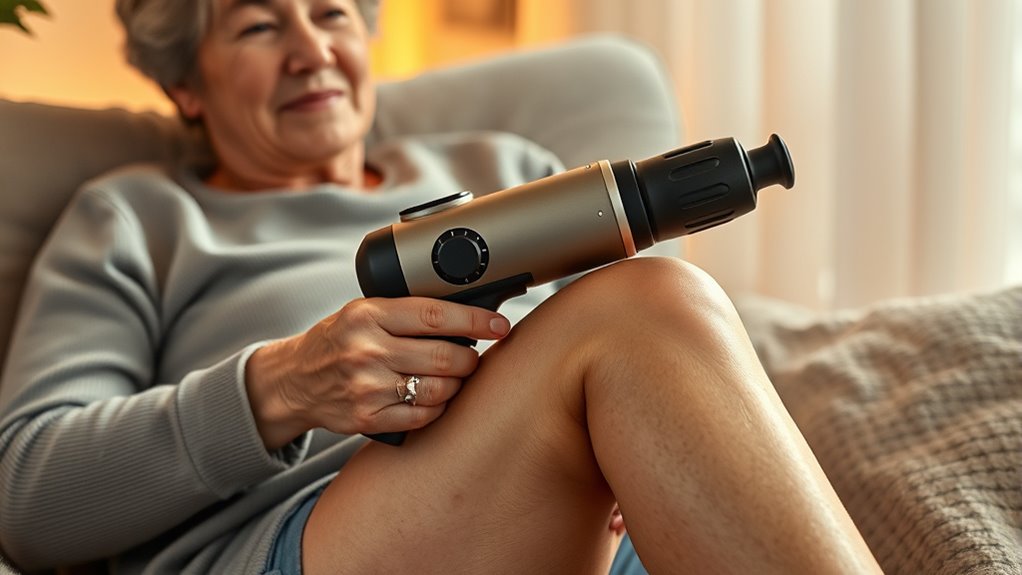

When using a massage gun as an older adult, start with the lowest setting to gauge your comfort and response. Gradually increase the intensity only if you feel okay, paying close attention to your body’s signals. Avoid sensitive areas like joints or bones, and limit sessions to 15-30 seconds per muscle. Proper adjustment helps prevent discomfort or injury, allowing you to enjoy safe relief—discover more tips for maintaining safe and effective use as you continue.

Get workout gear delivered free with Prime
- Fast, free delivery on millions of items
- Prime Video, Amazon Music and more included
- Member-only deals all year
Key Takeaways
- Start with the lowest intensity setting and gradually increase based on comfort and response.
- Avoid using the massage gun on bones, joints, neck, or spine unless advised by a healthcare professional.
- Limit initial sessions to 15-30 seconds per muscle group to prevent overstimulation.
- Pay attention to body signals; reduce intensity if discomfort or pain occurs.
- Consult a healthcare provider before regular use, especially with pre-existing conditions like osteoporosis or circulation issues.

As we age, muscle stiffness and soreness become common concerns, but massage guns offer a convenient way to relieve discomfort and improve mobility. If you’re considering using a massage gun, it’s crucial to understand how to adjust the intensity safely. Many older adults worry about tech safety, especially when it comes to devices that deliver powerful vibrations. Rest assured, most massage guns come with adjustable settings designed to cater to different comfort levels, making them suitable for muscle recovery without risking injury. The key is to start slow, using lower intensities to gauge how your muscles respond and gradually increase as needed. This approach helps prevent overstimulation or soreness that could result from overly aggressive use.
When adjusting the massage gun, pay attention to your body’s signals. If you experience pain or discomfort beyond a mild sensation, reduce the intensity immediately. Older adults often have more sensitive muscles and tissues, so it’s better to err on the side of caution. Using the device for shorter periods—around 15 to 30 seconds per muscle group—is advisable initially. Over time, as your muscles adapt, you can extend the duration or increase the intensity, but always listen to your body. Remember, the goal is to enhance muscle recovery, not to cause additional strain or injury.
It’s also wise to avoid using the massage gun directly on bones, joints, or sensitive areas like the neck or spine unless your healthcare provider advises otherwise. Targeting larger muscle groups, such as thighs, calves, or back, with appropriate settings will maximize benefits while minimizing risks. And don’t forget to hydrate well after a session, as this supports muscle recovery and helps flush out toxins released during massage. Incorporating vertical storage solutions can also help organize your massage tools and accessories, keeping your space clutter-free and accessible.
While technology has advanced to make these devices safer and more user-friendly, you should still prioritize safety—especially if you have pre-existing health conditions like osteoporosis or circulation issues. Consulting your healthcare provider before starting regular massage gun use ensures you’re choosing the right settings and avoiding contraindications. Proper use, combined with attentiveness to your body’s responses, can turn this tool into a safe and effective part of your muscle recovery routine. With patience and care, you’ll find that adjusting the intensity appropriately can bring relief, improve mobility, and support your overall well-being well into your later years.
Products Worth Considering

Fitbit Sense 2 Smartwatch – Blue Mist / Pale Gold

Oral-B iO5 Rechargeable Electric Toothbrush with 5 Cleaning Modes and Travel Case, White

Hyperice Hypervolt Go 3 Portable Percussion Massage Gun with Carry Case
As an affiliate, we earn on qualifying purchases.
Frequently Asked Questions
Can Massage Guns Help With Age-Related Joint Pain?
Yes, massage guns can help with age-related joint pain by improving joint mobility and promoting muscle relaxation. When used correctly, they can reduce stiffness and ease discomfort, making movement easier. You should start with gentle settings and gradually increase intensity, listening to your body. Regular use can enhance circulation and flexibility, helping you manage joint pain more effectively and stay more active in daily life.
Are There Specific Massage Gun Features Suited for Seniors?
You’ll find that massage guns with gentle vibrations and ergonomic design are best suited for seniors. These features help you comfortably target muscles without overwhelming sensitivity. The gentle vibrations provide soothing relief, while the ergonomic design guarantees easy handling and control. By choosing a device with these features, you can safely enjoy the benefits of massage therapy, reducing discomfort and improving mobility without risking injury or strain.
How Often Should Older Adults Use a Massage Gun?
You should use a massage gun no more than 2-3 times a week, following the frequency guidelines for safe application. Start with low intensity and short sessions, paying attention to how your body responds. If you feel discomfort or pain, stop immediately. Always listen to your body and consult with a healthcare professional if you’re unsure about the proper frequency or technique.
Can Massage Guns Replace Professional Physical Therapy?
Massage guns can’t substitute professional physical therapy because they serve as DIY techniques and alternative therapies that support your health. While they help relieve muscle tension and improve circulation, they lack the personalized assessment and targeted treatment a licensed therapist offers. Always consult your healthcare provider before replacing or combining massage gun use with professional therapy to ensure safety and effectiveness tailored to your needs.
What Are Signs of Overuse or Adverse Reactions?
If you notice persistent pain, increased tenderness, or swelling, you might be experiencing tissue damage or nerve irritation from overuse. Feelings of numbness, tingling, or a burning sensation could also indicate adverse reactions. Stop using the massage gun and consult a healthcare professional if these signs appear. Always listen to your body, and avoid applying excessive pressure to prevent tissue damage or nerve irritation.
Conclusion
As you gently guide the massage gun over your muscles, imagine each pulse easing away tension like a soft wave washing ashore. By adjusting the intensity carefully, you create a soothing rhythm that nurtures your body’s comfort and health. Feel the gentle hum relax your muscles, bringing relief and renewal with every stroke. With mindful use, you turn each session into a calming, revitalizing experience—a peaceful moment of self-care you truly deserve.