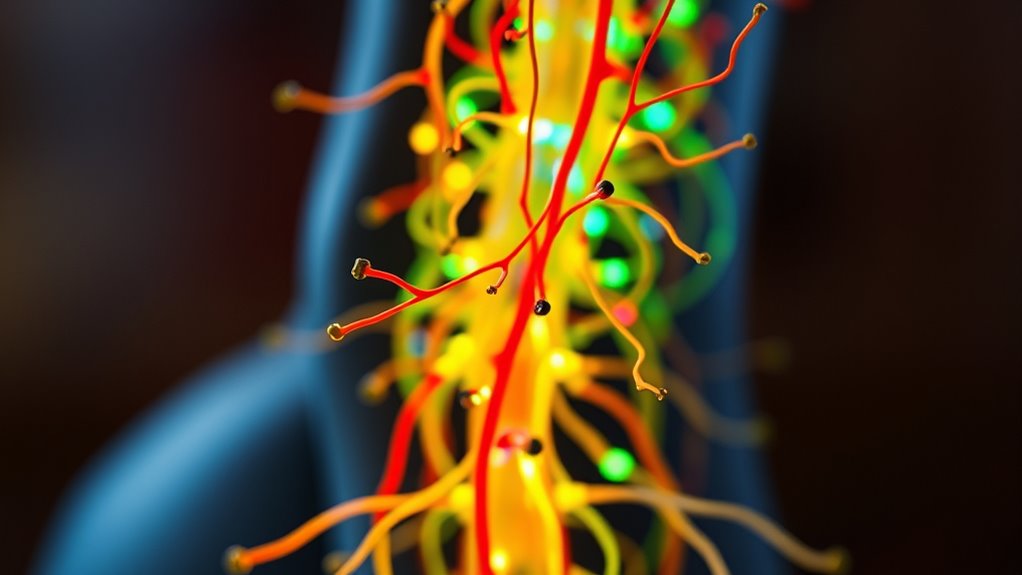

The gate control theory of pain explains that your nervous system actively controls how much pain you feel by regulating signals before they reach your brain. Neural pathways carry pain signals from injury sites, but a “gate” in your spinal cord can open or close, influenced by things like pressure, attention, or emotions. When the gate closes, less pain reaches your brain, making you feel less pain. To discover how your mind and body work together, keep exploring further.

Get workout gear delivered free — and shop member deals
- Fast, free delivery on millions of items
- Access to Prime Big Deal Days deals on October 6–7
- Prime Video, Amazon Music and more included
Key Takeaways
- The Gate Control Theory explains how the spinal cord regulates pain signals before they reach the brain.
- It proposes a “gate” in the spinal cord that can open or close to amplify or dampen pain signals.
- Neural pathways transmit pain from injury to the brain, influenced by psychological and physical factors.
- External stimuli like rubbing or pressure can help close the gate and reduce pain perception.
- The theory emphasizes active modulation of pain, showing the brain’s role in controlling pain experience.
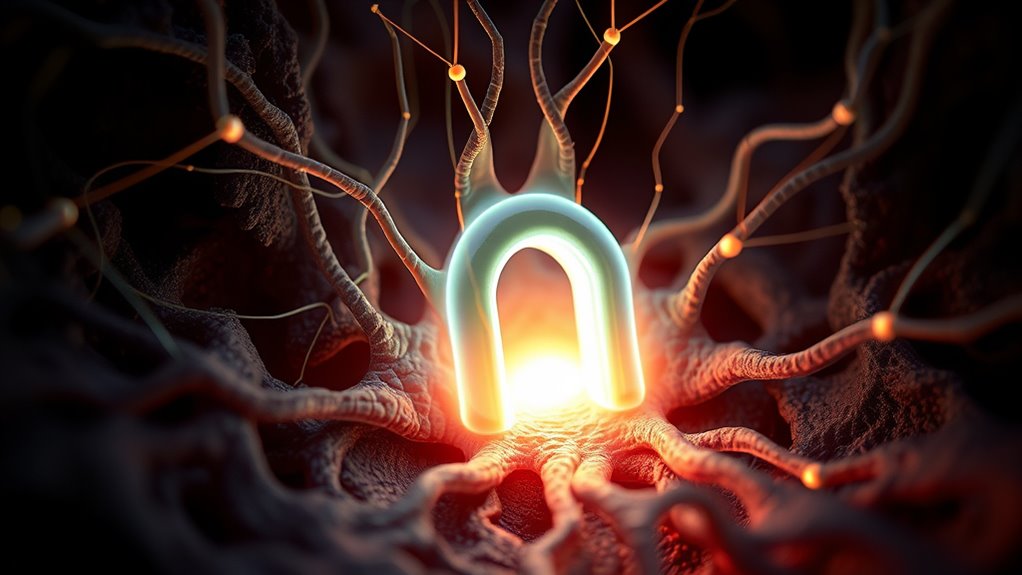
Have you ever wondered why some injuries hurt more than others or why rubbing a bumped elbow can lessen the pain? The answer lies in how your nervous system processes and manages pain signals. The Gate Control Theory of Pain offers a fascinating explanation by focusing on neural pathways and pain modulation. Fundamentally, your brain doesn’t just passively receive pain signals; it actively controls how much pain you feel through a sort of “gate” mechanism in your spinal cord. When tissue damage occurs, nerve fibers send signals along neural pathways to your brain, alerting you to injury. But the gate control model suggests that these signals can be amplified or dampened before they truly reach your conscious awareness. Understanding neural pathways is vital here. These pathways are the routes along which pain signals travel from the site of injury to your brain. The gate control model emphasizes that these pathways are not a one-way street; they can be influenced by various factors, including psychological states, attention, or even distraction. This explains why focusing on something else or applying physical pressure can reduce pain—you’re effectively engaging your body’s own pain modulation system to close the gate. It’s a dynamic process that highlights how your nervous system isn’t just a passive receiver but an active participant in shaping your pain experience. Additionally, research shows that brain plasticity plays a role in how pain signals are processed and modulated over time, which can influence chronic pain conditions.
As an affiliate, we earn on qualifying purchases.
Frequently Asked Questions
How Does the Gate Control Theory Influence Modern Pain Management?
The gate control theory influences modern pain management by highlighting how neural pathways and sensory modulation can control pain signals. By stimulating non-painful sensations, like through massage or electrical nerve stimulation, you can activate the gate to block pain signals before they reach your brain. This approach helps reduce pain perception naturally, guiding treatment methods such as physical therapy and transcutaneous electrical nerve stimulation (TENS) for effective pain relief.
Can the Gate Control Theory Explain Chronic Pain Conditions?
Think of your neural pathways as a busy highway, and pain signals as cars racing through. The gate control theory suggests that your brain acts like a traffic controller, influencing pain modulation. In chronic pain conditions, this gate may stay partially open, letting pain signals flood through unchecked. So yes, it can help explain why some pain persists longer than expected, as the neural pathways keep the gate open wider over time.
Are There Specific Therapies Based on the Gate Control Theory?
Yes, there are therapies based on the gate control theory. You might experience treatments like transcutaneous electrical nerve stimulation (TENS), which use electrical impulses to modulate neurotransmitter activity and block nerve signals transmitting pain. These therapies aim to activate larger nerve fibers, effectively “closing the gate” to pain signals in your nervous system. By doing so, they can reduce your perception of pain and improve comfort.
How Does Psychological State Affect the Gate Control Mechanism?
Your psychological influence and emotional modulation profoundly impact the gate control mechanism. When you’re stressed or anxious, these emotional states can amplify pain signals by opening the gate wider, making pain feel more intense. Conversely, positive emotions and relaxation can close the gate, reducing pain perception. Your mental state actively interacts with the neural pathways, demonstrating how psychological factors directly modulate how pain is processed and experienced.
What Are the Limitations of the Gate Control Theory?
You might think the gate control theory explains all pain, but it has limitations. It oversimplifies neural pathways, ignoring complex processes like emotional and cognitive influences on sensory modulation. The theory doesn’t fully account for chronic pain or the role of biochemical factors in pain perception. While helpful, it can’t explain every aspect of pain, reminding you that pain’s mechanisms are more intricate than a simple gate.
As an affiliate, we earn on qualifying purchases.
Conclusion
So, next time you stub your toe or feel a sharp pinch, remember the Gate Control Theory is like a vintage radio tuner, filtering pain signals before they reach your brain. It’s your body’s way of deciding what’s worth your attention—kind of like selecting a station in the age of dial-up internet. By understanding this, you see how your nervous system acts as a gatekeeper, turning down the volume on pain when it’s not as urgent.
As an affiliate, we earn on qualifying purchases.
electrical nerve stimulation device
As an affiliate, we earn on qualifying purchases.
As an affiliate, we earn on qualifying purchases.
Fall Picks
fall essentials
As an affiliate, we earn on qualifying purchases.