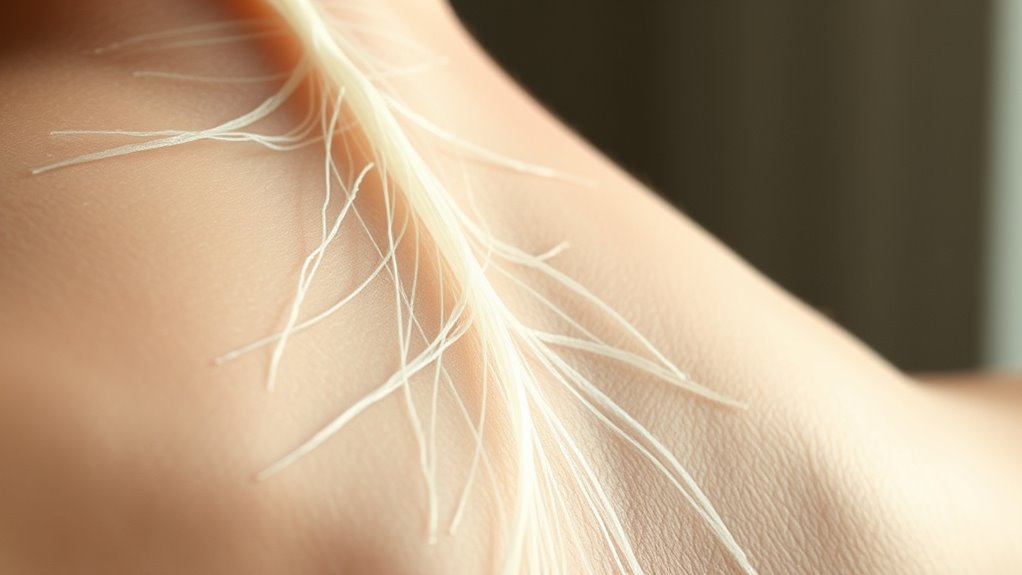

Fascia is a connective tissue network that surrounds your muscles, bones, and organs, supporting smooth movement and quick recovery. When your fascia is healthy and flexible, it helps reduce pain, prevents injuries, and keeps your tissues resilient. Conversely, tight or damaged fascia can limit mobility and cause discomfort. Taking care of your fascia through stretching or foam rolling boosts recovery and overall performance. To discover how you can maintain this essential tissue, keep exploring further.
Key Takeaways
- Fascia is connective tissue that surrounds muscles, bones, and organs, supporting movement and structural integrity.
- Healthy fascia enables quick recovery, flexibility, and smooth muscle gliding, enhancing overall movement efficiency.
- Restrictions or damage in fascia can cause pain, limited mobility, and increase injury risk.
- Techniques like stretching and foam rolling maintain fascia flexibility, promoting resilience and faster recovery.
- Proper fascia health reduces strain on musculoskeletal structures, preventing injuries and supporting optimal performance.
Fascia, the connective tissue that surrounds muscles, bones, and organs, plays a crucial role in your body’s movement and overall recovery process. When your fascia is healthy and well-maintained, it supports smooth, efficient motion and helps your body recover faster from activity or injury. But if your fascia becomes tight, damaged, or restricted, it can lead to discomfort, limited mobility, and a higher risk of injury. Maintaining fascia health isn’t just about feeling good—it’s a key factor in injury prevention and long-term resilience. When you keep your fascia in good shape, you reduce the chance of strains, sprains, and overuse injuries that can sideline you for weeks or even months.
Your fascia acts like a web that connects everything inside your body. It’s flexible and elastic, allowing muscles to glide smoothly over each other and organs to stay in place. If you neglect fascia health, this web can become stiff or sticky, which can cause pain and limit your range of motion. This stiffness not only makes movement uncomfortable but also puts extra strain on muscles and joints, increasing your risk of injury. By focusing on fascia health, you can keep this tissue supple and resilient, which helps your body absorb impacts better and recover more swiftly after workouts or accidents. Techniques such as stretching, foam rolling, and myofascial release target fascia to improve its flexibility and reduce adhesions, keeping your tissues in excellent condition.
Injury prevention hinges on your fascia’s ability to stay healthy. When fascia is flexible and free of restrictions, your muscles work efficiently, and your joints move through their full range of motion without strain. Conversely, if fascia becomes tight or knotted, your movement patterns become compromised, and the likelihood of injury jumps. Regularly caring for your fascia can help you avoid common issues like muscle pulls, joint pain, or chronic aches. It’s about creating a balanced, resilient tissue network that supports your activity and helps you bounce back quickly from stress or injury. Incorporating fascia-focused practices into your routine isn’t just a wellness trend; it’s a proactive approach to safeguarding your body’s structural integrity and ensuring your recovery process remains smooth and effective.
As an affiliate, we earn on qualifying purchases.
Frequently Asked Questions
Can Fascia Injuries Be Detected With Standard Imaging Tests?
Fascia injuries often can’t be detected with standard imaging tests because of imaging limitations and fascia visualization challenges. These tests, like X-rays or MRIs, usually focus on bones or muscles, making fascia damage hard to see. You might need specialized imaging techniques, such as ultrasound or advanced MRI methods, to precisely detect fascia injuries. Recognizing these limitations helps ensure you get the right diagnosis and proper treatment for recovery.
How Does Fascia Affect Chronic Pain Conditions?
Did you know that fascia accounts for about 40% of your body’s total collagen, impacting its elasticity? Fascia plays a vital role in chronic pain management because tight or restricted fascia can cause persistent discomfort and limit movement. When fascia loses elasticity, it can trap nerves or muscles, intensifying pain. Addressing fascia health through targeted therapies can markedly reduce chronic pain and improve overall mobility.
Are There Specific Exercises to Target Fascia Health?
Yes, you can target fascia health with specific exercises like foam rolling and myofascial release. Foam rolling helps break down adhesions and improves flexibility, while myofascial release involves applying gentle pressure to release tension in fascia. Incorporate these techniques regularly into your routine to enhance mobility, reduce pain, and support recovery. Remember to listen to your body and avoid overdoing it to prevent injury.
What Role Does Fascia Play in Athletic Performance?
Fascia is your secret weapon in athletic performance, acting like the body’s scaffold. When your fascia has good elasticity and stays well-hydrated, you move more freely and recover faster. It helps you generate power, improve flexibility, and prevent injuries. If you neglect fascial health, you’re leaving gains on the table. By keeping fascia supple and hydrated, you optimize your performance and stay at the top of your game.
How Long Does Fascia Healing Typically Take?
Fascia regeneration varies depending on the injury’s severity, but generally, the healing timeline ranges from a few weeks to several months. Minor fascia strains may heal in 3-6 weeks, while more significant damage can take 2-3 months or longer. During this period, your body works to repair and restore fascia, so patience and proper care are essential to support an effective healing process and avoid re-injury.
As an affiliate, we earn on qualifying purchases.
Conclusion
Understanding fascia is key to your recovery. It’s not just tissue; it’s the web that holds your muscles together and influences your movement. Did you know that fascia makes up about 20% of your body’s total mass? By caring for it through proper stretching and movement, you can speed up recovery and keep your body flexible. So, next time you rest, remember, your fascia is working behind the scenes to help you heal and stay active.
As an affiliate, we earn on qualifying purchases.
As an affiliate, we earn on qualifying purchases.