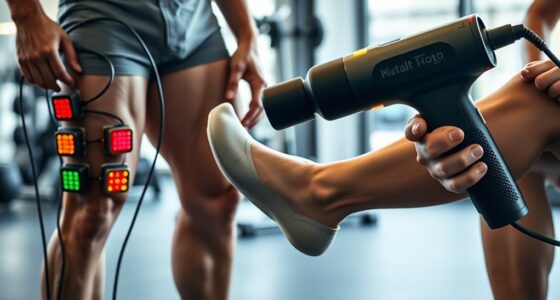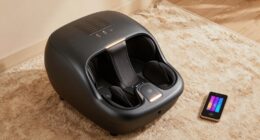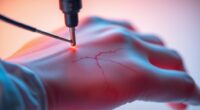
Tensiomyography (TMG) helps you objectively assess muscle stiffness and response after percussive massage. By attaching sensors to your skin, TMG measures how quickly muscles respond and their level of tension. This data reveals whether your treatment successfully relaxes tight tissues or if further care is needed. Using TMG, you can track your progress precisely. Keep exploring to discover how this tool can optimize your recovery and muscle health.
Key Takeaways
- TMG measures changes in muscle response time and stiffness before and after percussive massage to assess effectiveness.
- A decrease in muscle stiffness and response time post-massage indicates successful relaxation.
- TMG provides objective, quantifiable data to evaluate how percussive massage impacts muscle health.
- Persistent high stiffness after massage signals the need for alternative or additional recovery methods.
- Using TMG helps tailor and optimize massage interventions for improved muscle recovery outcomes.

Have you ever wondered how athletes and therapists assess muscle function with accuracy? Tensiomyography (TMG) offers a state-of-the-art way to do just that. It’s a non-invasive technique that measures muscle response to electrical stimulation, giving you detailed insight into muscle stiffness, tone, and overall health. When it comes to muscle recovery, understanding how your muscles respond after treatments like percussive massage is vital. TMG helps you evaluate whether massage techniques are effectively reducing muscle stiffness or if your muscles need additional care.
TMG provides precise, non-invasive insights into muscle health and recovery effectiveness.
Percussive massage is widely used to promote muscle recovery by loosening tight tissues, increasing blood flow, and reducing soreness. But how do you know if these massage techniques are truly working? That’s where TMG comes in. By attaching small sensors to the skin, you can monitor how muscles respond to stimuli before and after massage sessions. If the muscle’s response time decreases and stiffness drops, it indicates successful relaxation and recovery. Conversely, if stiffness remains high, you might need to adjust your approach or incorporate different techniques.
Using TMG, you can pinpoint specific muscles that are still tense or overworked. This precision allows you to tailor your recovery plan, whether you’re an athlete or a therapist. For example, if a particular muscle shows persistent stiffness after massage, you might decide to apply targeted stretching, additional massage techniques, or rest. This data-driven approach ensures that your muscle recovery process isn’t based on guesswork but on measurable, objective evidence.
Moreover, TMG’s ability to provide real-time feedback makes it a powerful tool during rehabilitation. You can track progress over multiple sessions, observing how different massage techniques influence muscle stiffness. This helps you determine the most effective strategies for long-term recovery and performance enhancement. Whether you’re recovering from intense training or managing injury, understanding muscle function through TMG empowers you to make smarter decisions about your therapy and exercise routines.
In essence, TMG bridges the gap between subjective feelings of muscle tightness and objective, quantifiable data. It complements massage techniques by verifying their effectiveness and guiding adjustments for perfect muscle recovery. No longer do you need to rely solely on sensations or assumptions; instead, you can see exactly how your muscles respond. This accuracy not only accelerates recovery but also reduces the risk of injury, helping you stay active and healthy for longer. So, if you’re serious about understanding your muscles and maximizing recovery, integrating TMG into your routine can make all the difference. Additionally, employing scalable assessments can enhance the precision of your recovery protocols, ensuring optimal muscle health over time.
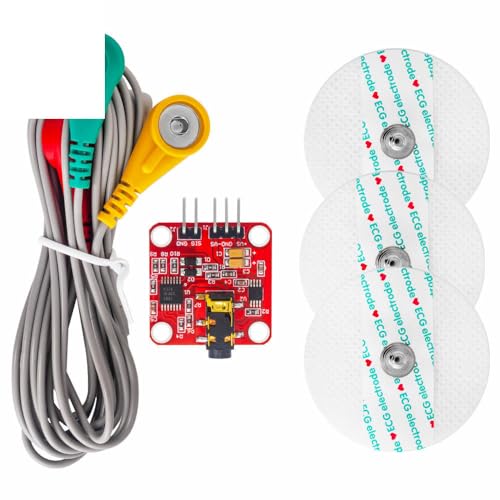
Muscle Electrical Sensor Module Muscle Analog Signal EMG Raw Signal Collection Electronic Development Kit for Arduino
Muscle Electrical Sensor Module Muscle Analog Signal EMG Raw Signal Collection Electronic Development Kit for Arduino
As an affiliate, we earn on qualifying purchases.
As an affiliate, we earn on qualifying purchases.
Frequently Asked Questions
How Does Tensiomyography Compare With Other Muscle Assessment Tools?
You’ll find tensiomyography offers precise insights into muscle stiffness and flexibility, surpassing traditional tools like manual palpation or pain assessments. It uses electrical signals to measure muscle response, providing objective data. Unlike subjective methods, it helps identify subtle changes in muscle condition, making it ideal for monitoring recovery or evaluating pain. Overall, it’s a more accurate, non-invasive way to gauge muscle health compared to other assessment techniques.
Is Tensiomyography Suitable for All Muscle Groups?
You’ll find tensiomyography isn’t a one-size-fits-all solution, but it’s quite versatile. While it works well for many muscle groups, its effectiveness can vary due to muscle specificity and assessment limitations. Some muscles, especially deeper or smaller ones, may be harder to evaluate accurately. So, you should consider these factors before relying solely on tensiomyography for all muscle assessments, ensuring you get precise, valuable insights.
What Are the Contraindications for Using Tensiomyography?
You should avoid using tensiomyography if you have recent muscle damage or skin irritation, as these conditions can skew results or cause discomfort. Also, skip it if you have open wounds, infections, or severe skin conditions in the area being tested. Always consult a healthcare professional if you’re unsure, especially if you have underlying health issues that might interfere with accurate readings or cause complications.
How Quickly Can Tensiomyography Detect Changes Post-Massage?
Did you know muscle elasticity can change within minutes after a massage? Tensiomyography detects these changes almost immediately, often within 2 to 5 minutes, making it ideal for evaluating recovery timing. You can see how your muscles respond to percussive massage right away, helping you optimize your recovery plan and understand how quickly your muscles regain flexibility and reduce stiffness after treatment.
Can Tensiomyography Be Used During Injury Rehabilitation?
Yes, you can use tensiomyography during injury rehabilitation to monitor muscle recovery and prevent further injury. By evaluating muscle stiffness and response in real-time, you get valuable insight into how well your muscles are healing and adapting. This helps tailor your rehab program, optimize recovery, and reduce the risk of re-injury. Incorporating tensiomyography ensures your rehab progresses safely and effectively, supporting long-term injury prevention.
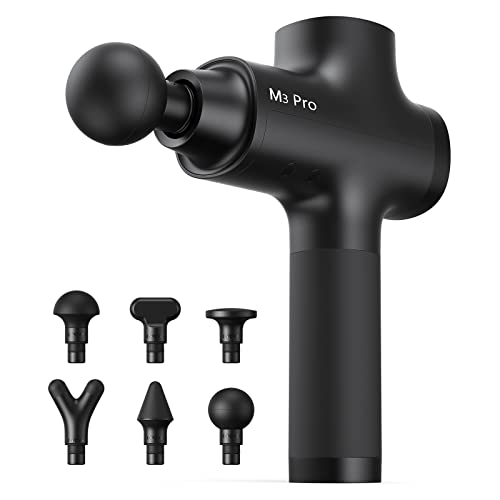
Opove M3 Pro 2 Massage Gun Deep Tissue Percussion Muscle Massager for Workout, Handheld Percussive Therapy Fascia Gun for Athletes Fast Recovery 4-8 Hours Long Battery Life, Powerful, Quiet, Black
Opove M3 Pro had sold more than 500,000 units all over the world since its launch. It has…
As an affiliate, we earn on qualifying purchases.
As an affiliate, we earn on qualifying purchases.
Conclusion
Imagine reducing muscle stiffness by up to 20% after just a single percussive massage session, thanks to insights from tensiomyography. This innovative technique helps you understand how your muscles respond and recover, making your recovery process more effective. By monitoring muscle stiffness accurately, you can optimize your training and therapy routines. Embrace this technology to keep your muscles healthier, more flexible, and ready for whatever challenge comes next.

Tens Unit Machine Pulse Massager for Pain Relief, 24 Massage Modes, Rechargeable Muscle Stimulator Device with 10 Pads
THIS PRODUCT INCLUDES; 1x NueMedics Tens 24 Controller, 6 Large Electrodes ( Pads ), 2 Electrodes Cables, User's…
As an affiliate, we earn on qualifying purchases.
As an affiliate, we earn on qualifying purchases.
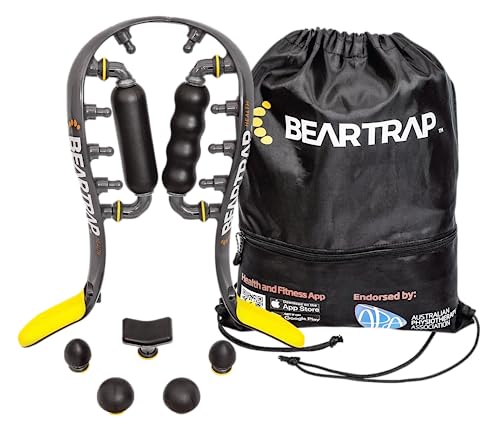
Beartrap Health Muscle Pain Relief Recovery Tool: Full-Body Muscle Release Self-Treatment Tool to Help You Train Harder, Recover Faster & Feel Better!
Full-Body Relief – This versatile muscle roller stick and muscle release tool targets tight spots across your entire…
As an affiliate, we earn on qualifying purchases.
As an affiliate, we earn on qualifying purchases.