TL;DR

Get workout gear delivered free with Prime
- Fast, free delivery on millions of items
- Prime Video, Amazon Music and more included
- Member-only deals all year
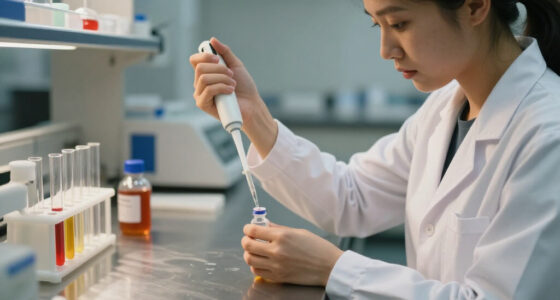
Flinders University researchers have identified antioxidant, anti-inflammatory and antibacterial properties in vanillin, the compound associated with vanilla’s flavor and aroma. The findings point to possible wound-care and drug-delivery applications, but do not show that vanillin treats wounds in patients; safety and effectiveness require further development and clinical testing.
Researchers at Flinders University report that vanillin, the compound best known for vanilla’s flavor and aroma, has antioxidant, anti-inflammatory and antibacterial properties that could be useful in developing wound-care materials. The findings suggest possible applications for chronic wounds and ulcers, but do not establish a treatment for patients; further development and clinical testing are needed to determine its safety and effectiveness.
The work was conducted by researchers in Flinders University’s Biomedical Nanoengineering Laboratory. The team examined vanillin’s chemical properties and how they might be used in medical formulations. In particular, the compound may help address several factors involved in difficult-to-heal wounds: inflammation, bacterial contamination and oxidative stress, in which reactive molecules can damage cells and interfere with tissue repair.
According to the report, vanillin can also act as a dynamic crosslinker, helping connect components in a material. That characteristic could be useful in designing materials for wound care or drug delivery. Researchers describe its molecular structure as amphiphilic, meaning it can interact with both water-attracting and water-repelling substances. They say this may help in formulations carrying hydrophobic compounds, which do not dissolve easily in water.
The researchers point to synthetic vanillin as an abundant, relatively low-cost ingredient, potentially making it practical to investigate for manufactured medical products. Those supply and formulation advantages are possibilities, not evidence that a product is ready for use. The source report does not provide patient-trial results, treatment outcomes, or a timetable for clinical studies.
Potential Uses in Wound-Care Materials
Chronic wounds and ulcers can be challenging to manage when inflammation, bacteria and oxidative stress occur together. A material that could address more than one of these issues may give researchers a route to developing wound-care products with several functions. Vanillin’s reported properties make it a candidate for investigation, rather than a proven solution.
The work also matters because the team is considering how a familiar, widely used compound might be incorporated into medical materials and drug-delivery systems. If further research supports the idea, vanillin’s availability and cost could be relevant to manufacturing. At present, however, the practical value for patients remains unknown: laboratory properties do not by themselves establish clinical benefit, appropriate doses, or safe use on wounds.
As an affiliate, we earn on qualifying purchases.
From Food Compounds to Medical Coatings
Vanillin is the main flavor and fragrance compound in natural vanilla pods and can also be made synthetically. Its established use in food and fragrance is part of the researchers’ rationale for exploring other applications, but a history of use in those settings does not establish the safety of a particular medical formulation or its use on damaged tissue.
The vanillin investigation follows related work by the Flinders team on a nanoscale peppermint-oil coating. The source report says that research was published in the journal Small in February 2026 and described a coating designed to address infection, inflammation and oxidative stress while remaining compatible with human tissue. The team’s broader approach involves investigating whether compounds from everyday ingredients can be incorporated into functional medical materials. The peppermint work provides research context; it does not confirm that a vanillin product has been developed or tested in patients.
antioxidant antibacterial wound dressing
As an affiliate, we earn on qualifying purchases.
As an affiliate, we earn on qualifying purchases.
Clinical Evidence Is Still Missing
The report does not specify the full experimental methods, the scale of testing, or results from human studies. It also does not give details such as a proposed formulation, dose, application schedule, or comparisons with existing wound treatments. Those gaps mean it is not possible to assess from the report whether vanillin-based products would improve healing or how they would perform against current care.
The researchers’ statements about potential safety and usefulness remain prospective claims. A compound’s properties, affordability and previous use as a flavor ingredient cannot substitute for testing the specific product and its use on wounds. Further development and clinical testing are needed before its effects and risks in patients can be established. No approval, launch date or clinical-trial timeline is provided.
vanillin-based drug delivery system
As an affiliate, we earn on qualifying purchases.
As an affiliate, we earn on qualifying purchases.
Further Formulation and Patient Testing
The next steps would involve developing and evaluating specific vanillin-containing materials, including testing how they interact with wound-relevant conditions and whether they can deliver intended compounds. Any candidate would need evidence on performance, safety and suitability for its proposed use before researchers could draw conclusions about patient care.
The source report does not announce a clinical study or set a date for one. For now, the development remains at the research and potential-application stage. Readers should not treat vanillin, vanilla, or food products containing it as wound treatments based on these findings.
As an affiliate, we earn on qualifying purchases.
Key Questions
What did the Flinders University researchers find?
They reported that vanillin has antioxidant, anti-inflammatory and antibacterial properties that could be relevant to wound-care materials and drug-delivery formulations. The report does not establish a treatment for patients.
Can vanilla or vanillin be used to treat a wound now?
The findings do not support using vanilla or vanillin as a wound treatment. The researchers describe a possible future medical application that requires further development and clinical testing.
Why are researchers interested in vanillin for chronic wounds?
Chronic wounds can involve inflammation, bacterial contamination and oxidative stress. Researchers are investigating whether vanillin’s reported properties, and its ability to interact with materials, could help address several of these challenges in a formulated product.
Has vanillin been shown to heal ulcers in clinical trials?
The source report provides no results from clinical trials or other patient studies. Whether a vanillin-based formulation is safe and effective for ulcers remains unknown.
What could make vanillin useful in medical products?
The researchers cite its chemical properties, potential role as a crosslinker, and the abundance and relatively low cost of synthetic vanillin. These factors may support formulation research, but they do not prove that a medical product will work.
Source: rss
Halloween Picks
halloween
As an affiliate, we earn on qualifying purchases.