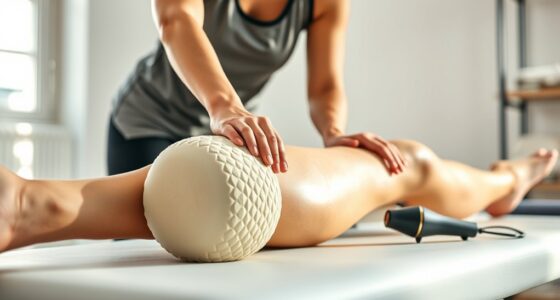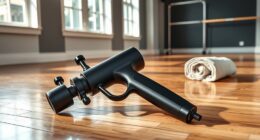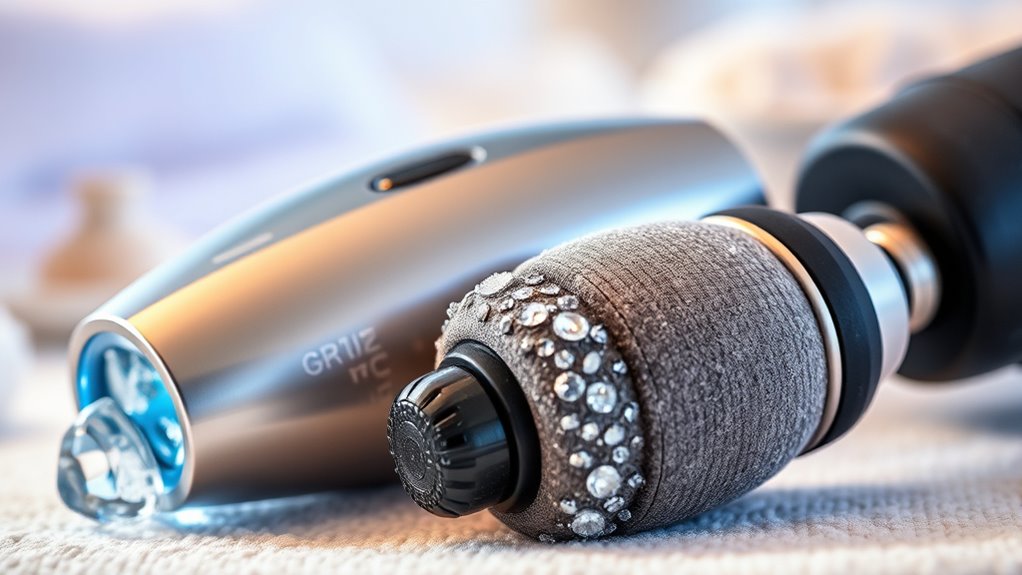

Using cold therapy and percussion together offers a powerful recovery strategy. Cold therapy quickly reduces inflammation and numbs pain immediately after injury or intense activity, while percussion therapy later helps relax muscles, improve circulation, and reduce soreness. Combining both methods targets different recovery needs, making your overall healing more efficient. If you want to understand how this layered approach can benefit you further, there’s more to discover below.

Get workout gear delivered free — and shop member deals
- Fast, free delivery on millions of items
- Access to Prime Big Deal Days deals on October 6–7
- Prime Video, Amazon Music and more included
Key Takeaways
- Cold therapy effectively reduces inflammation immediately post-injury, while percussion therapy promotes circulation during recovery, making them complementary.
- Using cold therapy first minimizes tissue damage; applying percussion therapy afterward enhances muscle relaxation and soreness relief.
- Combining both techniques maximizes recovery by addressing inflammation, swelling, and muscle tension more efficiently.
- Cold therapy and percussion therapy serve different purposes: one reduces pain and swelling, the other improves blood flow and flexibility.
- Strategic layering—cold therapy initially, percussion later—offers a comprehensive approach for injury prevention and faster recovery.
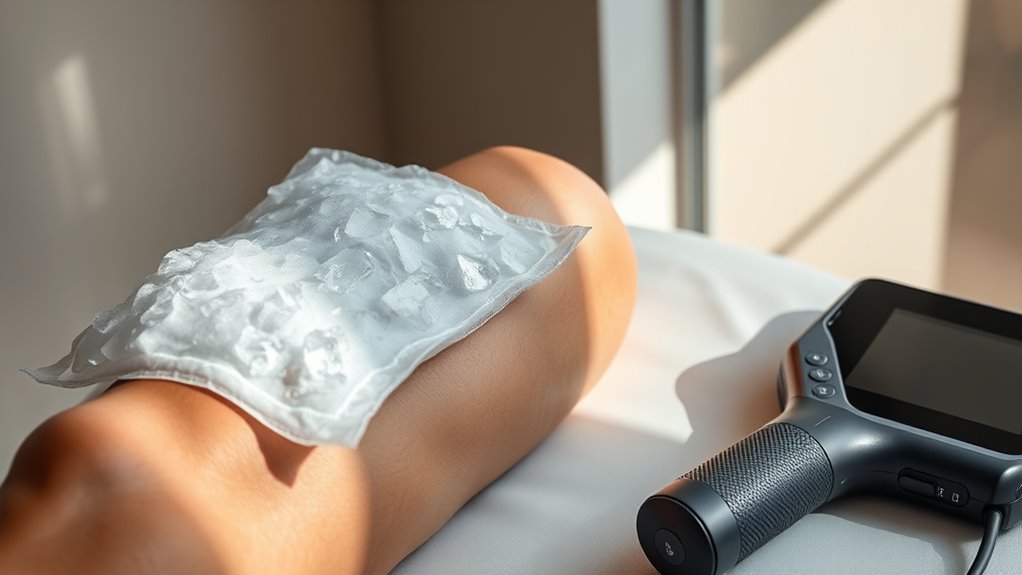
When choosing between cold therapy and percussion therapy, understanding their differences can help you make the best decision for muscle recovery and pain relief. Both methods target muscle soreness, but they do so in distinct ways, impacting recovery efficiency and injury prevention differently. Cold therapy, often involving ice packs or cold compresses, works by constricting blood vessels, reducing inflammation, swelling, and numbness. It’s particularly effective immediately after an injury or intense workout, helping to slow down the inflammatory process. By minimizing swelling early on, cold therapy can prevent further tissue damage and promote quicker recovery, which is vital for injury prevention. This method is simple, cost-effective, and easy to apply, making it a common first step to manage acute pain.
Percussion therapy, on the other hand, uses rapid, targeted vibrations to loosen tight muscles, improve blood flow, and break up knots. Its active approach stimulates circulation, which can help deliver oxygen and nutrients more efficiently to sore tissues. Unlike cold therapy, percussion therapy is more suited for post-acute phases of recovery, aiding in muscle relaxation and reducing soreness over time. When used regularly, it enhances recovery efficiency by accelerating the removal of metabolic waste products and encouraging tissue repair. Additionally, percussion therapy can be a proactive tool for injury prevention; by maintaining muscle flexibility and reducing tension, it lowers the risk of strains or tears during activity. Incorporating muscle recovery techniques such as percussion therapy can significantly improve overall athletic performance and resilience.
While each therapy has unique benefits, they can also complement each other when used strategically. Cold therapy is most effective immediately after injury or intense activity to curb inflammation, while percussion therapy can be incorporated later to promote circulation and facilitate ongoing recovery. Combining these methods can optimize recovery efficiency, ensuring muscles are less prone to injury and recover faster. For instance, you might use cold therapy right after a workout or injury to control swelling, then switch to percussion therapy in the following days to loosen muscles and enhance mobility. This layered approach can maximize recovery, minimize pain, and help you maintain a consistent training routine.
cold therapy ice packs for injury
As an affiliate, we earn on qualifying purchases.
As an affiliate, we earn on qualifying purchases.
Frequently Asked Questions
Can Cold Therapy Help Reduce Muscle Soreness Faster?
Yes, cold therapy can help reduce muscle soreness faster. When you apply cold, it constricts blood vessels, decreasing inflammation and muscle fatigue. This accelerates recovery and supports injury prevention. Using cold therapy after workouts helps to calm sore muscles, lessen swelling, and promote quicker healing. Combining cold therapy with other recovery methods can optimize your muscle recovery process, allowing you to feel better sooner and keep your muscles in top shape.
How Long Should Each Session of Percussion Therapy Last?
While session timing varies, following duration guidelines guarantees safe and effective percussion therapy. Typically, you should limit each session to 1-2 minutes per muscle group, avoiding overuse. This balance prevents discomfort while maximizing benefits. Short, focused sessions allow you to target sore areas efficiently, optimizing recovery without risking tissue irritation. Always listen to your body, adjusting duration based on your comfort and response to treatment.
Are There Any Risks Combining Cold Therapy With Percussion?
When combining cold therapy with percussion, you should consider the risk interaction and safety concerns. Using both treatments together may increase skin irritation or numbness, and if not done carefully, could cause tissue damage. Always monitor your body’s response, avoid overusing, and consult a healthcare professional if you have underlying conditions. Being cautious helps prevent adverse effects and guarantees safe, effective recovery.
Is Cold Therapy Suitable for Chronic Inflammation?
Think of your body’s inflammation like a garden overrun with weeds. Cold therapy can be a helpful gardener’s tool, but its suitability for long-term use depends on the situation. For chronic inflammation, cold therapy might offer relief, yet overuse could suppress necessary healing processes. Always consider long-term effects and consult a healthcare professional, as prolonged use without guidance may lead to unintended consequences.
Which Therapy Is More Effective for Post-Workout Recovery?
For post-workout recovery, you should consider combining cold therapy and percussion, as they work synergistically to promote muscle repair and reduce inflammation. Cold therapy constricts blood vessels, helping with inflammation reduction, while percussion stimulates blood flow, aiding muscle recovery. Using both can accelerate healing, decrease soreness, and improve overall recovery, making them more effective together than separately. This combo targets multiple recovery aspects for ideal results.
percussion massage gun for muscle recovery
As an affiliate, we earn on qualifying purchases.
As an affiliate, we earn on qualifying purchases.
Conclusion
So, whether you’re battling sports injuries or just want to feel like a superhero, cold therapy and percussion are basically the dynamic duo of recovery. Alone, they’re great, but together, they’re like peanut butter and jelly on steroids—supercharged and unstoppable! Don’t settle for one; harness the full power of these treatments and turn your recovery from a snail’s pace to lightning-fast. Trust me, your muscles will thank you like they’ve just won the lottery!
cold and percussion therapy combo kit
As an affiliate, we earn on qualifying purchases.
As an affiliate, we earn on qualifying purchases.
muscle recovery cold compression wrap
As an affiliate, we earn on qualifying purchases.
As an affiliate, we earn on qualifying purchases.
Fall Picks
fall essentials
As an affiliate, we earn on qualifying purchases.