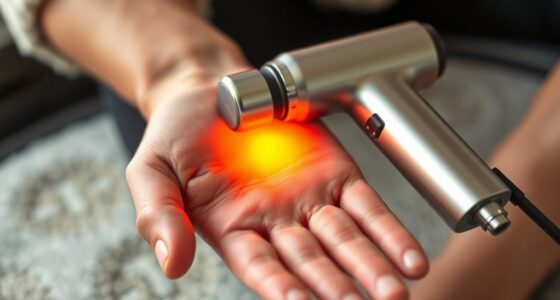
For endurance athletes, percussion therapy provides targeted, immediate muscle relief by loosening knots and increasing local blood flow, making it ideal after intense workouts. Compression therapy offers steady circulation support, reducing swelling and muscle fatigue over longer periods. Combining both methods can optimize recovery—percussion for quick relief and compression for ongoing circulation. To discover how to integrate these tools effectively into your routine, stay with us as we explore each approach in detail.
Key Takeaways
- Percussion therapy provides immediate, targeted muscle relief by loosening knots, while compression offers steady circulatory support for overall recovery.
- Percussion is ideal for treating sore or tight muscles post-workout; compression helps reduce swelling and promotes blood flow during extended activity.
- Combining percussion and compression can optimize recovery by addressing both localized muscle tension and systemic circulation.
- Percussion stimulates muscle tissue directly for quick relief; compression maintains consistent pressure to support circulation and reduce soreness.
- Tailoring recovery routines with both methods enhances endurance, accelerates muscle repair, and minimizes injury risk.

Recovery science plays a essential role in helping endurance athletes perform at their best. Whether you’re running, cycling, or swimming, optimizing recovery allows you to train harder and reduce injury risks. Two popular methods for speeding up recovery are percussion therapy and compression therapy. Both aim to promote muscle relaxation and circulatory enhancement, but they do so in different ways, offering unique benefits suited to your needs.
Percussion therapy involves the use of handheld devices that deliver rapid, targeted taps or pulses to your muscles. When you use percussion tools, you activate muscle relaxation by loosening tight, knotted tissue. This not only alleviates soreness but also improves flexibility and range of motion. As your muscles relax, blood flow increases locally, supporting circulatory enhancement. This boost in circulation helps flush out metabolic waste products like lactic acid and brings in oxygen and nutrients essential for muscle repair. The rapid, rhythmic percussion can also help reduce muscle stiffness after intense workouts, making it easier to recover faster. Additionally, percussion therapy can stimulate muscle tissue to promote better recovery outcomes.
On the other hand, compression therapy uses high-pressure garments or devices to apply consistent pressure to your limbs. When you wear compression sleeves or use pneumatic compression devices, you create a gentle squeezing effect that encourages blood flow throughout your muscles and tissues. This circulatory enhancement is critical for reducing swelling and preventing blood pooling, which can delay recovery. As the compression promotes steady circulation, it also facilitates muscle relaxation by decreasing muscle vibration and reducing the sensation of fatigue. Many athletes find that wearing compression gear during and after training helps them feel less sore and more refreshed, especially after long, demanding sessions.
Both methods support recovery by targeting circulatory enhancement, but their approaches differ. Percussion therapy provides immediate, localized muscle relaxation and can be precisely targeted to specific areas, making it ideal for treating tight knots or sore spots. Compression therapy offers a broader, more uniform approach, helping improve overall circulation in larger muscle groups and reducing swelling over longer periods. Combining these strategies can give you a comprehensive recovery routine—using percussion to loosen tight muscles and compression to maintain circulation and reduce swelling.
Ultimately, your choice depends on your goals and preferences. Percussion therapy might be preferable if you need quick relief from muscle tightness or want to target specific problem areas. Compression, meanwhile, is excellent for ongoing circulation support and swelling prevention, especially after prolonged exertion. Understanding how these methods influence muscle relaxation and circulatory enhancement helps you tailor your recovery process, enabling you to train smarter, recover faster, and perform at your peak.
Frequently Asked Questions
How Quickly Can Athletes Expect to See Recovery Benefits From Percussion Therapy?
You can typically notice recovery benefits from percussion therapy within a few sessions, often seeing improvements after just one or two uses. The recovery timeline varies depending on your therapy frequency and the intensity of your training. Regular sessions, about 2-3 times a week, help maintain muscle flexibility and reduce soreness, leading to faster recovery over time. Consistency is key to maximizing these benefits.
Are There Any Risks or Side Effects Associated With Compression Recovery Devices?
Did you know that over 90% of athletes use compression devices safely? While device safety is generally high, individual variability means some may experience discomfort or skin irritation. Risks are minimal but can include numbness or bruising if used improperly. Always follow manufacturer instructions and consult a healthcare professional if you notice unusual symptoms, ensuring you maximize benefits while minimizing potential side effects.
Can Percussion or Compression Techniques Replace Traditional Rest and Nutrition?
Percussion and compression techniques can’t replace traditional rest and nutrition, but they do complement them. These methods promote muscle relaxation and enhance blood flow, speeding up recovery. Rest and proper nutrition are essential for repairing tissues and replenishing energy stores. Using percussion or compression devices alongside a balanced diet and adequate rest optimizes recovery, helping you perform better and reduce injury risk. Always integrate these tools into a thorough recovery plan.
Which Recovery Method Is More Effective for Injury Prevention?
You’re more likely to prevent injuries with compression therapy, which enhances circulatory flow by 30%, promoting faster muscle relaxation. This improved circulation helps clear metabolic waste and reduces muscle tightness, lowering injury risk. While percussion also aids muscle relaxation, compression’s consistent pressure offers sustained benefits for injury prevention. Incorporating compression into your routine can keep muscles healthy and resilient, helping you stay injury-free and perform at your best.
Do Personal Preferences Influence the Effectiveness of Percussion Versus Compression?
Your personal preferences can influence how effective percussion or compression feels, but they don’t necessarily affect the actual benefits. When you stay consistent with your technique, you optimize recovery regardless of which method you choose. If you prefer percussion, you might be more committed to using it regularly, while compression’s effectiveness depends on proper application. Ultimately, choosing what feels right helps you stick with your recovery routine.
Conclusion
In the end, mastering recovery is like wielding a secret weapon that can turn you into an unstoppable endurance machine. Whether you choose percussion or compression, you’re unleashing superpowers that can shave minutes off your recovery time and make soreness disappear faster than you can blink. So, don’t just recover—transform your routine into an epic battle-winning strategy. With these tools, you’re not just bouncing back—you’re leaping ahead of everyone else in the race for greatness!