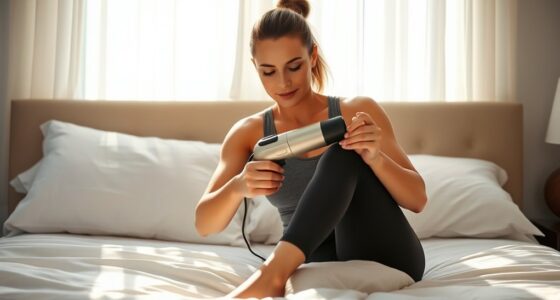
You should avoid using a massage gun if you have certain health issues, injuries, or skin problems. Don’t use it over inflamed, broken, or infected skin, or if you have blood clotting disorders or are on blood thinners. Be cautious if you have heart conditions, pacemakers, or are pregnant. Avoid areas with numbness, tingling, or pain, especially around the neck, spine, or head. Knowing more about these restrictions helps guarantee you use your massage gun safely and effectively.
Key Takeaways
- Avoid using a massage gun on inflamed, injured, or damaged tissues to prevent worsening conditions or delayed healing.
- Do not use if you have blood clotting disorders, open wounds, skin infections, or rashes, as pressure may cause bleeding or worsen skin issues.
- Refrain from use if experiencing numbness, tingling, or sensory loss, which may indicate nerve or circulatory problems.
- Those with heart conditions, pacemakers, or pregnant women should consult a healthcare professional before use.
- Do not use on sensitive areas like the neck, spine, or head, or near recent surgeries or fractures until fully healed.

While massage guns can be effective for relieving muscle tension and promoting recovery, they aren’t suitable for everyone. If you’re experiencing specific health issues or injuries, using a massage gun could do more harm than good. For example, if you have severe muscle soreness from an intense workout, a massage gun might help speed up athletic recovery, but only if used correctly. However, if your soreness is linked to an injury or inflammation, applying deep percussion could worsen the condition. It’s essential to differentiate between normal muscle soreness, which is often a sign of your body adapting to exercise, and pain from injury. Using a massage gun on inflamed or damaged tissues can delay healing or cause further tissue damage.
People with certain health conditions should avoid massage guns altogether. If you have blood clotting disorders, such as deep vein thrombosis, or if you’re on blood-thinning medication, the increased blood flow from a massage gun could dislodge clots or cause bleeding. Similarly, individuals with skin infections, open wounds, or rashes should steer clear, as applying pressure could worsen these conditions or introduce bacteria. Those with recent surgeries or fractures should also wait until fully healed, as the vibrations could interfere with the healing process or cause discomfort.
Avoid massage guns if you have blood disorders, skin infections, open wounds, or recent injuries to prevent complications.
If you have any heart conditions or pacemakers, caution is advised. The vibrations from a massage gun might interfere with medical devices or impact blood circulation in unpredictable ways. Pregnant women should consult their healthcare provider before using a massage gun, especially on the abdominal or lower back areas, as the vibrations could affect the pregnancy or trigger contractions. Additionally, if you notice numbness, tingling, or a loss of sensation in the area you plan to treat, it’s best to avoid using the device. These symptoms could indicate nerve issues or circulatory problems that might worsen with massage gun use.
Finally, be cautious around sensitive areas like the neck, spine, or head. Applying deep pressure to these regions can sometimes cause discomfort or even nerve damage, especially if you’re unsure of the underlying condition. Always follow manufacturer guidelines and listen to your body. If you experience pain, dizziness, or any unusual sensations, stop immediately. To put it briefly, while massage guns can be valuable for muscle recovery and easing soreness, you should avoid them if you have certain health concerns, injuries, or conditions that could be aggravated by their use. Always consult a healthcare professional if you’re unsure whether a massage gun is safe for your specific situation.
Top picks for "contraindication shouldn massage"
Open Amazon search results for this keyword.
As an affiliate, we earn on qualifying purchases.
Frequently Asked Questions
Can I Use a Massage Gun During Pregnancy?
You should avoid using a massage gun during pregnancy without consulting your healthcare provider. Pregnancy caution is essential because certain areas and vibrations could affect your baby. While prenatal massage can be beneficial, a massage gun’s intense vibrations aren’t recommended. Always seek professional advice to guarantee safe relief, and consider gentle, approved methods instead. Your doctor can guide you on safe options to manage discomfort during pregnancy.
Is It Safe to Use on Broken or Bruised Skin?
You shouldn’t use a massage gun on broken or bruised skin because it can disrupt skin integrity and interfere with the healing process. Applying the device to damaged areas may cause pain, worsen inflammation, or delay recovery. Always wait until your skin has fully healed and the bruising has subsided before using a massage gun near those areas. Prioritize gentle methods until your skin is completely restored.
Are There Age Restrictions for Massage Gun Use?
You should be cautious with age restrictions when using a massage gun. Generally, pediatric use isn’t recommended without medical advice, especially for children under 12. Younger kids may have sensitive skin or developing muscles that could be harmed by these devices. Always consult a healthcare professional to determine if a massage gun is safe for children or teenagers, and supervise their use to prevent injuries.
Can Massage Guns Cause Nerve Damage?
Sure, massage guns can cause nerve damage if you ignore nerve sensitivity or push too hard. While they’re great for muscle relief, overusing them near sensitive nerves might lead to nerve injury. So, you might think they’re completely safe, but a little caution goes a long way. Always listen to your body, avoid that nerve-rich area if it feels uncomfortable, and don’t use excessive pressure.
Should I Avoid Using Near Medical Implants or Pacemakers?
You should avoid using a massage gun near medical devices like pacemakers because it can cause electromagnetic interference, potentially disrupting their function. The massage gun’s vibrations and electromagnetic fields may interfere with your medical device, risking complications. Always consult your healthcare provider before using a massage gun if you have a medical device implanted. To stay safe, keep the massage gun at a safe distance from any medical device.
Conclusion
Remember, while massage guns can be wonderful for relaxation, it’s best to listen to your body and avoid using them in certain situations. If you’re dealing with serious injuries, swelling, or skin issues, it’s wise to pause and consult a healthcare professional. By respecting these gentle boundaries, you’ll guarantee your experience remains enjoyable and safe. After all, a little caution can help you fully embrace the calming benefits without any unwelcome surprises.