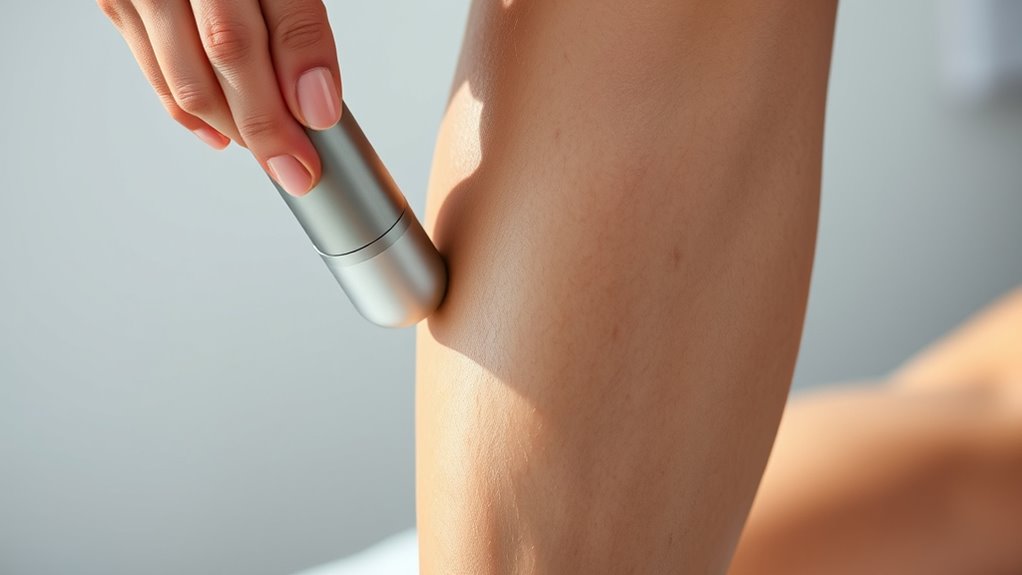

To target your calves, focus percussion on the gastrocnemius and soleus muscles, using gentle to moderate pressure along the muscle belly and Achilles tendon to improve blood flow and relieve tightness. For your hamstrings, apply percussion from just below your glutes down to behind your knees, using slow, firm strokes to relax and increase flexibility. Understanding these techniques helps prevent injuries and enhances mobility—continue exploring for detailed tips to optimize your recovery.
Key Takeaways
- Percussion on calves focuses on the gastrocnemius and soleus muscles for ankle mobility and push-off strength.
- Hamstring percussion targets biceps femoris, semitendinosus, and semimembranosus to improve knee flexion and hip extension.
- Calf therapy enhances circulation for activities like running and jumping; hamstring therapy prevents strains during sudden movements.
- Use gentle to moderate percussion along the muscle belly and Achilles tendon for calves; target the entire hamstring from pelvis to behind the knee.
- Regular targeted percussion reduces tightness, improves flexibility, and helps prevent injuries in both muscle groups.

Have you ever wondered how your calves and hamstrings differ in function and importance? Understanding the muscle anatomy of these two key muscle groups can help you target them effectively with percussion techniques. Your calves, primarily made up of the gastrocnemius and soleus muscles, are located at the back of your lower leg. They play a crucial role in activities like walking, running, and jumping by enabling ankle flexion and providing power during push-off. Conversely, your hamstrings are a group of three muscles—biceps femoris, semitendinosus, and semimembranosus—situated at the back of your thigh. They’re responsible for knee flexion and hip extension, essential for bending your knee and propelling your body forward.
When it comes to injury prevention, knowing the differences in muscle anatomy is vital. The calves often endure strain from repetitive high-impact activities, which can lead to cramps, strains, or Achilles tendinitis if not properly maintained. Regular percussion therapy on your calves can improve blood flow, reduce muscle tightness, and help prevent injuries. Similarly, your hamstrings are prone to strains, especially during sudden starts or stops, or when they’re tight and weak. Properly targeting the hamstrings with percussion techniques can aid in recovery, increase flexibility, and minimize the risk of tears.
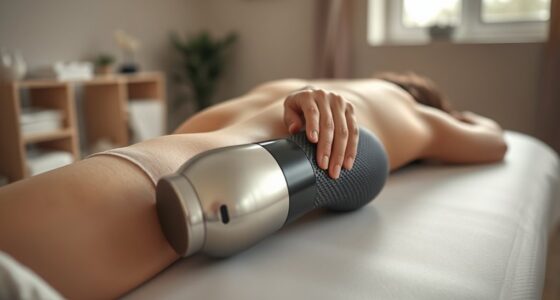
Additionally, understanding the muscle function of each group helps tailor your treatment approach to maximize benefits. Targeted percussion techniques involve applying controlled, rhythmic pressure to these muscles to promote circulation and tissue elasticity. For your calves, focus on the muscle belly—specifically the gastrocnemius—using gentle to moderate pressure to work out knots and ease tension. Light percussion along the Achilles tendon can also relieve discomfort and improve mobility. When addressing your hamstrings, target the muscle group from just below the buttocks down to the back of the knee. Use slow, deliberate strokes to facilitate muscle relaxation and break up adhesions that might restrict movement or cause discomfort.
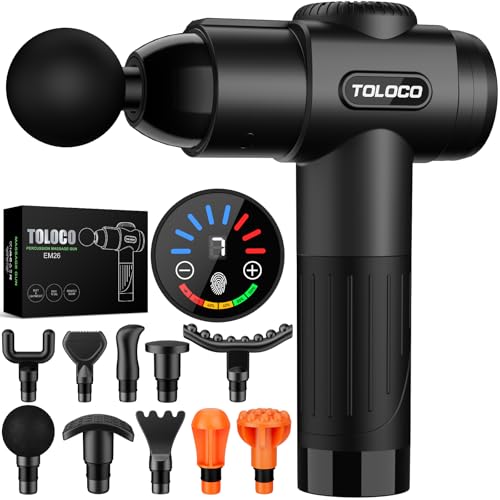
TOLOCO Massage Gun, Deep Tissue Back Massage for Athletes for Pain Relief, Percussion Massager with 10 Massages Heads & Silent Brushless Motor, Valentines Day Gifts for Him Her, Black
Quick Pain Relief: The TOLOCO deep tissue massage gun has a high penetration force of 12mm, up to...
As an affiliate, we earn on qualifying purchases.
Frequently Asked Questions
How Often Should I Perform Percussion Therapy on Calves and Hamstrings?
You’re wondering how often you should perform percussion therapy on your calves and hamstrings. Based on frequency guidelines, start with 2-3 sessions per week, adjusting based on your muscle sensitivity and response. Listen to your body—if you experience soreness or discomfort, reduce the frequency. Consistent, moderate sessions help improve circulation and reduce tension without overloading your muscles, promoting recovery and flexibility effectively.
Are There Any Risks or Contraindications for Percussion Therapy in These Muscles?
Ever wondered if percussion therapy could cause more harm than good? You should know risks like muscle atrophy or nerve irritation exist if used improperly. Avoid applying too much pressure or overusing it, especially around sensitive areas. If you have nerve issues or muscle injuries, consult a healthcare professional first. Proper technique minimizes risks and guarantees you gain benefits without risking complications like nerve irritation or worsening muscle conditions.
Can Percussion Techniques Replace Traditional Stretching or Strengthening Exercises?
Percussion techniques can’t fully replace traditional stretching or strengthening exercises, but they do support your goals of improving muscle flexibility and injury prevention. You should use percussion therapy as a complementary tool, not a substitute. Incorporating both methods allows you to optimize muscle health, enhance recovery, and reduce injury risk. Remember, a balanced routine combining these approaches is the most effective way to maintain overall muscle function.
What Signs Indicate I Need Professional Assistance With Muscle Tension?
When muscle stiffness feels like a tightrope pulling too hard, it’s time to seek help. If injury symptoms like swelling, sharp pain, or persistent soreness don’t fade, your muscles are warning you. Ignoring these signs can turn a small spark into a blazing fire. Trust your body’s signals; if discomfort lingers or worsens, professional assistance is your safest anchor to prevent further damage.
How Long Should Each Percussion Session Last for Optimal Results?
For ideal results, you should follow duration guidelines of about 1 to 2 minutes per muscle group during each percussion session. Keep session length moderate to avoid overstimulation or discomfort. Pay attention to how your muscles respond; if you notice pain or excessive soreness, reduce the session length or take a break. Consistency is key, so incorporate these sessions into your routine a few times a week for best outcomes.
BILITOK Massage Chair Recliner with Zero Gravity with Full Body Air Pressure, Speaker and Blue-Tooth Connection, Easy to Use at Home and in The Office
【Zero Gravity Massage】:Pressing the zero gravity button, the zero gravity massage chair lifts the feet to the same...
As an affiliate, we earn on qualifying purchases.
Conclusion
Think of your muscles as the strings of a guitar—you need to tune each one precisely. When I first tried targeted percussion on my calf, it felt like tuning a delicate instrument, restoring its harmony. Similarly, understanding the difference between calf and hamstring techniques guarantees you hit just the right note for relief and recovery. With consistent practice, you’ll find your muscles resonate perfectly, turning tension into a smooth, effortless melody.

Lvrunben Shiatsu Back Massager with Heat, 3D Kneading Massage Chair Pad, Electric Massage Seat Cushion for Body, Neck,Shoulder, with Movable Multi-Function Leg and Foot Massager, for 62-69 inches
Please Note Before Use:If there is pain when using the massager, this is a normal phenomenon, because the...
As an affiliate, we earn on qualifying purchases.
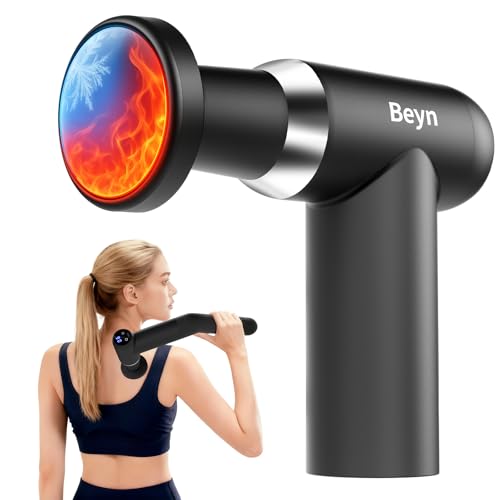
Beyn Hot and Cold Fascia Gun - Detachable Extended Handle Massage Gun,Deep Tissue Massage Gun, Used for Relieving Pain in The Back/Muscles of The Neck/Body, with 6 Massage Heads, LCD Display.
Powerful Muscle Massage Gun: This deep-tissue massage gun features a high-quality casing and a high-torque brushless motor, offering...
As an affiliate, we earn on qualifying purchases.