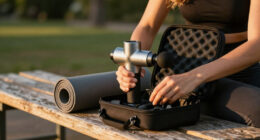
TENS units use electrical pulses to target nerves, blocking pain signals and releasing natural painkillers, offering focused, drug-free relief. Massage guns apply mechanical pressure to muscles, relaxing tension but don’t directly influence nerve activity. While both help with pain, they operate differently—electrical stimulation affects nerve signals and endorphin release, whereas massage softens muscles. To discover how these methods can work together for effective pain management, keep exploring more insights.

Get workout gear delivered free with Prime
- Fast, free delivery on millions of items
- Prime Video, Amazon Music and more included
- Member-only deals all year
Key Takeaways
- TENS units deliver electrical pulses to nerves for targeted pain relief, unlike massage guns which use mechanical pressure on muscles.
- Electrical stimulation in TENS units interferes with pain signals and stimulates endorphin production, whereas massage guns relax muscles through physical manipulation.
- TENS units provide drug-free, customizable, portable pain management by affecting nerve activity directly; massage guns focus on muscle relaxation.
- Combining TENS and massage therapy can offer synergistic relief, addressing both nerve pain and muscle tension effectively.
- TENS units are ideal for nerve-related pain, while massage guns are better suited for releasing muscle tightness and improving circulation.
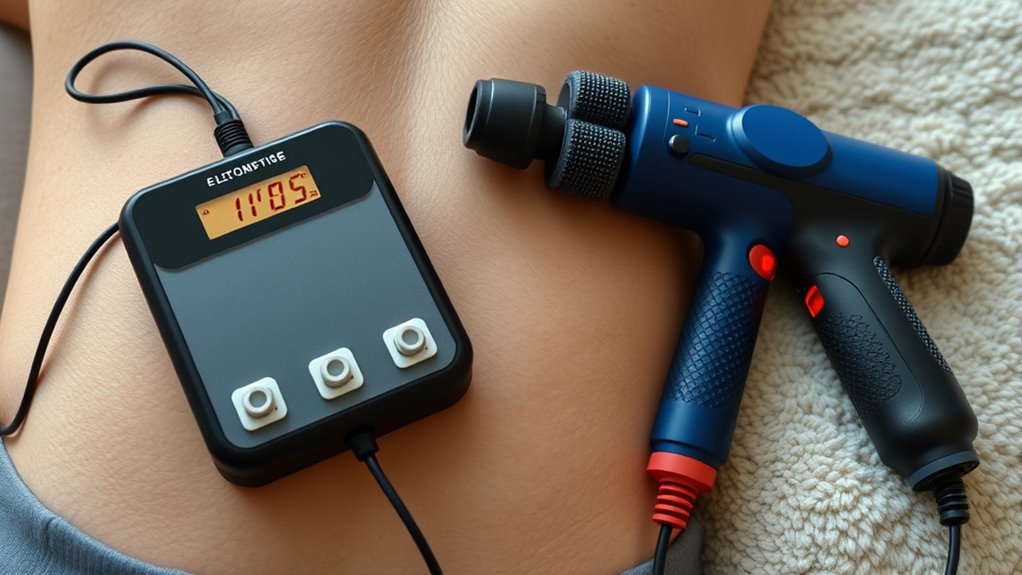
Have you ever wondered how TENS units provide pain relief without medication? The answer lies in their ability to deliver electrical stimulation directly to your nerves. When you use a TENS device, tiny electrical pulses pass through electrodes placed near the pain site. These pulses interfere with the pain signals traveling to your brain, effectively reducing your sensation of pain. This process is a form of electrical stimulation that activates your body’s natural pain control mechanisms. Unlike medications, TENS units offer targeted relief without side effects, making them a popular choice for those seeking drug-free pain management options.
TENS units deliver electrical pulses to nerves, providing targeted, drug-free pain relief without side effects.
Electrical stimulation from TENS units works quickly to ease discomfort by blocking or interrupting pain signals. It also stimulates the production of endorphins, your body’s natural painkillers, which enhances overall relief. The process is adjustable, allowing you to customize the intensity, frequency, and duration of the pulses to suit your comfort level and specific pain condition. Because it’s non-invasive and portable, you can use it at home, at work, or even while traveling, providing continuous pain management when needed most. Additionally, high-quality electrodes ensure effective and comfortable stimulation during use.
In contrast, massage therapy uses mechanical pressure and movement to relieve muscle tension and promote relaxation. While massage guns are popular tools for this purpose, TENS units operate on a different principle. Instead of kneading muscles, they send electrical impulses that target nerve pathways. This distinction is essential because electrical stimulation can reach deeper tissues and influence nerve activity directly, offering a different kind of relief compared to massage therapy. Both methods aim to reduce pain, but TENS units do so by manipulating nerve signals, whereas massage therapy focuses on improving blood flow and loosening tight muscles.
For many users, combining electrical stimulation from a TENS unit with traditional massage therapy can provide extensive pain relief. While massage can soften tight muscles and improve circulation, TENS offers targeted nerve modulation. This synergy can be especially beneficial for chronic pain conditions like back pain, arthritis, or neuropathy. The key is understanding how each approach works and choosing the right combination based on your specific needs. Ultimately, whether you prefer the electrical pulses of a TENS device or the hands-on approach of massage therapy, both methods serve as effective, drug-free options to manage pain and enhance your comfort.
Products Worth Considering

Hyperice Hypervolt 3 Percussion Massage Gun with Heated Head and Carry Case

Therabody Theragun Prime Plus Heated Deep Tissue Massage Gun, Black

Therabody Theragun Mini Plus Portable Massage Gun with Heat
As an affiliate, we earn on qualifying purchases.
Frequently Asked Questions
Can TENS Units Be Used for Chronic Pain Management?
Yes, you can use TENS units for chronic pain management. They work by stimulating your nerves, which promotes muscle relaxation and provides pain relief. Regular use can help reduce discomfort over time, making daily activities easier. Just make certain you follow your healthcare provider’s instructions, especially if you have underlying conditions or are pregnant. TENS units are a non-invasive, effective option for managing ongoing pain issues.
Are There Any Risks or Side Effects With TENS Therapy?
Yes, TENS therapy can have risks or side effects if you don’t follow safety precautions. You might experience skin irritation, a tingling sensation, or muscle twitching. To manage side effects, guarantee proper electrode placement and avoid using it over broken skin or near your heart. Always consult your healthcare provider before starting TENS, and follow their guidance to ensure safe and effective pain relief.
How Does TENS Differ From Other Electrical Stimulation Devices?
You’ll find that TENS units differ from other electrical stimulation devices mainly in their design and purpose. TENS devices specifically target nerve fibers to block pain signals, while other electrical stimulation devices may focus on muscle strengthening or recovery. In a device comparison, TENS units are typically more user-friendly for pain relief, offering adjustable settings for pain management, whereas other devices might have different functionalities suited for physical therapy or muscle rehab.
Can TENS Units Replace Traditional Physical Therapy?
TENS units can’t fully replace traditional physical therapy, but they can complement it by providing muscle activation and pain relief. They target specific areas to reduce discomfort and improve circulation, helping your recovery process. However, physical therapy offers a personalized approach with hands-on techniques and tailored exercises. Use TENS units alongside professional guidance for best results, but don’t rely on them as your sole treatment method.
Is Professional Supervision Necessary When Using TENS Units at Home?
Think of it like a trusted sword; even in skilled hands, guidance matters. You should have professional supervision when using TENS units at home to guarantee home safety and proper device calibration. Without expert oversight, you risk ineffective treatment or injury. A professional can help you set the device correctly and monitor your progress, making sure you get the relief you need safely and effectively.
Conclusion
Ultimately, whether you’re opting for the powerful pulse of TENS units or the gentle grind of massage guns, understanding their unique uses makes a difference. Decide which device delivers relief and restores your routine. Remember, your recovery is within reach—research, recognize, and choose what works best. With the right tool in hand, you’ll feel better, faster, and more confident in controlling your comfort. Embrace the experience and elevate your ease today!