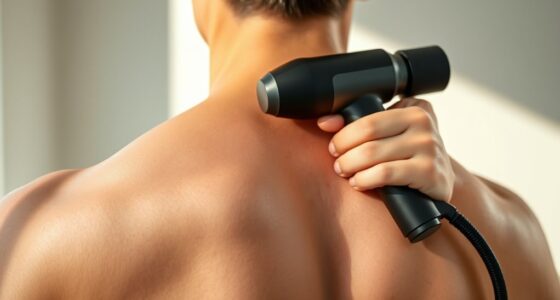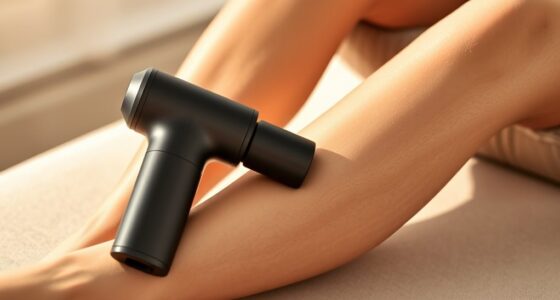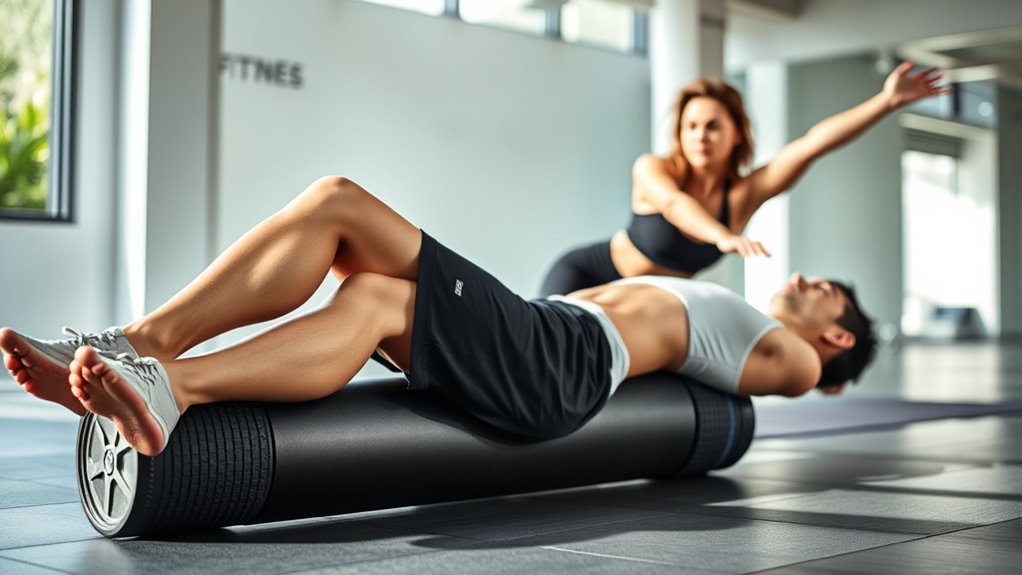

To effectively pair stretching with percussive therapy, start by using percussive therapy gently to warm up muscles and loosen tight areas before you stretch. Follow with dynamic stretches to prepare your body for activity, then perform static stretches post-exercise to lengthen muscles. Using percussive therapy afterward helps recovery and reduces soreness. By following this sequence, you’ll enhance flexibility and avoid injuries—all the tips you’ll discover below will help you master the process.

Get workout gear delivered free with Prime
- Fast, free delivery on millions of items
- Prime Video, Amazon Music and more included
- Member-only deals all year
Key Takeaways
- Use percussive therapy before stretching to warm up muscles and increase flexibility.
- Apply gentle, controlled percussive therapy on tight areas prior to dynamic stretching.
- Perform static stretches after activity to lengthen muscles and improve flexibility.
- Incorporate percussive therapy post-stretching to aid recovery and reduce soreness.
- Follow a sequence: warm-up with percussive therapy, stretch, then use percussive therapy again for optimal results.
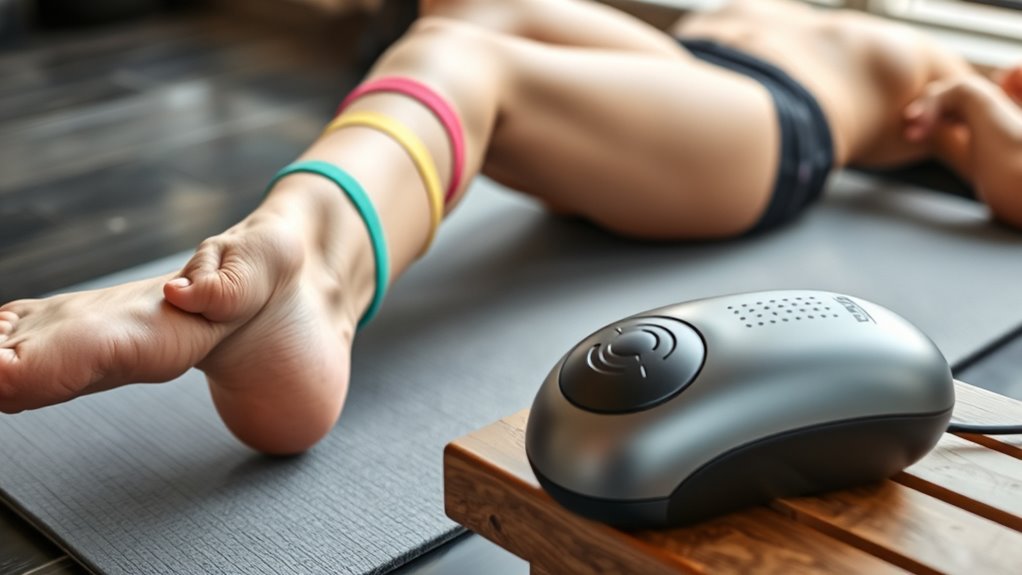
Stretching and percussive therapy are powerful tools to enhance your flexibility, reduce muscle tension, and speed up recovery. When you combine these methods effectively, you can optimize your muscle recovery process and considerably lower your risk of injury. Proper pairing ensures that your muscles are prepared for activity and recover efficiently afterward, helping you stay consistent and injury-free. To make the most of this combination, start with light stretching before your workout. Gentle dynamic stretches warm up your muscles, increasing blood flow and preparing your tissues for movement. After your workout or activity, switch to static stretching to lengthen muscles and improve flexibility. This post-activity stretching helps release residual tension, reducing the likelihood of stiffness and tightness that can lead to strains or other injuries.
Combine stretching and percussive therapy to boost recovery, prevent injuries, and enhance flexibility effectively.
Percussive therapy, often delivered through a massage gun, is most effective when used in tandem with stretching. Before stretching, percussive therapy can serve as a warm-up, loosening tight muscles, breaking down adhesions, and increasing circulation. This prepares your tissues for more effective stretching, allowing you to deepen stretches safely and comfortably. After your stretching session, percussive therapy acts as a recovery tool, helping to flush out metabolic waste, alleviate soreness, and restore muscle function. By targeting specific areas that feel tight or sore, you can accelerate muscle recovery, reducing downtime and preventing overuse injuries.
Timing and technique are essential. Use percussive therapy in a gentle, controlled manner—avoiding excessive pressure—to avoid overstimulating or damaging tissues. Focus on areas that tend to tighten up or are prone to injury, such as hamstrings, calves, or shoulders. When you incorporate stretching immediately after percussive therapy, the muscles are more pliable, making stretching more effective and safer. This sequence not only enhances flexibility but also minimizes the risk of strains or tears during future activity. Remember to listen to your body; if a particular area feels tender or painful, ease up and avoid forcing stretches or applying too much percussive pressure.
Consistency is key. Regularly pairing stretching with percussive therapy creates a routine that keeps muscles healthy, flexible, and resilient. Over time, you’ll notice improved recovery times, fewer injuries, and better overall performance. By understanding how these methods complement each other, you empower yourself to take proactive steps towards long-term muscle health. In short, combining stretching and percussive therapy isn’t just about immediate relief — it’s about building a sustainable approach to muscle care that supports your activity goals and keeps you moving safely and confidently.
As an affiliate, we earn on qualifying purchases.
Frequently Asked Questions
Can Stretching Before Percussive Therapy Reduce Injury Risk?
Stretching before percussive therapy can help reduce injury risk by activating your muscles through a dynamic warm-up. This prepares your muscles for activity, enhancing flexibility and blood flow. Incorporating stretching with percussive therapy guarantees your muscles are properly warmed up and looser, which decreases the chance of strains or injuries during exercise. Always focus on muscle activation techniques to optimize your warm-up and protect your body from harm.
How Long Should I Hold Each Stretch During Therapy?
Think of your muscles as a vintage jukebox; they need the right tune to work best. For stretch duration, aim for 15 to 30 seconds per stretch, following recommended duration guidelines. Hold each stretch steadily without bouncing, ensuring you relax into it. If you feel discomfort, ease up. Consistent, gentle stretching during therapy helps improve flexibility and reduces injury risk, making your workout both effective and safe.
Is There an Optimal Order for Stretching and Percussive Sessions?
Yes, there’s a ideal order. Start with gentle stretching techniques to warm up your muscles, then use percussive devices for deeper muscle relaxation. This sequence helps improve flexibility and reduces soreness. After percussive therapy, perform static stretching to enhance flexibility further. Always listen to your body, and adjust the intensity and duration as needed. Properly sequencing stretching and percussive sessions maximizes benefits and minimizes injury risk.
Are Certain Stretches Better Suited After Percussive Therapy?
Think of your muscles as a garden waiting to bloom. After percussive therapy, focus on dynamic stretches that promote muscle activation and joint mobility, like leg swings or arm circles. These stretches help release tightness, enhancing blood flow. Static stretches can come later, once muscles are warm, to improve flexibility. Prioritizing movement that encourages activation and mobility ensures your body reaps maximum benefits from your therapy session.
Can Percussive Therapy Replace Traditional Stretching Routines?
Percussive therapy can supplement your stretching routine, but it shouldn’t fully replace traditional stretching. It excels at muscle relaxation and reducing soreness, which can enhance flexibility improvement. Using percussive therapy before stretching may prepare your muscles and improve your range of motion. However, for ideal flexibility, combine both methods, ensuring your muscles stay relaxed and your stretches are more effective, preventing injury and promoting overall mobility.
As an affiliate, we earn on qualifying purchases.
Conclusion
Think of your muscles as a garden; stretching and percussive therapy are your tools to keep it thriving. I once watched a friend’s post-workout recovery accelerate when she combined both techniques—her muscles felt like a well-tended soil ready for new growth. Just like tending a garden, pairing these methods nurtures your muscles, prevents injury, and boosts performance. Embrace this duo, and watch your body flourish like a vibrant, healthy landscape.
As an affiliate, we earn on qualifying purchases.
As an affiliate, we earn on qualifying purchases.
Halloween Picks
halloween
As an affiliate, we earn on qualifying purchases.