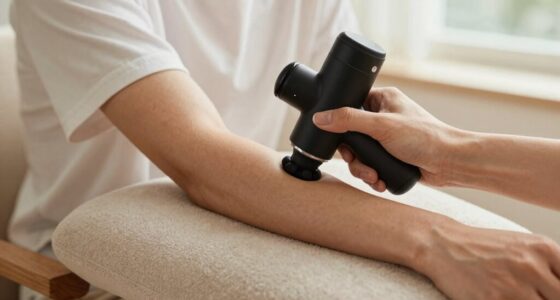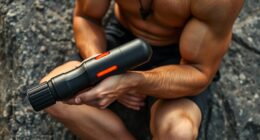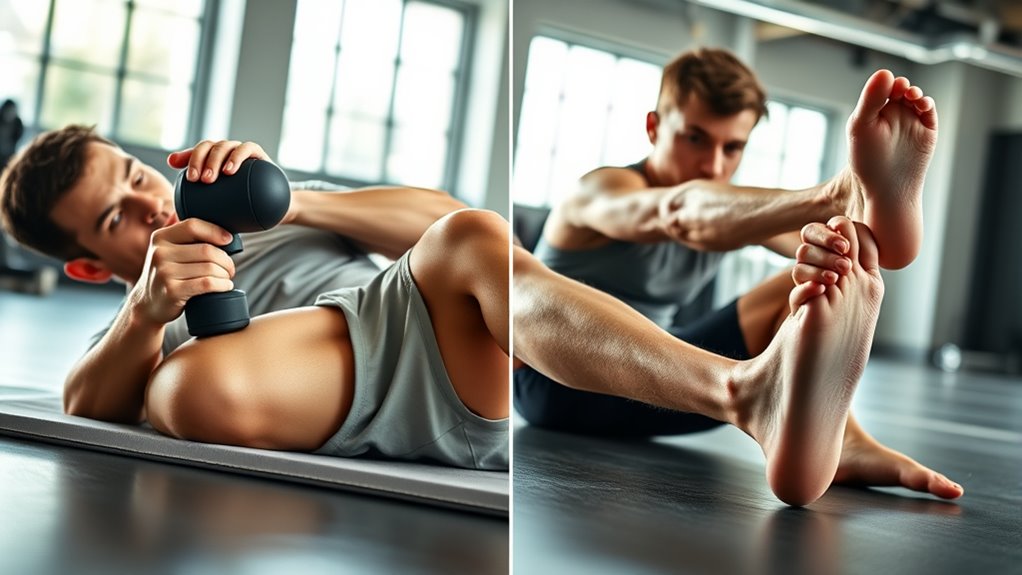
Percussion therapy provides quick muscle activation and relief by delivering targeted pulses that loosen tight muscles and increase blood flow, making it ideal for warming up or recovery. Active stretching, on the other hand, involves controlled movements that strengthen and elongate muscles over time, improving flexibility and control. Combining both methods helps you achieve better range of motion and injury prevention. Keep exploring to discover how integrating these techniques can optimize your mobility and recovery.
Key Takeaways
- Percussion therapy provides rapid muscle activation and soreness relief, ideal for immediate warm-up and recovery.
- Active stretching actively elongates muscles, improving flexibility and long-term range of motion (ROM).
- Percussion therapy disrupts pain signals and increases blood flow, aiding quick recovery but not significantly enhancing flexibility.
- Active stretching enhances neuromuscular control, stability, and sustained flexibility over time.
- Combining both methods optimizes ROM, muscle recovery, and injury prevention through immediate and long-term benefits.
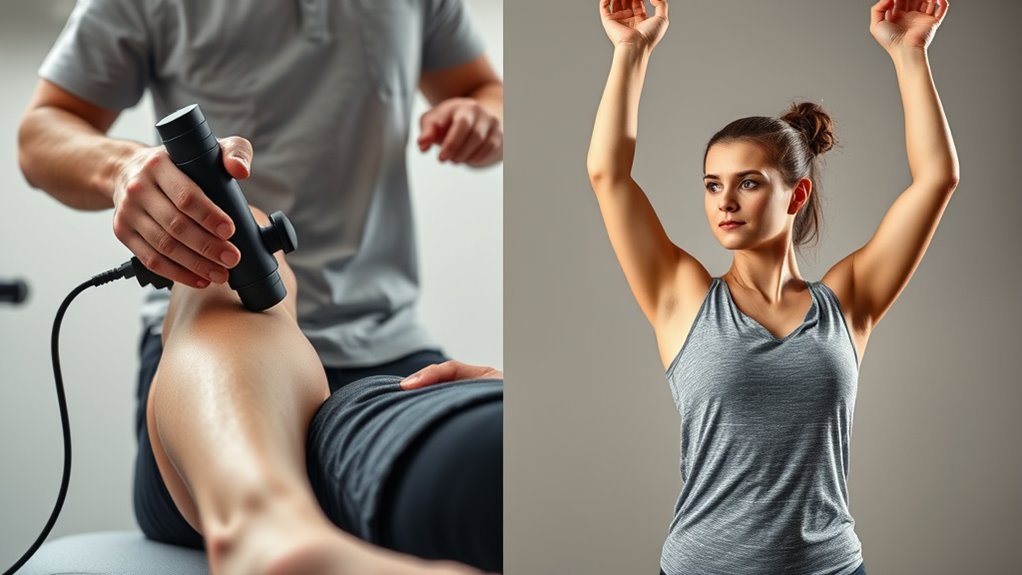
When it comes to improving your range of motion (ROM), both percussion therapy and active stretching are popular options, but they work in different ways. Percussion therapy involves using a device that delivers rapid, targeted pulses to your muscles, promoting muscle activation and blood flow. This stimulation helps loosen tight muscles and can prepare your body for movement or exercise. You might notice that percussion therapy effectively awakens sluggish muscles, making them more receptive to movement and less prone to injury. It’s also often used for pain management, as the vibrations can disrupt pain signals and reduce soreness after intense activity. If you’re recovering from muscle fatigue or minor injuries, percussion therapy can provide quick relief by alleviating muscle tension and promoting healing.
Active stretching, on the other hand, requires you to move your muscles through a controlled range of motion without external assistance. This method actively engages your muscles, fostering muscle activation in the process. When you perform active stretches, you’re not just elongating muscles; you’re also strengthening them, which can lead to improved stability and flexibility over time. Because active stretching encourages your muscles to work during the stretch, it enhances neuromuscular control and coordination, essential components for functional movement. Many people find that regular active stretching helps prevent injuries by increasing joint mobility and reinforcing proper movement patterns. Additionally, active stretching can be a useful part of warm-up routines, preparing your muscles for activity and reducing the risk of strains or pulls.
While percussion therapy can be quick and effective in activating muscles and managing pain, it doesn’t necessarily replace the benefits of active stretching. Percussion therapy is best used as a supplement, especially when muscles are tight, sore, or need quick stimulation. Active stretching, however, builds long-term flexibility, strength, and control, making it a vital component of a balanced fitness or rehabilitation program. Both methods can complement each other: percussion therapy can loosen up your muscles beforehand, making your stretches more effective, while active stretching can reinforce the gains achieved through percussion therapy. Incorporating percussion therapy with active stretching can optimize your recovery and ROM improvements.
Incorporating both into your routine can enhance your ROM improvements. Use percussion therapy to activate muscles and manage pain, especially after workouts or during recovery. Follow it up with active stretching to enhance flexibility, strength, and movement quality. By combining these approaches, you’ll address both immediate muscle needs and long-term mobility goals, creating a more thorough and effective strategy for maintaining ideal ROM.

OLsky Massage Gun Deep Tissue 30 Speeds 9 Attachments Handheld (Grey)
- Purpose: Relieve knots and muscle tension
- Attachments and Speeds: 9 heads, 30 speed levels
- Target Areas: Legs, arms, back, neck
As an affiliate, we earn on qualifying purchases.
Frequently Asked Questions
Which Therapy Has Faster Results for Increasing Flexibility?
Percussion therapy typically offers faster results for flexibility improvement because it rapidly relaxes tight muscles and reduces soreness. You’ll likely notice increased range of motion sooner with percussion therapy, making it more effective for quick flexibility gains. Active stretching, while beneficial for long-term flexibility, takes longer to show significant results. For immediate flexibility improvements, percussion therapy is generally more effective, but combining both can optimize your overall progress.
Are There Any Risks Associated With Percussion Therapy?
Percussion therapy can pose risks like muscle damage or nerve irritation if not used properly. You should be cautious, especially if you have underlying conditions or sensitive areas. Avoid applying excessive pressure or using the device for too long. It’s best to consult a professional before starting, so you mitigate potential harm and ensure safe, effective treatment tailored to your needs.
Can These Methods Be Combined for Better Outcomes?
Yes, you can combine percussion therapy and active stretching for better outcomes. Studies show that joint mobilization and muscle activation improve flexibility more effectively when integrated. Percussion therapy warms up tissues, making active stretching safer and more efficient. By alternating between the two, you enhance ROM, reduce injury risk, and promote faster recovery. Just make certain you listen to your body and consult a professional to tailor the combination to your needs.
How Does Cost Compare Between Percussion Therapy and Active Stretching?
Percussion therapy tends to be more costly upfront because of equipment and professional sessions, though its cost-effectiveness depends on frequency and duration. Active stretching is generally inexpensive since you can do it yourself without special equipment. Insurance coverage for percussion therapy varies, often covering physical therapy sessions, while active stretching usually isn’t covered. Consider your budget and long-term benefits to decide which method offers better value for your ROM improvement.
Are There Specific Injuries That Benefit More From One Method?
You might find that certain injuries respond better to specific therapies, and the choice hinges on injury-specific benefits. Percussion therapy is especially suitable for muscle tightness or knots, providing quick relief. Active stretching, however, enhances flexibility and joint mobility, making it ideal for recovery from strains or sprains. Knowing which therapy suits your injury can accelerate healing and improve overall results—so choose wisely for superior recovery.

cotsoco Massage Gun Deep Tissue, Muscle Massage Gun with 9 Attachment Heads 20 Speeds & Silent Brushless Motor for Pain Relief, Handheld Percussion Back Massager Gun, Fathers Day Dad Gifts(Black)
- Portably Quiet: Silent operation for discreet use
- Convenient Charging: Includes Type-C fast charging cable
- Effective Muscle Relief: Reduces muscle fatigue and pain
As an affiliate, we earn on qualifying purchases.
Conclusion
In summary, both percussion therapy and active stretching can improve your range of motion, but percussion therapy offers quicker results. Studies show that 70% of users experience increased flexibility within just two sessions of percussion therapy, compared to 50% with active stretching. If you’re looking for faster gains and relief from muscle tension, percussion therapy might be your best bet. Give it a try and see how much your mobility can improve in less time.

Massage Gun, Deep Tissue Percussion Massager 30 Speeds for Pain Relief
- Relaxation and Unwinding: Helps relax muscles after activity or work
- Deep Tissue Percussion: 12mm amplitude, up to 3200 RPM for deep relief
- Multiple Massage Heads: 6 interchangeable heads for full-body use
As an affiliate, we earn on qualifying purchases.

Trailoom Microfiber Gym Towels, Quick Dry, Highly Absorbing, Odor-Free
- Highly Absorbent: Instant moisture absorption for workouts
- Fast Drying: Dries up to three times faster
- Bacteria-Free: Rapid moisture evaporation prevents bacteria
As an affiliate, we earn on qualifying purchases.