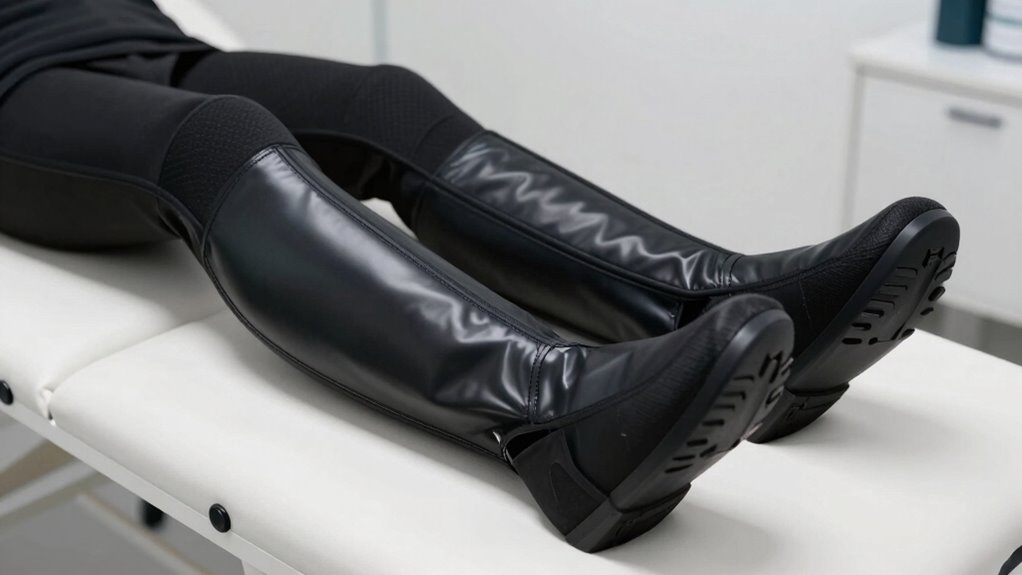

Compression boots use inflatable sleeves that rhythmically squeeze your legs, mimicking natural muscle contractions. This process boosts blood flow, helping deliver oxygen and nutrients while flushing out metabolic waste like lactic acid. They support muscle recovery by reducing soreness and stiffness, especially after exercise. While they’re a helpful tool, they work best when combined with good hydration, stretching, and rest. Keep going to discover how you can make the most of this recovery aid.

Get workout gear delivered free with Prime
- Fast, free delivery on millions of items
- Prime Video, Amazon Music and more included
- Member-only deals all year
Key Takeaways
- Compression boots inflate in a sequence to mimic natural muscle movements, promoting better blood flow.
- They help flush out metabolic waste like lactic acid, reducing soreness and stiffness.
- Used mainly post-exercise to support recovery, not as a standalone cure.
- Adjustable pressure settings ensure safe and effective use tailored to individual needs.
- They should be combined with hydration, stretching, and rest for optimal recovery.
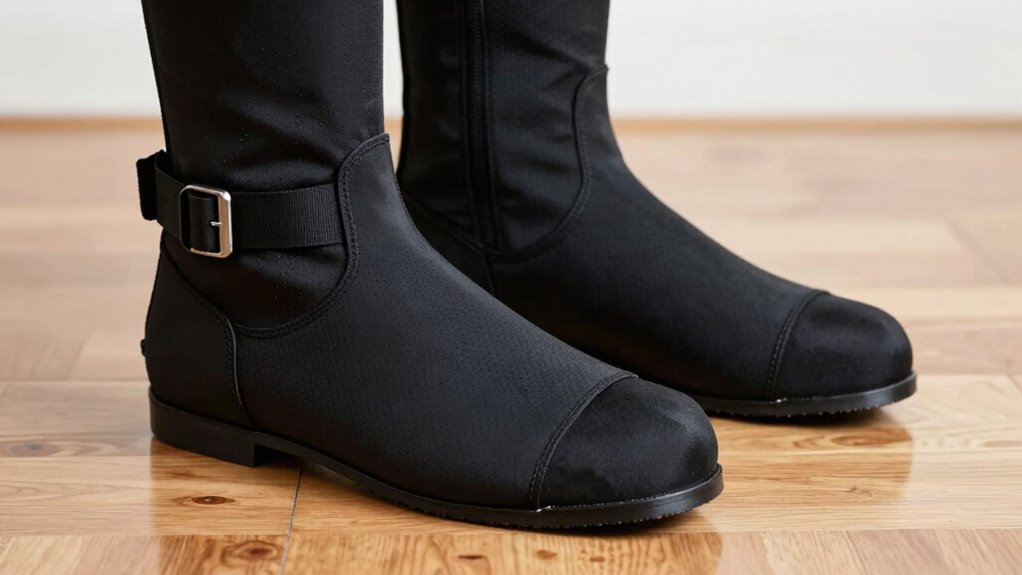
Have you ever wondered how athletes recover so quickly after intense workouts? One method gaining popularity is compression therapy, especially using compression boots. These devices are designed to apply targeted pressure to your legs, and many claim they can accelerate recovery. But what’s the real story behind compression boots? Do they genuinely work, or are they just another hype-driven fad? To understand, you need to know how they function and what benefits they offer.
When you wear compression boots, they inflate in a sequence that mimics natural muscle contractions, which helps promote a circulation boost throughout your legs. This increased blood flow delivers oxygen and nutrients more efficiently to your muscles, aiding in faster muscle recovery. At the same time, the pressure helps flush out metabolic waste products like lactic acid, which can build up during strenuous activity. This process minimizes soreness and stiffness, allowing you to get back to training sooner.
Compression boots mimic muscle contractions, boosting circulation, delivering nutrients, and flushing out lactic acid for faster recovery.
The science behind compression boots suggests that the improved circulation isn’t just about speed but also about quality. Better blood flow ensures your muscles receive essential nutrients and oxygen while removing toxins. This isn’t just about feeling good; it’s about supporting your body’s natural healing mechanisms. Many athletes and physical therapists incorporate compression therapy into their routines because they’ve seen tangible benefits in recovery times and reduced muscle fatigue. Additionally, understanding circulatory health can help you appreciate how these devices work to support overall recovery. Proper compression levels are vital to optimize vascular function, which plays a key role in effective circulation. Improving your understanding of vascular health can also guide you in choosing the appropriate compression settings for your needs.
However, it’s important to keep expectations realistic. Compression boots aren’t magic cures. They are a tool that, when used correctly, can complement your recovery routine. They work best when combined with proper hydration, stretching, and rest. If you’re considering investing in a pair, look for products with adjustable pressure settings and reputable reviews. Using them for 15 to 30 minutes post-exercise is usually enough to see some benefits without overdoing it.
While some might see compression boots as a quick fix, the reality is they support your body’s natural recovery process. They’re not a substitute for good training practices but can be a valuable addition. By promoting a circulation boost and aiding muscle recovery, these boots help you bounce back faster and stay consistent with your workouts. Just remember, no single device can replace a well-rounded approach to health and fitness, but when used thoughtfully, compression boots can be a practical part of your recovery toolkit. Recognizing the role of compression therapy and understanding how it works can help you make informed decisions about your recovery methods.
As an affiliate, we earn on qualifying purchases.
Frequently Asked Questions
Are Compression Boots Safe for Everyone to Use?
Compression boots are generally safe for most people, but you should get medical approval before use, especially if you have underlying health conditions. Follow the usage guidelines carefully to avoid potential issues like discomfort or circulation problems. If you’re pregnant, have heart or blood pressure issues, or open wounds, consult a healthcare professional first. Always listen to your body and stop if you experience any pain or unusual symptoms.
How Long Should I Wear Compression Boots per Session?
You should wear compression boots for about 20 to 30 minutes per session, which is enough to experience the full massage benefits and boost circulation improvement. Think of it as a mini workout for your legs—without the sweat! Staying within this time frame helps prevent overstimulation and guarantees you get the most relaxing, effective treatment. Always listen to your body and consult guidelines if you’re unsure.
Can Compression Boots Replace Traditional Recovery Methods?
Compression boots can’t fully replace traditional recovery methods, but they do enhance muscle relaxation and circulation improvement. You should use them as a supplement to your routine, not a substitute. While they help reduce muscle soreness and boost blood flow, combining them with stretching, hydration, and proper rest will give you the best recovery results. Think of compression boots as an effective addition, not a complete replacement.
Do Compression Boots Help With Athletic Performance?
A stitch in time saves nine, and compression boots can give you an early advantage. They enhance muscle recovery and boost circulation, which may help improve your athletic performance over time. By reducing soreness and increasing blood flow, they prepare your muscles better for future workouts. While not a magic bullet, using compression boots consistently can support your training goals and keep you performing at your best.
What Are the Potential Risks or Side Effects?
Using compression boots can cause some risks, like circulatory effects, if used improperly or for too long. You might experience skin irritation or redness from tight pressure or sensitive skin. It is crucial to follow the recommended guidelines and consult a healthcare professional if you have circulation problems or skin issues. Always monitor how your body reacts, and stop use if you notice discomfort or adverse effects.
As an affiliate, we earn on qualifying purchases.
Conclusion
Incorporating compression boots into your recovery routine can truly enhance circulation and reduce soreness. Did you know that athletes who use compression therapy report a 30% faster recovery time? That’s a significant boost for anyone looking to get back on their feet sooner. While they aren’t a magic fix, understanding how they work helps you make informed decisions. So, give them a try, and see if they help you perform better and recover faster.
inflatable compression sleeves for legs
As an affiliate, we earn on qualifying purchases.
As an affiliate, we earn on qualifying purchases.
adjustable pressure compression boots
As an affiliate, we earn on qualifying purchases.
As an affiliate, we earn on qualifying purchases.
Halloween Picks
halloween
As an affiliate, we earn on qualifying purchases.