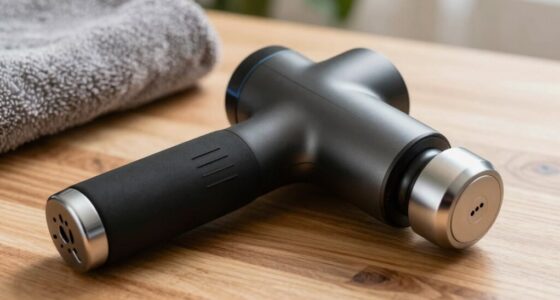

Myofascial release is a hands-on technique that targets your fascia—the connective tissue surrounding muscles and organs—to help loosen restrictions, relieve trigger points, and boost mobility. You’ll use gentle, sustained pressure rather than forceful strokes, focusing on slow, deliberate movements to soften and glide the fascia. Tools like foam rollers and massage balls can help target specific areas. Keep exploring to discover how these methods can truly benefit your body’s flexibility and comfort.

Get workout gear delivered free with Prime
- Fast, free delivery on millions of items
- Prime Video, Amazon Music and more included
- Member-only deals all year
Key Takeaways
- Myofascial release is a manual therapy targeting fascia to reduce tension and improve mobility.
- Techniques involve gentle, sustained pressure rather than vigorous rubbing.
- Palpation helps identify fascia restrictions and trigger points for targeted treatment.
- Tools like foam rollers, massage balls, or specialized instruments assist in applying precise pressure.
- Benefits include pain reduction, enhanced flexibility, better posture, and improved musculoskeletal function.

Myofascial release techniques are manual therapies designed to alleviate tension and improve mobility in the fascia, the connective tissue that surrounds muscles and organs. When your fascia becomes tight or restricted, it can cause pain, limit movement, and contribute to the development of trigger points—small, tender knots within muscle tissue that refer pain to other areas. By targeting these trigger points, myofascial release helps restore fascia mobility, allowing your muscles to move freely and reducing discomfort.
As you undergo these therapies, you’ll notice that the practitioner applies gentle, sustained pressure to specific areas of your body. Unlike deep tissue massage, which often involves vigorous rubbing, myofascial release emphasizes slow, deliberate movements designed to stretch and loosen the fascia. This approach is particularly effective because fascia is a dense, fibrous tissue that responds better to sustained, gentle pressure rather than quick, forceful strokes. When the fascia is too tight, it can entrap or irritate trigger points, perpetuating pain cycles and limiting your range of motion. Releasing these trigger points through targeted pressure helps break the cycle, easing pain and restoring fascia mobility.
The process often involves palpation, where the practitioner feels for areas of tension or adhesions in your fascia. Once identified, they use precise hand movements—sometimes employing tools like foam rollers, massage balls, or specialized instruments—to apply sustained pressure. The goal is to soften the fascia, increase its pliability, and allow it to glide smoothly over muscles and organs. As the fascia becomes more mobile, your overall movement improves, and you’ll likely experience a reduction in pain caused by trigger points and fascia restrictions. Additionally, fascia health plays a crucial role in maintaining overall musculoskeletal function.
You might also find that myofascial release supports better posture, enhances athletic performance, and helps prevent injuries. Because fascia connects everything, improving its mobility can positively influence your entire musculoskeletal system. Regular sessions can help you maintain ideal fascia health, especially if you’re recovering from injury or dealing with chronic pain. Remember, patience is key—fascia responds gradually, and consistent work on trigger points and fascia mobility produces the best results. Over time, you’ll notice increased flexibility, less pain, and a more relaxed, free movement, all thanks to the targeted release of tension within your fascia.
foam roller for myofascial release
As an affiliate, we earn on qualifying purchases.
As an affiliate, we earn on qualifying purchases.
Frequently Asked Questions
Can Myofascial Release Be Performed at Home Without Professional Help?
Yes, you can perform self myofascial techniques at home for DIY fascia release. Using tools like foam rollers, massage balls, or even your hands, you can target tight areas safely. Just remember to start gently, avoid pain, and focus on consistent, controlled pressure. Educate yourself with proper techniques to prevent injury, and consider consulting a professional if you’re unsure about specific methods or conditions.
How Long Does Each Myofascial Release Session Typically Last?
Think of each session as a gentle tide, lasting about 30 to 60 minutes. This duration lets you unwind tension without overdoing it. You might find that, like waves returning to shore, your body responds best with 1 to 3 sessions weekly. Keep in mind, the exact session length and frequency depend on your needs, so listen to your body and adjust as you go along.
Are There Any Risks or Side Effects Associated With Myofascial Release?
There are some potential side effects with myofascial release, like soreness or bruising, but these are usually mild and temporary. To manage risk, make certain you work with a trained therapist who evaluates your condition carefully. Always communicate if you feel discomfort during the session, so adjustments can be made. While rare, serious risks are minimal with proper technique and professional guidance, making it generally safe for most people.
How Do I Know if Myofascial Release Is Effective for Me?
Did you know that over 80% of people report symptom improvement after consistent myofascial release sessions? To know if it’s working for you, do a self-assessment by tracking your pain levels and mobility before and after treatments. If you notice reduced discomfort, increased range of motion, or better daily function, then the technique is likely effective. Keep monitoring your symptoms to see ongoing benefits.
Can Myofascial Release Help With Chronic Pain Conditions?
Yes, myofascial release can help with chronic pain conditions by addressing fascia restrictions and releasing trigger points. When you apply targeted pressure, it helps loosen tight fascia, reducing pain and improving mobility. Regular sessions can break down adhesions and ease persistent discomfort. By focusing on these areas, you may find relief from ongoing pain, making daily activities more comfortable and restoring your overall well-being.
As an affiliate, we earn on qualifying purchases.
Conclusion
Now that you know the ins and outs of myofascial release, you’re equipped to unseal your body’s potential like a key opening a hidden door. These techniques gently melt away tension, restoring freedom and ease to your movements. Remember, consistency is your compass on this healing journey. With patience and practice, you’ll find your body becoming more resilient—a well-oiled machine ready to move effortlessly through life’s twists and turns.
As an affiliate, we earn on qualifying purchases.
As an affiliate, we earn on qualifying purchases.
Halloween Picks
halloween
As an affiliate, we earn on qualifying purchases.