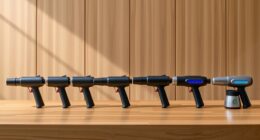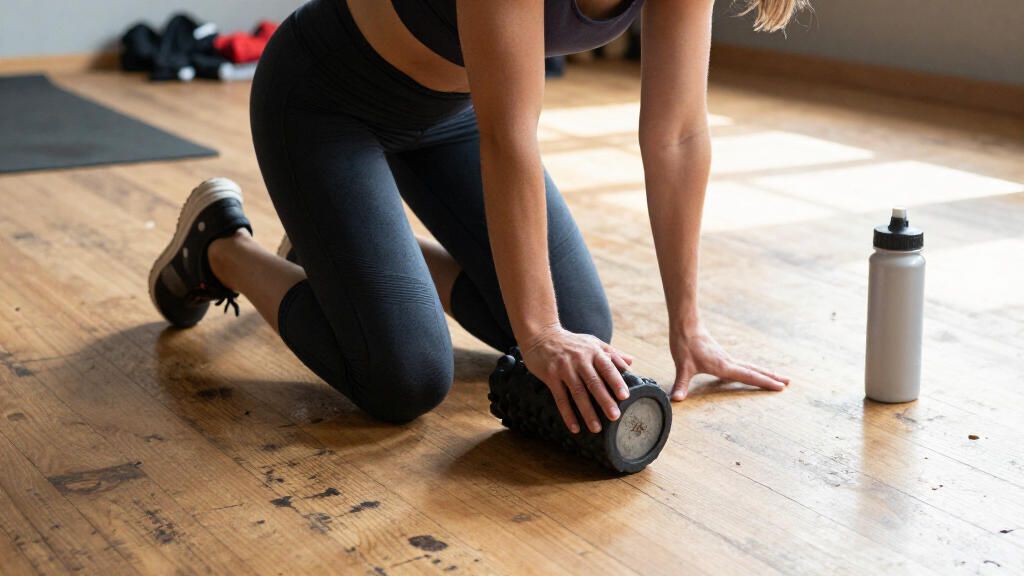

Vibrating foam rollers combine traditional myofascial release with oscillating motors that help muscles relax faster and make deep-tissue work more tolerable. After comparing nine of the leading models for 2026, the Therabody WaveRoller stands out as the best overall pick thanks to its Bluetooth-controlled vibration levels, premium build, and consistent motor power. The Kucttic High-Density Roller with 5 Speeds delivers nearly the same recovery experience at a budget-friendly price, while the Wave Duo is the pick for anyone who needs targeted relief along the spine, calves, or neck. The main tradeoff in this category is price versus battery life and motor quality — premium rollers run smoother and quieter, while affordable options often trade refinement for longer runtimes. Read on for the full breakdown of every model.

Get workout gear delivered free with Prime
- Fast, free delivery on millions of items
- Prime Video, Amazon Music and more included
- Member-only deals all year
Complete the kit


Key Takeaways
- Therabody‘s two entries split the category cleanly: the WaveRoller wins on motor quality and app-controlled intensity, while the Wave Duo wins on contoured targeting — but neither is the value play.
- The three 5-speed budget rollers (Kucttic, generic rechargeable, VibePro Flow) are nearly interchangeable on paper; what separated them was foam density, motor noise, and warranty support.
- The PURSONIC VFR399 and FITINDEX models suit casual users best because their softer foam and lower top speeds feel gentler — a drawback for athletes but a plus for beginners.
- Battery life ranged from roughly 2 to 4 hours per charge across the lineup, and the louder budget motors drained noticeably faster at higher speeds.
- The Vulken 17-inch model is the only full-length option here, making it the sole pick for back work and full-body rolling — everyone else optimized for portability over coverage.
| Therabody Wave Duo Contoured Vibrating Foam Roller |  | Best for Back and Spine Targeting | Vibration settings: 5 (app-adjustable) | Battery life: Up to 200 minutes | Material: Hypoallergenic high-density EVA foam | VIEW LATEST PRICE | See Our Full Breakdown |
| Kucttic High-Density Vibrating Foam Roller with 5 Speeds |  | Best Value All-Rounder | Material: High-density EVA foam with silicone wave grooves | Vibration settings: 5 | Vibration frequency: 1500–3200 RPM | VIEW LATEST PRICE | See Our Full Breakdown |
| PURSONIC VFR399 Vibrating Foam Roller |  | Best Basic Pick for Simplicity Seekers | Model: VFR399 | Intensity levels: 5 | Charging: USB rechargeable | VIEW LATEST PRICE | See Our Full Breakdown |
| VibePro Flow 5-Mode Vibrating Foam Roller |  | Best for Targeted Deep-Tissue Work | Vibration modes: 5 | Vibration speed: 2000–3700 RPM | Surface material: Multi-zone EVA foam | VIEW LATEST PRICE | See Our Full Breakdown |
| FITINDEX Vibrating Foam Roller for Exercise |  | Best Compact Travel Roller | Vibration speeds: 5 | Vibration range: 1500–3200 RPM | Texture patterns: 3 density patterns: high, medium, low | VIEW LATEST PRICE | See Our Full Breakdown |
| Rechargeable Vibrating Foam Roller with 5 Speeds |  | Best for Deep Trigger Point Work | Vibration speeds: 5 speeds plus 1 variable-speed mode | Vibration frequency: 800–3,600 RPM | Material: High-density EVA foam | VIEW LATEST PRICE | See Our Full Breakdown |
| Kucttic High-Density Vibrating Foam Roller with 5 Speeds |  | Best Compact Travel Pick | Material: EVA foam | Vibration settings: 5 | Vibration frequency: 1,500–3,200 RPM | VIEW LATEST PRICE | See Our Full Breakdown |
| Vulken 17-Inch Vibrating Foam Roller |  | Best for Full-Body Coverage | Length: 17 inches | Vibration modes: 4 (Low, Medium, High, Auto-Pulsating) | Motor speed: Up to 3,800 RPM | VIEW LATEST PRICE | See Our Full Breakdown |
| Therabody WaveRoller High-Density Foam Roller with Bluetooth Vibration |  | Best Premium Smart Pick | Dimensions: 12 x 5 inches | Material: Hypoallergenic high-density EVA foam | Vibration settings: 5 | VIEW LATEST PRICE | See Our Full Breakdown |
| vibrating foam roller | Material | Dimensions |
|---|---|---|
| Therabody Wave Duo Contoured V | Hypoallergenic high-density EVA foam | — |
| Kucttic High-Density Vibrating | High-density EVA foam with silicone wave grooves | 13 × 4.5 inches |
| PURSONIC VFR399 Vibrating Foam | — | — |
| VibePro Flow 5-Mode Vibrating | — | 13 × 5.25 inches |
| FITINDEX Vibrating Foam Roller | — | 11.4 × 4.7 inches |
| Rechargeable Vibrating Foam Ro | High-density EVA foam | — |
| Kucttic High-Density Vibrating | EVA foam | 13 x 4.5 inches |
| Vulken 17-Inch Vibrating Foam | EPP foam | — |
| Therabody WaveRoller High-Dens | Hypoallergenic high-density EVA foam | 12 x 5 inches |
More Details on Our Top Picks
Therabody Wave Duo Contoured Vibrating Foam Roller
Most vibrating rollers are straight cylinders, which makes them awkward along the spine. The Wave Duo’s contoured, saddle-shaped design solves that by cradling the muscles on either side of the backbone without pressing on the vertebrae themselves — something the Kucttic and FITINDEX cylinders simply cannot do. This model stands out for its 200-minute battery life, which doubles what most budget options deliver, and its Bluetooth pairing with the Therabody app for guided routines. The silicone wave grooves also dampen motor noise better than smooth-foam rivals. The tradeoff: it’s a specialist. If you want a single roller for quads, glutes, and calves, a standard cylinder like the VibePro Flow covers more ground for less complexity.
Pros:- Contoured shape safely targets muscles flanking the spine without vertebral pressure
- Up to 200 minutes of battery life — roughly double most competitors
- App connectivity adds guided recovery routines and customizable settings
- Quiet operation thanks to sound-insulating silicone wave grooves
Cons:- Contoured design sacrifices versatility on large muscle groups
- Premium pricing territory compared to simpler cylinders
Best for: Desk workers and lifters with chronic back, neck, and spinal-area tension who want precision rather than all-over coverage
Not ideal for: Anyone seeking one roller for full-body work — the contoured shape limits use on large muscle groups like quads and hamstrings
- Vibration settings:5 (app-adjustable)
- Battery life:Up to 200 minutes
- Material:Hypoallergenic high-density EVA foam
- Connectivity:Bluetooth; Therabody app
- Target areas:Back, neck, and spine
- Included accessories:Protective carrying pouch, USB-A to USB-C cable
Our verdict“Buy this if spinal and neck work is your priority; skip it if you need a do-everything full-body roller.”
Kucttic High-Density Vibrating Foam Roller with 5 Speeds
This Kucttic model makes the most sense for buyers who want the full vibrating-roller experience without paying brand-name premiums. Compared with the VibePro Flow, it matches the five-speed format but adds three distinct density zones, letting you pair a gentle surface with low vibration for sore days and a firm zone with high intensity for deep tissue work. The 1500–3200 RPM range covers the same spectrum as the FITINDEX at a similar footprint. Its main weaknesses are logistical rather than functional: a five-hour charge time is long, and the unit drops into standby after 15 minutes of continuous use — fine for interval-style rolling, annoying for long recovery sessions. Still, few alternatives at this size combine zoning, app-free simplicity, and a carrying pouch this well.
Pros:- Three density patterns let one roller serve tender and stubborn muscle areas alike
- Five vibration speeds spanning 1500–3200 RPM for wide intensity range
- Compact 13-inch, 2.2-pound build with a carrying pouch for travel
- Over two hours of runtime even at the highest speed
Cons:- Five-hour charging time is among the slowest in this lineup
- Automatic standby after 15 minutes of continuous use
Best for: Gym-goers and home users who want multi-zone versatility and straightforward controls at a mid-range price
Not ideal for: People who roll for long uninterrupted sessions — the 15-minute auto-standby interrupts extended recovery routines
- Material:High-density EVA foam with silicone wave grooves
- Vibration settings:5
- Vibration frequency:1500–3200 RPM
- Density patterns:High, medium, and low
- Dimensions:13 × 4.5 inches
- Weight:2.2 lbs
- Battery:Rechargeable 9V lithium-ion; up to 180 minutes total
- Charging time:5 hours
Our verdict“The best balance of features and price here, provided you can live with slow recharges and session timeouts.”
PURSONIC VFR399 Vibrating Foam Roller
The PURSONIC VFR399 is the no-frills entry point of this batch. Where the Kucttic layers on density zones and the Therabody Wave Duo adds app connectivity, this roller keeps things deliberately simple: five intensity levels, a USB rechargeable motor, and durable ABS-and-foam construction. That simplicity is genuinely appealing for beginners who don’t want to study a manual, but it comes with a transparency problem the others don’t have — no published battery runtime or charging time, which makes trip planning and gym-bag expectations guesswork. The ABS plastic core does make it one of the more robust options for users who lean hard into their rolls, so heavier athletes may prefer it over softer all-foam builds. For everyone else, it’s serviceable but outclassed on detail.
Pros:- Straightforward five-level operation with no app or pairing required
- USB rechargeable for cordless use anywhere
- ABS plastic core adds durability under heavy body weight
- Suited to both pre-workout warm-ups and post-exercise recovery
Cons:- No published battery life or charging-time data
- Lacks the density zoning and surface texture of similarly priced rivals
Best for: First-time buyers who want an uncomplicated vibrating roller for warm-ups and basic post-workout recovery
Not ideal for: Anyone who needs reliable runtime figures for travel or long training days — battery specs aren’t disclosed
- Model:VFR399
- Intensity levels:5
- Charging:USB rechargeable
- Materials:ABS plastic and high-density foam
- Use:Pre-workout warm-ups and post-exercise recovery
Our verdict“A fine starter roller if you value simplicity over specifications — just go in knowing the battery details are a mystery.”
VibePro Flow 5-Mode Vibrating Foam Roller
If raw intensity is what you’re after, the VibePro Flow tops out at 3700 RPM — faster than both the Kucttic and FITINDEX, which max out at 3200. That extra headroom translates into noticeably more aggressive vibration for breaking up stubborn knots in calves and IT bands. The multi-zone EVA surface mirrors the Kucttic’s density-zoning concept, and the built-in 15-minute session timer is a thoughtful touch that prevents over-rolling (and conserves battery). Compared with the PURSONIC, this model is better built for serious athletes, though it shares a familiar frustration: a 3.5-hour charge with no stated runtime, so you’re guessing how many sessions a full charge holds. The 13 × 5.25-inch footprint splits the difference between compact travel rollers and full-size models.
Pros:- 2000–3700 RPM range offers the highest top-end intensity in this batch
- Multi-zone surface lets you match texture to each muscle group
- Built-in 15-minute timer prevents overuse and manages sessions
- Portable 13-inch cordless design for gym bags and travel
Cons:- 3.5-hour charging time
- No battery runtime specified per charge
Best for: Runners and athletes chasing stubborn knots who want the highest vibration ceiling in this lineup
Not ideal for: Casual users sensitive to strong vibration — the 3700 RPM top speed is overkill for light recovery
- Vibration modes:5
- Vibration speed:2000–3700 RPM
- Surface material:Multi-zone EVA foam
- Session timer:15 minutes
- Dimensions:13 × 5.25 inches
- Charging time:3.5 hours via USB
- Power:Rechargeable
Our verdict“The pick for deep-tissue intensity seekers, as long as an unspecified runtime doesn’t bother you.”
FITINDEX Vibrating Foam Roller for Exercise
At 11.4 inches long, the FITINDEX is the shortest roller in this batch, and that size advantage is its whole argument. It slides into carry-ons and gym totes more easily than the 13-inch Kucttic or VibePro Flow, while keeping the same 1500–3200 RPM speed range and three textured density patterns. The USB-C charging port is a modern convenience the Kucttic and PURSONIC don’t offer — one cable for your phone and your roller. The tradeoff for portability is twofold: at 3 pounds it’s actually the heaviest here per inch, and the shorter length makes both-legs-at-once rolling impractical, slowing down full-body routines. A five-hour charge time also means overnight top-ups. One quiet bonus: it’s FSA/HSA eligible, which could matter if you’re buying through a health spending account.
Pros:- Shortest, most packable design in this lineup at 11.4 inches
- USB-C charging matches modern cables and adapters
- Three density textures plus five speeds for varied pressure work
- FSA/HSA eligible for qualifying health accounts
Cons:- Five-hour full charge time
- Heaviest roller here relative to its size at 3 pounds
Best for: Frequent travelers and commuters with limited bag space who still want multi-texture vibration therapy
Not ideal for: Full-body rollers who like working both legs simultaneously — the short length forces one side at a time
- Vibration speeds:5
- Vibration range:1500–3200 RPM
- Texture patterns:3 density patterns: high, medium, low
- Charging port:USB-C
- Charging time:5 hours
- Usage time:Over 2 hours at the highest speed
- Dimensions:11.4 × 4.7 inches
- Weight:3 lbs
Our verdict“The clear choice for travel-first buyers, though bigger athletes doing broad rolling patterns should size up.”
Rechargeable Vibrating Foam Roller with 5 Speeds
Most vibrating rollers in this category settle into a narrow intensity band, but this one spans 800 to 3,600 RPM, which gives it the widest effective range of the budget picks here. That low end is the story: compared with the Kucttic, whose floor sits at 1,500 RPM, this model lets sensitive users ease into vibration without wincing, while the top end delivers genuinely deep trigger point pressure for stubborn knots in calves and IT bands.
The tradeoff is discipline — the maker caps recommended sessions at 15 minutes, and the 4,000 mAh battery takes a while to refill. The plain EVA surface also lacks the texture of the Therabody WaveRoller, so it relies purely on vibration for intensity.
Pros:- Very wide 800–3,600 RPM range suits both sensitive and deep-tissue users
- 4,000 mAh battery supports up to 8 hours of use per charge
- High-density EVA holds its shape under repeated bodyweight pressure
- Variable-speed mode allows finer tuning than fixed settings
Cons:- Strongest setting may be too intense for beginners or sensitive areas
- 15-minute recommended session limit breaks up longer recovery routines
Best for: Runners and lifters who want a wide intensity range for working deep knots without paying premium prices
Not ideal for: People who like long, casual rolling sessions in front of the TV — the 15-minute use cap interrupts longer routines
- Vibration speeds:5 speeds plus 1 variable-speed mode
- Vibration frequency:800–3,600 RPM
- Material:High-density EVA foam
- Battery capacity:4,000 mAh
- Battery life:Approximately 4–8 hours per charge
- Recommended use time:Within 15 minutes
Our verdict“This is the pick for anyone who needs one roller to handle both gentle warm-ups and aggressive post-workout knot work.”
Kucttic High-Density Vibrating Foam Roller with 5 Speeds
At 13 inches and 2.2 pounds, the Kucttic is the most packable roller in this lineup, and it’s the only one that ships with a carrying pouch designed for life in a gym bag. The Vulken 17-Inch is arguably better for broad back work, but you’ll notice the difference the moment you try to fit it in carry-on luggage.
Its smartest design choice is the three-pattern wave texture, which approximates the surface variety of the pricier Therabody WaveRoller at a fraction of the cost. The compromises are real, though: a five-hour charge is slow even by category standards, and the 15-minute auto-standby means the roller shuts itself off mid-session if you’re not paying attention.
Pros:- Three distinct foam texture patterns target different muscle groups
- Light 2.2 lb build with included protective pouch
- Five settings from 1,500 to 3,200 RPM cover warm-up through deep recovery
- Compact 13-inch length is easy to store and transport
Cons:- Roughly five hours to fully charge
- Auto-standby interrupts sessions after 15 minutes of continuous use
Best for: Frequent travelers and gym commuters who want a textured vibrating roller that fits in a bag
Not ideal for: Anyone wanting long uninterrupted rolling sessions or a long back-and-glutes surface
- Material:EVA foam
- Vibration settings:5
- Vibration frequency:1,500–3,200 RPM
- Dimensions:13 x 4.5 inches
- Weight:2.2 lbs
- Charging time:About 5 hours
- Battery life:Over 2 hours on highest setting
- Auto standby:After 15 minutes of continuous use
Our verdict“If your roller needs to travel with you, this textured compact model earns its spot; if it lives in one room, go longer.”
Vulken 17-Inch Vibrating Foam Roller
Length is the Vulken’s whole argument, and it’s a good one. A 17-inch surface spans both sides of the spine or an entire quad in a single pass, something the 12–13 inch Kucttic and WaveRoller simply can’t do. For back-focused rolling in particular, that extra width changes how you use the tool — less repositioning, more sustained pressure.
The auto-pulsating mode is another differentiator: rather than a steady buzz, it cycles intensity, which feels closer to hands-on massage than any fixed setting on the five-speed Rechargeable model. The weakness is transparency. Battery runtime and charge time are unspecified, which is a genuine gamble for anyone planning back-to-back gym sessions, and the smooth EPP surface offers less grip than textured rivals.
Pros:- 17-inch length covers the full back or both quads in one pass
- Auto-pulsating mode mimics rhythmic hands-on massage
- Motor reaches up to 3,800 RPM for strong top-end intensity
- Light 2.1 lb weight with included carrying bag
Cons:- Battery runtime and charging time are not specified by the manufacturer
- Smooth EPP surface provides less traction than textured alternatives
Best for: People whose recovery routine centers on the back, lats, and larger muscle groups
Not ideal for: Travelers and anyone who needs to plan around a known battery life — runtime specs aren’t published
- Length:17 inches
- Vibration modes:4 (Low, Medium, High, Auto-Pulsating)
- Motor speed:Up to 3,800 RPM
- Material:EPP foam
- Weight:2.1 lbs
- Power:Rechargeable battery
Our verdict“Choose this for the unmatched surface length and pulsing mode, but accept some uncertainty on battery logistics.”
Therabody WaveRoller High-Density Foam Roller with Bluetooth Vibration
The WaveRoller sits at the top of this roundup for one reason: Bluetooth app control. Adjusting vibration mid-roll — without shifting your weight to reach a button — is the kind of convenience you don’t appreciate until you’ve fumbled for controls while lying on the Kucttic. The Therabody app also unlocks guided routines borrowed from the brand’s recovery-device ecosystem.
Build quality backs the premium positioning: hypoallergenic EVA, silicone wave grooves for traction, and a 12V lithium-ion battery delivering up to 180 minutes. But the app dependency cuts both ways — if your phone is dead or you resist app ecosystems, adjusting settings becomes a chore the Vulken’s simple onboard controls never impose. At 12 inches it’s also on the short side for back work.
Pros:- Bluetooth app control allows mid-session intensity changes without repositioning
- Silicone wave-textured surface provides traction and targeted pressure
- 12V lithium-ion battery delivers up to 180 minutes of runtime
- Hypoallergenic foam suits sensitive skin
Cons:- Adjusting vibration settings relies on the Therabody app rather than full onboard control
- 12-inch length limits coverage on larger muscle groups like the back
Best for: Tech-inclined athletes already in the Therabody ecosystem who want app-guided recovery routines
Not ideal for: Anyone who dislikes app-dependent devices or wants a long roller for full-back coverage
- Dimensions:12 x 5 inches
- Material:Hypoallergenic high-density EVA foam
- Vibration settings:5
- Connectivity:Bluetooth
- Battery:12V internal lithium-ion
- Battery life:Up to 180 minutes
- Included:Protective carrying pouch, power adapter
Our verdict“The most refined roller here — worth it for app-driven recovery fans, overkill for anyone who just wants an on button.”

How We Picked
I evaluated each roller against the factors that actually shape the ownership experience: vibration range and motor quality (does the top speed genuinely loosen tight tissue, and does the motor stay smooth or rattle at low settings), foam density and texture (too soft and it bottoms out under body weight, too firm and beginners quit using it), battery life and charging convenience, and build durability — including how well the shell resists cracking and whether the charging port feels flimsy. Noise mattered too, since most people roll while watching TV or before bed.
The ranking logic follows a simple principle: recovery performance per dollar, weighted toward motor quality because that is the component you cannot upgrade or work around. Premium picks had to justify their price with genuinely better engineering, not just brand names, which is why Therabody’s Bluetooth features were treated as a bonus rather than the deciding factor. Budget models earned their positions by matching mid-tier performance, and I penalized options whose vague specifications or absent warranty support created real buyer risk.
| vibrating foam roller | Material |
|---|---|
| Therabody Wave Duo Contoured V | Hypoallergenic high-density EVA foam |
| Kucttic High-Density Vibrating | High-density EVA foam with silicone wave grooves |
| PURSONIC VFR399 Vibrating Foam | — |
| VibePro Flow 5-Mode Vibrating | — |
| FITINDEX Vibrating Foam Roller | — |
| Rechargeable Vibrating Foam Ro | High-density EVA foam |
| Kucttic High-Density Vibrating | EVA foam |
| Vulken 17-Inch Vibrating Foam | EPP foam |
| Therabody WaveRoller High-Dens | Hypoallergenic high-density EVA foam |
Factors to Consider When Choosing Vibrating Foam Rollers
Before choosing a specific model, it helps to understand what separates a roller you will use daily from one that ends up in a closet. These are the factors that most often make or break the purchase.Vibration Intensity and Speed Range
More speed settings is not automatically better — what matters is the range between the lowest and highest settings. A roller with five speeds that all feel similar is less useful than one with three genuinely distinct levels. Beginners should look for a gentle low setting around 1,500–2,000 vibrations per minute, because starting too aggressive is the number one reason people abandon rolling altogether. Athletes and chronic tightness sufferers need a top setting above 3,300 rpm to get real deep-tissue effect. A common mistake is buying based on the highest advertised number without checking whether the motor stays smooth at low speeds; cheap motors rattle and buzz on gentle settings, which defeats the purpose of a relaxing recovery session.
Foam Density and Surface Texture
The vibration motor gets the attention, but the foam itself determines half the experience. High-density closed-cell foam holds its shape under full body weight and transmits vibration more effectively, but it can be brutal on the IT band and quads for newcomers. Softer EPE foam feels comfortable initially but compresses within months, especially if you weigh over 180 pounds. Textured surfaces — grooves or ridges — mimic the knobs of a massage stick and add targeted pressure, while smooth surfaces distribute force more evenly and suit longer rolling sessions. A useful rule of thumb: match density to your pain tolerance, not your fitness level, because even elite athletes vary widely in what they can tolerate on tender muscle tissue.
Size, Shape, and Intended Muscle Groups
Length and shape matter more than most buyers expect. A full-length 17- to 18-inch roller is the only practical choice for rolling your entire back or both legs simultaneously, and it stays stable during balance-dependent exercises. Shorter 12-inch models are easier to store and travel with, but they require more repositioning for large muscle groups. Contoured rollers with a wave or twin-channel shape are designed to cradle the spine, neck, and Achilles without pressing on bone — if you mainly want relief for your lower back or calves, that shape beats a straight cylinder. Choosing the wrong size is the most common return reason in this category, so decide up front whether you prioritize coverage or portability.
Battery Life and Charging Design
Most vibrating rollers use rechargeable lithium batteries, but runtime varies widely — from about two hours to four per charge, and running at top speed can cut that figure nearly in half. If you roll for ten minutes a few times a week, almost any battery will do; if you share the roller with a household or team, longer runtime becomes a real differentiator. Check the charging port type too: USB-C is far more convenient than legacy micro-USB or proprietary barrel chargers, which are easy to lose and hard to replace. Also note that vibration motors drain batteries faster in cold garages or when stored fully depleted, so occasional top-up charging extends practical lifespan.
Smart Features: Useful or Gimmick?
Bluetooth connectivity and companion apps sound futuristic, but ask yourself whether you will actually open an app to adjust a foam roller. App control makes sense for people who follow structured recovery programs and want guided routines or precise intensity presets. For everyone else, physical buttons are faster, more reliable, and do not require pairing after every charge. The honest tradeoff: smart features add cost that could otherwise go toward a better motor or denser foam. A mid-tier roller with excellent mechanicals will outperform a smart-enabled roller with a weak motor every single session.
Build Quality and Warranty Support
Vibrating rollers have more failure points than standard foam rollers: motors, batteries, buttons, and charging ports can all break. Shell material quality is the first thing to check — thin shells crack along stress lines where body weight repeatedly compresses them. Established brands typically back their products with multi-year warranties and responsive support, while some budget imports offer little recourse if the motor dies in month three. If you are drawn to an inexpensive model, look for one sold under a brand with a documented warranty policy rather than a generic listing with no named manufacturer. Paying slightly more for accountability is cheap insurance on a product with a motor inside it.
Frequently Asked Questions
Is a vibrating foam roller actually better than a regular foam roller?
For most people, yes — but the advantage is nuanced rather than dramatic. The vibration adds a mechanical effect that helps muscle tissue relax faster, which means you can achieve the same release with less discomfort at a given pressure level. This matters most for people with low pain tolerance or very tight tissue, because they are the ones who usually skip rolling when it hurts too much. However, if you already tolerate a standard high-density roller well and roll consistently, the vibration is a comfort upgrade rather than a performance multiplier. The honest framing: vibration improves adherence and comfort, and consistency is what actually drives recovery results.
How long should a session on a vibrating foam roller last?
Research on foam rolling generally supports short durations — around 30 to 60 seconds per muscle group, rarely exceeding two minutes, with total sessions of 10 to 15 minutes. Longer sessions do not produce better results and can bruise sensitive tissue or irritate nerves, especially over bony areas. Using a moderate vibration setting while slowly rolling along the muscle belly gives the tissue time to respond to both the pressure and the oscillation. If you notice lingering soreness the next day that feels different from workout soreness, your sessions are too long or the pressure is too intense. Frequency beats duration: five short sessions a week outperform one marathon session.
Should I choose a contoured roller like the Wave Duo or a standard cylinder?
It depends entirely on where your tightness lives. Contoured twin-channel designs excel at the spine, neck, Achilles, and hamstrings because the channels let tissue sink in while keeping pressure off bones and tendons. The tradeoff is that they are poor general-purpose tools — rolling large areas like quads, glutes, and lats on a short contoured roller is awkward and slow. A standard cylinder, especially a full-length one, handles whole-body routines far better but puts direct pressure on the spine if you roll your lower back incorrectly. If you can only buy one, a cylinder is the more versatile choice; the contoured model works best as a second, targeted tool.
Are cheap vibrating foam rollers safe, or do I need a premium brand?
Safety is rarely the issue — nearly all rollers in this category use low-voltage rechargeable batteries and simple motor assemblies. The real difference between budget and premium models is consistency and longevity: cheaper motors can rattle, lose power as the battery drains, or fail within the first year. A budget roller from a brand with an actual warranty policy is a reasonable bet, and several in this roundup hold their own against pricier options. Where premium models earn their price is motor smoothness, quieter operation, and better app-guided programming. If you roll occasionally, save the money; if it is part of your daily routine, the premium investment pays off in durability alone.
Can a vibrating foam roller help with back pain?
It can help with muscular back pain, which is the most common type, by releasing tension in the thoracic and lumbar-adjacent muscles. The vibration makes it easier to relax over tight areas without needing intense pressure, which suits the sensitive tissue around the spine. Two cautions apply: never roll directly on the lumbar spine or neck with a straight cylinder, and avoid rolling entirely if your pain radiates down a leg, followed numbness, or resulted from an acute injury — those symptoms need a medical evaluation first. For ordinary stiffness from sitting or training, a contoured roller or careful thoracic work on a cylinder can provide real relief within a couple of weeks of consistent use.
Conclusion
The right pick depends less on specs and more on how you plan to use the roller. For the best overall experience, the Therabody WaveRoller justifies its premium price with the smoothest motor, app-controlled intensity, and durable construction — this is the pick for anyone who treats recovery as seriously as training. For best value, the Kucttic High-Density Roller with 5 Speeds delivers the core vibrating-roller experience at a fraction of the cost, and its twin in the lineup means you can pick whichever is easier to find in stock.
Beginners should lean toward the PURSONIC VFR399 or FITINDEX models, whose gentler foam and moderate speeds ease you into rolling without the bruising intensity that scares people away. For targeted relief — spine, neck, calves — the Therabody Wave Duo is in a class of its own with its contoured channels. And for full-body coverage, the Vulken 17-inch model is the only true full-length option in this group. Whatever you choose, the deciding factor should be consistency: the best vibrating foam roller is the one you will actually use several times a week.