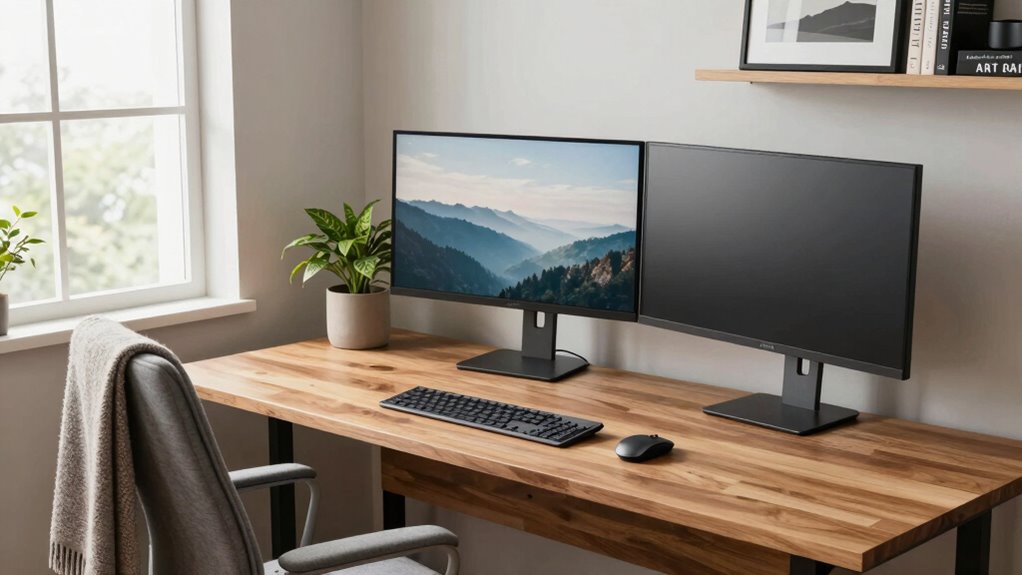

To build a desk-worker-friendly recovery setup, focus on ergonomic accessories like adjustable chairs, sit-stand desks, and supportive keyboards to ease muscle tension. Create a positive workspace with calming colors, plants, and personal touches for emotional well-being. Make certain proper item placement—monitor at eye level, feet flat, wrists neutral—while taking regular breaks to stretch. Optimizing your workspace design based on ergonomic principles can boost comfort and speed recovery—keep exploring for more helpful tips.

Get workout gear delivered free with Prime
- Fast, free delivery on millions of items
- Prime Video, Amazon Music and more included
- Member-only deals all year
Key Takeaways
- Incorporate ergonomic accessories like adjustable chairs, sit-stand desks, and ergonomic peripherals to support proper posture.
- Design the workspace with calming colors, natural elements, and personal touches to boost mood and comfort.
- Ensure monitor is eye level, feet are supported, and wrists remain neutral to reduce strain and promote recovery.
- Schedule regular breaks for stretching and posture resets to improve circulation and prevent muscle tension.
- Optimize the layout for ergonomic principles and future tech integrations to enhance long-term comfort and health.
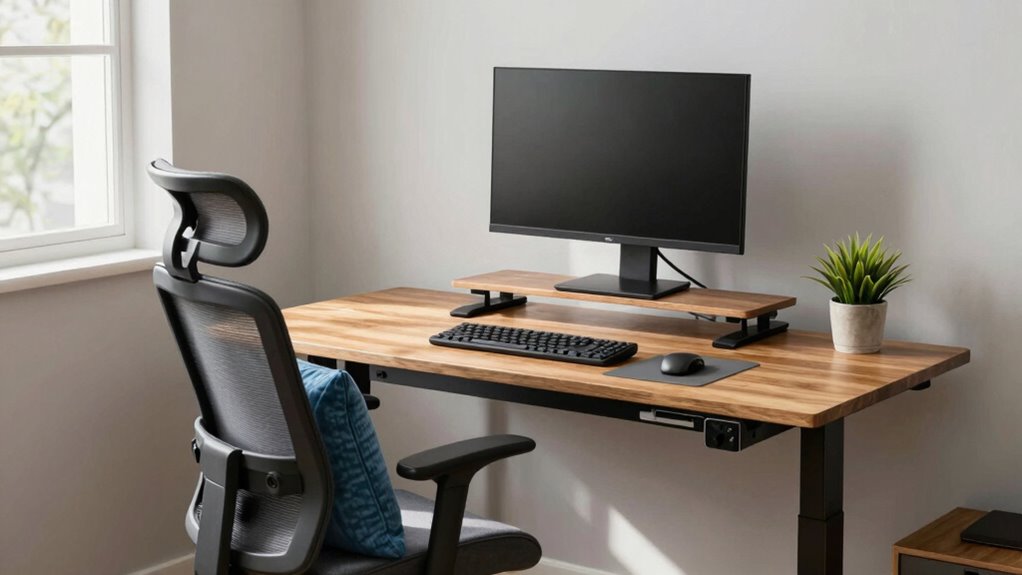
Creating a recovery setup that’s friendly to desk workers can considerably speed up your healing process and improve your overall comfort. When you spend long hours at your desk, it’s essential to design your environment in a way that promotes good posture, reduces strain, and keeps your spirits high. One of the first steps is investing in ergonomic accessories. These tools aren’t just luxury add-ons—they’re indispensable for preventing discomfort and supporting your body during recovery. Think of an adjustable chair that offers proper lumbar support, a sit-stand desk converter that allows you to switch positions throughout the day, and an ergonomic mouse and keyboard designed to minimize wrist strain. These accessories help maintain correct posture, reduce muscle tension, and improve circulation, making your recovery period more comfortable and less taxing.
Invest in ergonomic accessories like adjustable chairs and sit-stand desks to support recovery and enhance comfort.
Beyond the physical setup, the atmosphere around you plays a pivotal role in your healing and motivation. Incorporate mood-boosting decor into your workspace to create a positive, energizing environment. Bright colors like soft yellows or calming blues can lift your mood, while natural elements like plants bring a sense of tranquility and improve air quality. Adding personal touches such as inspiring artwork or photos of loved ones can foster emotional well-being. When your space feels inviting and uplifting, you’re more likely to stay engaged and motivated, which can positively influence your recovery journey. Ensuring your workspace promotes healthy habits can further support your physical and mental well-being.
Placement of ergonomic accessories is just as important as the accessories themselves. Make sure your monitor is at eye level to avoid neck strain, your feet are flat on the floor or on a footrest, and your wrists are kept in a neutral position while typing. Use a document holder if you’re referencing papers frequently, and take regular breaks to stretch and reset your posture. These small adjustments make a significant difference in reducing discomfort and preventing setbacks in your recovery. Additionally, proper workspace ergonomics can help maintain your physical health and enhance your overall recovery experience. Paying attention to ergonomic workspace design can further optimize your environment for comfort and health, especially when combined with knowledge about neural interfaces and future tech innovations.
Products Worth Considering

BowFlex Results Series SelectTech Adjustable Dumbbells (Pair)

Bowflex SelectTech 840 Adjustable Kettlebell

Withings BPM Connect Wi-Fi and Bluetooth Blood Pressure Monitor
As an affiliate, we earn on qualifying purchases.
Frequently Asked Questions
What Ergonomic Accessories Are Essential for Long-Term Comfort?
You need ergonomic accessories like a keyboard with proper ergonomics to prevent strain and promote comfort during long hours. Wrist support is essential to reduce pressure on your wrists and avoid repetitive strain injuries. Consider an adjustable keyboard tray and a cushioned wrist rest, which help maintain proper alignment. These accessories support your posture, minimize fatigue, and guarantee you stay comfortable and productive throughout your workday.
How Can I Improve Desk Organization for Better Recovery?
Think of your desk like a vintage typewriter—every item should have its place. Improve your organization by mastering clutter management and investing in smart storage solutions like drawers, shelves, or cable organizers. Keep frequently used items within arm’s reach, and regularly declutter to maintain a tidy workspace. A well-organized desk not only boosts your recovery but also enhances focus and efficiency during your work or relaxation periods.
What Lighting Options Reduce Eye Strain During Work?
To reduce eye strain during work, you should optimize your lighting with a mix of ambient lighting and task illumination. Use soft, diffused ambient lighting to prevent harsh shadows and glare, creating a comfortable overall environment. Pair it with focused task lights that directly illuminate your workspace without causing reflections on your screen. Adjust brightness levels to match your screen and ambient light, ensuring a balanced, eye-friendly setup.
How Often Should I Take Breaks to Prevent Fatigue?
You should take breaks every 30 minutes to prevent fatigue, or risk turning into a sluggish, unproductive zombie! During these breaks, do quick stretching routines to loosen tight muscles and boost circulation. Hydration tips are essential—drink water regularly to stay energized and alert. Short, frequent pauses keep your mind sharp and body refreshed, helping you avoid exhaustion and maintain focus throughout your workday.
Are There Specific Chair Adjustments for Optimal Posture?
To optimize your posture, adjust your chair tilt so it supports your lower back comfortably, preventing slouching. Make sure the lumbar support aligns with the natural curve of your spine, providing essential back support. Your chair height should let your feet rest flat on the floor, with knees at a 90-degree angle. Regularly fine-tune these adjustments to stay comfortable and reduce strain during long work sessions.
Conclusion
Now that you’ve crafted a recovery setup tailored to your needs, you’re planting the seeds for a healthier, more balanced work life. Remember, this isn’t just about physical comfort—it’s about nurturing your well-being amid the hustle. Think of your space as a sanctuary where stress melts away like snow in spring. With these adjustments, you’re not just building a desk; you’re shaping a brighter, more resilient you, ready to face each day with renewed energy.