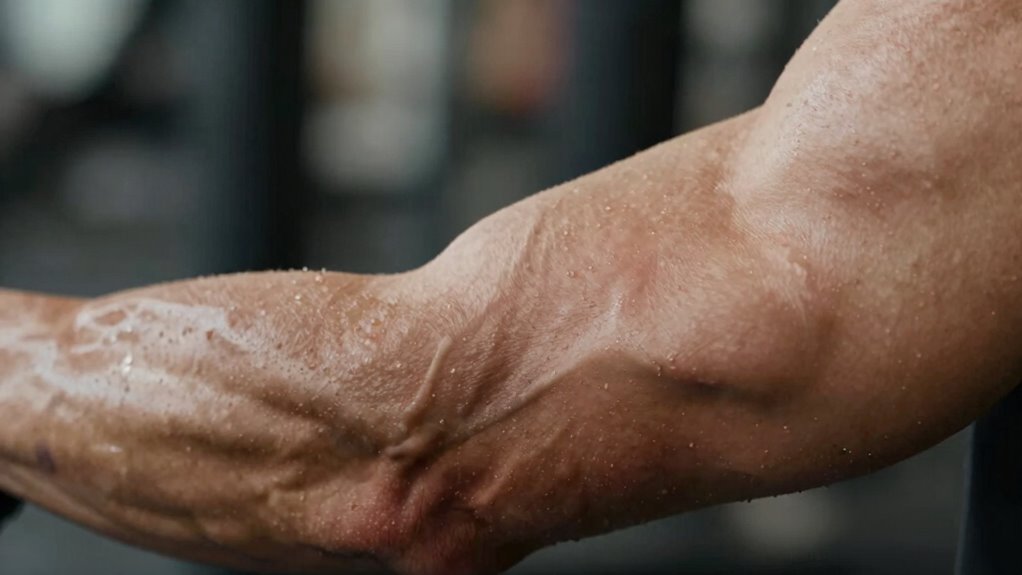

After challenging workouts, your muscles often feel worse before they improve because of inflammation and tiny tears in muscle fibers. These are normal and signal your muscles are adapting and growing. During recovery, increased blood flow, inflammation, and the healing process cause temporary soreness and stiffness. If you keep moving gently and follow proper strategies, you’ll soon notice your muscles feeling better. Keep going, and you’ll discover ways to speed up your recovery process.
Key Takeaways
- Muscle soreness often worsens initially due to increased inflammation and tiny tears during early recovery.
- The delayed onset of soreness (DOMS) indicates ongoing muscle repair and adaptation.
- Initial discomfort can be a sign of muscle rebuilding and strengthening processes underway.
- Proper recovery strategies may temporarily intensify feelings before improving overall muscle health.
- Recognizing that soreness can peak before improvement helps manage expectations and encourages continued recovery efforts.

After starting a new workout or pushing your muscles harder than usual, it’s common to feel worse before you feel better. That initial soreness can be discouraging, but it’s a normal part of the muscle recovery process. When you challenge your muscles, tiny tears occur in the muscle fibers, leading to muscle soreness. This discomfort signals that your muscles are adapting and growing stronger, but it can also make you feel sluggish or stiff. The key is understanding that these sensations are temporary and part of the body’s natural response to training.
Your muscles need time to repair and rebuild after exertion. During recovery, your body works by increasing blood flow to the affected areas, bringing nutrients and oxygen that help repair damaged tissues. This process can cause inflammation, which contributes to the soreness you experience. The good news is that with proper recovery strategies, you can speed up this healing process and reduce the discomfort. Rest is crucial; giving your muscles time to recover prevents overtraining and minimizes the risk of injury. Incorporating gentle stretching can help alleviate tightness and improve circulation, while applying ice or heat can reduce inflammation and soothe sore muscles.
Recovery involves increased blood flow, nutrients, and inflammation reduction through rest, stretching, and heat or ice.
Nutrition also plays a vital role in recovery. Consuming enough protein provides the building blocks your muscles need for repair, while staying hydrated supports metabolic processes and reduces muscle fatigue. Some people find that active recovery—like light walking or swimming—helps keep the blood flowing without adding stress to tired muscles. You don’t want to push through severe pain, but gentle movement can promote healing and lessen muscle soreness over time. Understanding your body’s natural recovery process can help you optimize your training and recovery routine. Recognizing the importance of consistent recovery and proper rest can make a significant difference in your progress and overall health.
It’s important to listen to your body. If you ignore signs of excessive pain or push through soreness, you risk prolonging recovery and causing injury. Instead, focus on effective recovery strategies that include rest, proper nutrition, hydration, and gentle activity. Over time, these approaches will help your muscles adapt to the increased workload, and you’ll notice that the soreness diminishes and strength improves. Remember, feeling worse initially is a sign your muscles are responding and growing stronger—patience and proper recovery are your best tools to get back to peak performance.
As an affiliate, we earn on qualifying purchases.
Frequently Asked Questions
How Long Does Muscle Soreness Typically Last?
Muscle soreness usually lasts between 24 to 72 hours after exercise, depending on your activity intensity and fitness level. During this period, muscle fatigue can intensify, making you feel worse before feeling better. Recovery techniques like gentle stretching, hydration, and rest help reduce soreness faster. Stay active with light movement, and your muscles will recover more efficiently, easing discomfort and restoring strength within a few days.
Can I Prevent Delayed Onset Muscle Soreness (DOMS)?
Preventing delayed onset muscle soreness (DOMS) is like trying to stop a rainstorm—difficult but manageable. You can minimize soreness by gradually increasing your workout intensity, incorporating proper warm-up and cool-down routines, and staying hydrated. Preventive strategies like gentle stretching and foam rolling help with soreness management. Consistency and listening to your body also reduce DOMS, so you don’t feel worse before you feel better after recovery.
Is It Okay to Exercise Through Muscle Pain?
It’s generally okay to exercise through mild muscle pain, but you should be cautious. Pushing through pain can increase overtraining risks and delay recovery. Focus on pain management—reduce intensity or switch to low-impact activities. If pain worsens or persists, stop exercising and rest. Listening to your body prevents injury and guarantees you stay on track with your fitness goals while minimizing overtraining risks.
What Foods Help Reduce Muscle Soreness?
To reduce muscle soreness, focus on nutrient timing by eating protein-rich foods soon after your workout. Incorporate anti-inflammatory foods like berries, cherries, turmeric, and fatty fish, which help lessen inflammation and promote recovery. Hydrate well and include magnesium-rich foods like spinach and nuts to relax muscles. These strategies can help you feel better faster, support healing, and keep soreness at bay during your recovery process.
When Should I See a Doctor for Muscle Pain?
When muscle pain becomes a warning sign, don’t ignore it—see a doctor promptly. If you experience severe muscle strain, persistent soreness beyond a few days, or if pain worsens despite rest, it’s time to seek medical advice. Chronic pain that interferes with daily activities or is accompanied by swelling, weakness, or numbness also warrants professional evaluation. Trust your body’s signals—early intervention can prevent long-term damage.
muscle soreness relief heat pack
As an affiliate, we earn on qualifying purchases.
As an affiliate, we earn on qualifying purchases.
Conclusion
Think of your muscles like a wildfire. At first, the flames flare up and the smoke thickens—uncomfortable but necessary. As the fire burns through, it clears out the old and makes way for new growth. Similarly, feeling worse before better is your body’s way of clearing out the damaged tissue, making room for stronger, healthier muscles. Embrace the temporary discomfort as the smoke signals that your body is rebuilding stronger than ever.
protein powder for muscle repair
As an affiliate, we earn on qualifying purchases.
As an affiliate, we earn on qualifying purchases.
As an affiliate, we earn on qualifying purchases.