
TL;DR

Get workout gear delivered free with Prime
- Fast, free delivery on millions of items
- Prime Video, Amazon Music and more included
- Member-only deals all year
A Fit&Well report highlights exercise power—the ability to produce force quickly—as a fitness skill that may receive less attention than strength training for women in midlife. Trainer Kylie Hansen recommends modified, low-repetition exercises, with rest between sets; the report does not present new research or establish that this workout extends longevity.
A Fit&Well report is drawing attention to exercise power—the ability to produce force quickly—as a fitness skill that may be overlooked in advice for women in midlife. Personal trainer Kylie Hansen recommends adapting familiar movements and prioritizing controlled, purposeful repetitions, while the report does not offer new research showing that its workout extends lifespan.
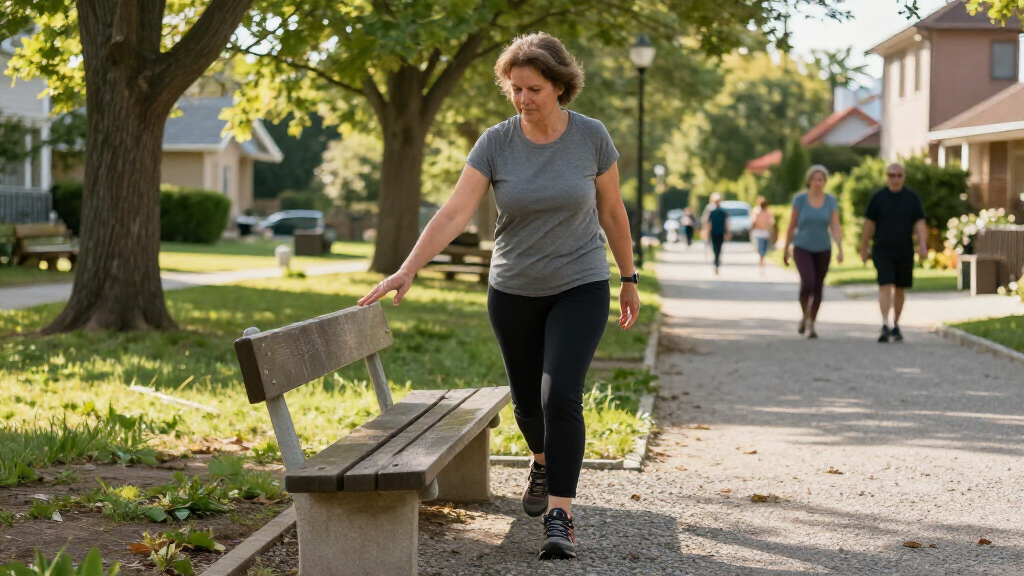
Hansen, a NASM-certified personal trainer and coach at Busy Bariatrics, describes power as using strength at speed. She says it can help with quick responses such as catching oneself after a trip or moving rapidly to regain balance. These are practical examples from the trainer, not reported results from a study.
Hansen says the muscle fibers involved in quick, powerful movements can decline with age and inactivity. The article places power alongside the better-known focus on strength training, but the supplied report does not cite a specific study, quantify that decline, or establish a direct link between its suggested routine and longevity.
The proposed session has four movements: a burpee, squat jump, squat to upright row, and plank dumbbell pull-through. The first three emphasize producing force during whole-body or lower-body movements; the pull-through challenges stability as weight shifts from one arm to the other. Hansen suggests two or three sets, typically five or six repetitions, and 60–90 seconds of rest between sets. For the pull-through, the recommendation is five or six repetitions on each side.
Power for Everyday Responses
Power is relevant to movements that happen quickly rather than under predictable, slow conditions. Hansen’s examples—recovering balance after a trip or moving out of someone’s way—help explain why she considers speed of force production useful in everyday life. The pull-through adds a separate challenge: maintaining a steady trunk while the base of support changes.
The article’s practical message is that power training does not have to begin with maximal jumps or complex lifts. Stepping instead of jumping, rising onto the toes, or doing a plank variation from the knees can lower the demands of the suggested movements. That adaptability may make the topic more approachable for readers who are new to explosive exercise, though each person’s needs and abilities differ.
The longevity framing should be read cautiously. The report discusses power as a capacity worth training and says relevant muscle fibers may decline with age and inactivity. It does not show that performing these four exercises prevents injury, improves a particular health outcome, or increases lifespan.
As an affiliate, we earn on qualifying purchases.
How the Suggested Session Works
The report begins from the existing emphasis on strength training with age and argues that power gets less attention. Hansen defines the distinction in functional terms: strength is used quickly when a person needs to produce force at speed. The supplied material does not provide a wider review of evidence or compare power training with other exercise approaches.
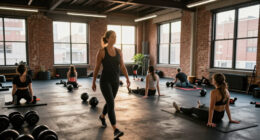
In Hansen’s session, participants complete two or three sets of each exercise before moving to the next, resting 60–90 seconds between sets. For burpees, beginners can step their feet back and forward and avoid the finishing jump. For squat jumps, the suggested lower-impact option is to rise onto the toes instead of leaving the ground. The squat-to-upright-row uses dumbbells or kettlebells, while the plank pull-through can be performed from the knees.
Hansen advises keeping the focus on quality rather than exhaustion. She says power declines as fatigue builds, so short sets of crisp repetitions with adequate rest are preferable to turning the movements into a high-repetition cardio workout. The advice is attributed to the trainer in Fit&Well’s report, not presented as a universal prescription.
“Power drops as fatigue builds.”
— Kylie Hansen
low impact explosive exercise equipment
As an affiliate, we earn on qualifying purchases.
As an affiliate, we earn on qualifying purchases.
Evidence Behind Longevity Claims
The supplied report does not identify a publication date, cite specific research, or provide data on how quickly power changes among women in midlife. It also does not quantify how much the proposed exercises affect power, balance, falls, or other outcomes. The phrase “crucial for longevity” appears in the report’s headline, but the provided material does not establish that this workout extends life.
Hansen’s recommendations are general exercise guidance, not an individualized assessment. The report does not discuss screening, how to progress weights or speed, or how to adapt each exercise for particular injuries or health conditions. Readers should not assume that jumping or lifting is suitable for everyone.
balance and stability training for women
As an affiliate, we earn on qualifying purchases.
As an affiliate, we earn on qualifying purchases.
Adapting Training Safely
The immediate next step for readers interested in the routine is to choose a version they can perform with control: step rather than jump, use the knee-based plank option, and rest between sets. The report provides no follow-up study or scheduled milestone, so whether this workout produces measurable gains is not established in the supplied material.
Anyone with a pre-existing condition, injury, balance concern, or uncertainty about exercise suitability should seek advice from a qualified health professional or appropriately credentialed trainer before starting. Progression should be based on ability and comfort; the report does not provide a personalized plan or promise a particular result.
resistance bands for midlife fitness
As an affiliate, we earn on qualifying purchases.
As an affiliate, we earn on qualifying purchases.
Key Questions
What does exercise power mean?
In Hansen’s definition, power is the ability to produce force quickly—using strength at speed, as when responding rapidly to a loss of balance.
Which exercises does the report recommend?
The four movements are a burpee, squat jump, squat to upright row, and plank dumbbell pull-through. The report includes modifications, such as stepping instead of jumping and performing the plank movement from the knees.
How many sets and repetitions are suggested?
Hansen suggests two or three sets of each exercise, generally five or six repetitions, with 60–90 seconds of rest between sets. The pull-through is listed at five or six repetitions per side. This is general guidance, not an individualized prescription.
Does this workout prove power training extends lifespan?
No. The supplied Fit&Well report discusses power as a fitness skill and offers exercises, but it does not provide evidence that this workout increases longevity or prevents a specific health outcome.
Source: rss
Fall Picks
fall essentials
As an affiliate, we earn on qualifying purchases.