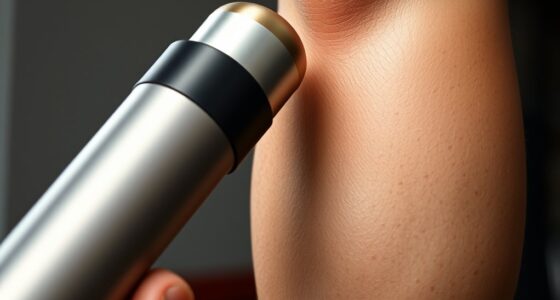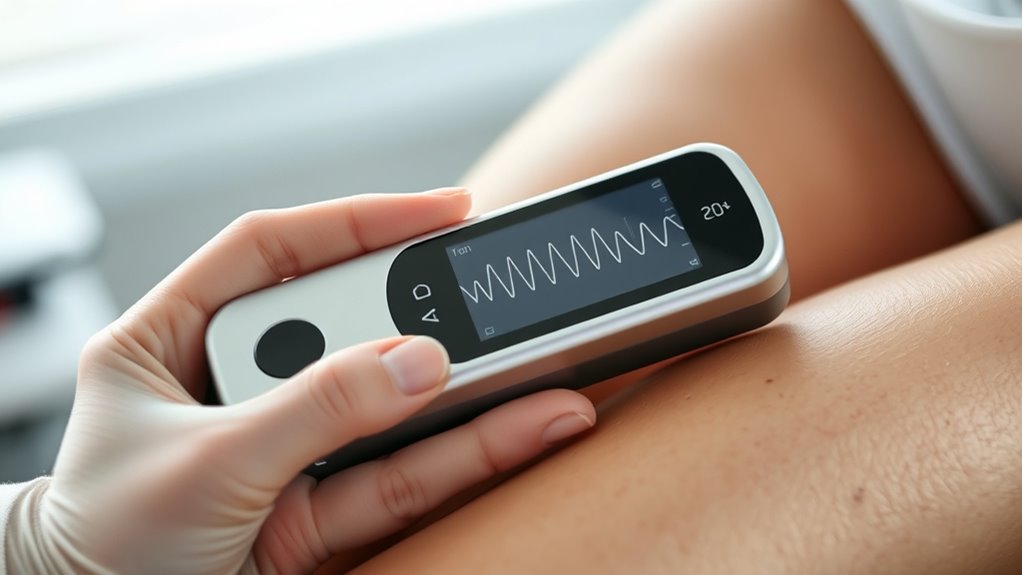

To measure your recovery progress in muscle elasticity, myotonometry is a valuable tool. It applies a quick mechanical impulse to assess how your muscles respond, providing clear data on stiffness and elasticity. This helps you track improvements, detect imbalances, and prevent injuries efficiently. By monitoring these measurable changes, you can optimize your recovery strategies. Keep exploring to understand how myotonometry can support your ongoing muscle health and performance goals.
Key Takeaways
- Myotonometry objectively measures muscle elasticity, stiffness, and tone to assess recovery progress after fatigue or injury.
- Changes in muscle elasticity detected via myotonometry indicate improved recovery and increased flexibility over time.
- Monitoring tendon stiffness alongside muscle elasticity helps identify early signs of recovery or potential overuse.
- Regular assessments guide personalized training and rehabilitation by tracking improvements in muscle health.
- Objective data from myotonometry enhances decision-making for optimizing recovery and preventing injuries.

Understanding muscle elasticity is vital for evaluating muscle health and function, especially since it influences movement and injury risk. When assessing how well your muscles perform, you need to consider muscle flexibility and tendon stiffness. Muscle flexibility refers to how far you can move a muscle through its full range of motion without discomfort, while tendon stiffness describes how resistant your tendons are to stretching. Both factors directly impact your ability to move efficiently and safely. If your muscles lack flexibility or your tendons are overly stiff, you may experience limited mobility or be more prone to strains and tears. Recognizing these aspects helps you tailor your training, recovery, and injury prevention strategies effectively.
Using tools like myotonometry allows you to measure muscle elasticity objectively. This technique involves applying a brief mechanical impulse to the muscle and recording its response. The resulting data reveal the muscle’s tone, stiffness, and elasticity—key indicators of recovery progress. When muscles are recovering from fatigue, injury, or intense activity, their elasticity typically decreases, and stiffness may increase. Monitoring these changes with myotonometry gives you tangible feedback, letting you know whether your muscles are returning to their ideal state or require additional rest or targeted therapy. This real-time data empowers you to make informed decisions about your training load, stretching routines, and rehabilitation efforts.
Furthermore, understanding how tendon stiffness affects recovery is vital. Tight tendons can hinder muscle relaxation, reducing overall flexibility and increasing strain on muscles during movement. Myotonometry can help detect elevated tendon stiffness, signaling that your tendons may need specific interventions like stretching or soft tissue work. As you track your progress over time, you’ll notice how improvements in muscle elasticity correlate with increased flexibility and decreased stiffness. This measurable progress can motivate you to stay committed to your recovery plan and adjust your regimen as needed.
In essence, combining knowledge of muscle flexibility, tendon stiffness, and the objective measurements provided by myotonometry creates a comprehensive picture of your muscle health. It helps you identify imbalances early, optimize your recovery strategies, and ultimately enhance your performance while reducing injury risks. When you understand these key factors and regularly monitor them, you gain a proactive approach to maintaining healthy, elastic muscles that support your active lifestyle. This targeted insight ensures you’re not just training harder but smarter, with a clear understanding of how your muscles respond and recover over time.
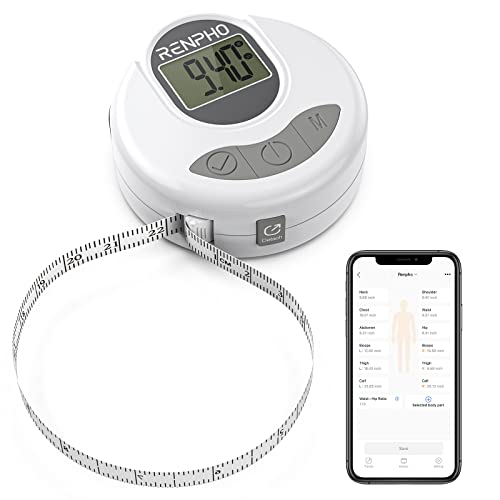
RENPHO Body Measuring Tape, Bluetooth Smart Tape Measure with Lock Hook & Retractable Function, Accurate Body Fat Measurement Device for Weight Loss, Muscle Gain, Fitness Bodybuilding, 60in /150cm
Achieve Your Fitness Goals: The RENPHO Smart Body Tape Measure is compatible with the Renpho Health App, which…
As an affiliate, we earn on qualifying purchases.
As an affiliate, we earn on qualifying purchases.
Frequently Asked Questions
How Does Muscle Elasticity Vary Between Different Sports?
You’ll notice muscle elasticity varies across sports due to different demands. Flexibility training helps improve elasticity, especially in sports requiring high range of motion like gymnastics or dance. In contrast, sports like weightlifting often lead to increased muscle stiffness, reducing elasticity. By measuring these differences, you can tailor recovery strategies to optimize performance and prevent injuries, ensuring your muscles stay balanced and responsive for your specific sport’s needs.
Can Myotonometry Predict Injury Risk Accurately?
Myotonometry can help predict injury risk by evaluating muscle fatigue and hydration levels, but it’s not fully accurate on its own. You should use it alongside other methods, like physical assessments and monitoring symptoms. By tracking changes in muscle elasticity, you can identify when your muscles are more prone to injury, especially if fatigue or dehydration are present. This combined approach improves your injury prevention efforts.
What Factors Influence Recovery Measurements Beyond Muscle Health?
Recovery measurements are influenced by hydration levels and psychological factors beyond muscle health. When you’re well-hydrated, your muscles recover more efficiently, impacting elasticity readings. Psychological factors like stress or motivation can also affect your perceived and actual recovery progress, potentially skewing measurements. You should consider these influences to get a more accurate picture of your recovery, ensuring you don’t rely solely on muscle health indicators like myotonometry results.
Is There a Standard Timeline for Measurable Improvements?
Recovery timelines vary depending on individual factors and injury severity, but generally, you can expect measurable improvements within a few weeks. Improvement benchmarks often include increased muscle elasticity and better recovery metrics. Keep in mind that consistent monitoring with tools like myotonometry helps track progress accurately. Stay patient and persistent, as real progress depends on adherence to your recovery plan and the body’s natural healing process.
How Cost-Effective Is Myotonometry for Regular Monitoring?
Myotonometry can be cost-effective for regular monitoring if you consider its cost analysis and affordability assessment. While the initial investment might seem high, it saves money long-term by reducing the need for more invasive tests or frequent visits. If you’re committed to tracking recovery progress consistently, this device offers a reliable, affordable option that can help you optimize your training and rehabilitation efforts efficiently.
myotonometry muscle tester
As an affiliate, we earn on qualifying purchases.
As an affiliate, we earn on qualifying purchases.
Conclusion
By measuring muscle elasticity with myotonometry, you can literally see your recovery soar like a rocket blasting through the sky. It’s like turning your muscles into rubber bands that snap back instantly, not limp spaghetti. This tool gives you the power to track progress in real-time, making your recovery feel like riding a roller coaster—exciting, fast, and unstoppable. So, embrace it, and watch your muscles bounce back with superhero speed!

Deep Recovery Body Track Deep Tissue Back & Psoas Muscle Release Tool – Full Body Massage Track with Grooved Channels for Massage Ball Control and Use (Balls Not Included)
Full-Body Relief: Grooved channels hold massage balls in place for smooth, effective rolling across the back, psoas, shoulders,…
As an affiliate, we earn on qualifying purchases.
As an affiliate, we earn on qualifying purchases.
tendon stiffness measurement tool
As an affiliate, we earn on qualifying purchases.
As an affiliate, we earn on qualifying purchases.