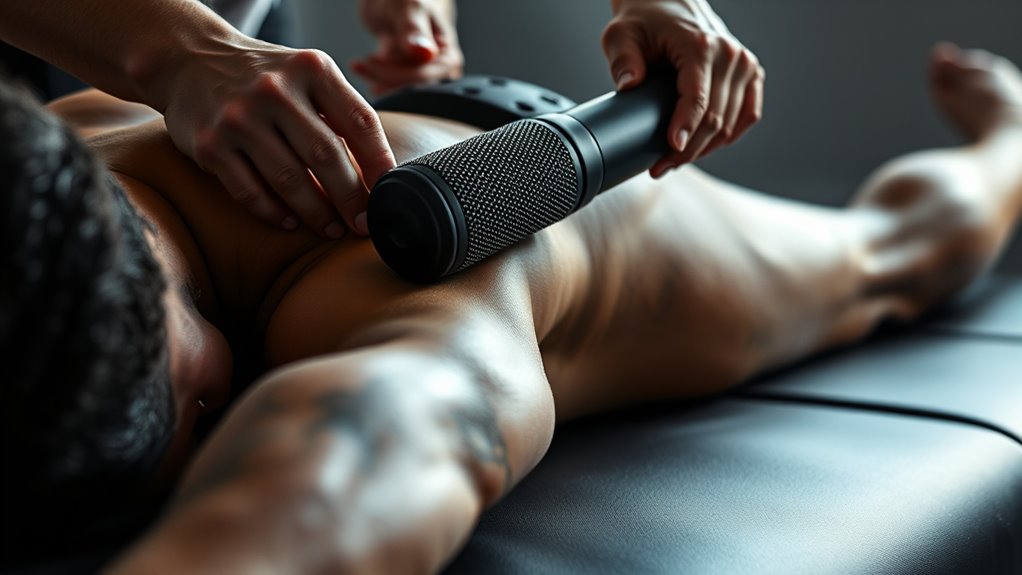
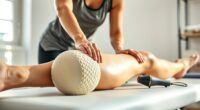
After HIIT, use a percussive therapy device to target sore muscles for faster recovery. Start with low intensity to avoid overstimulation, then gradually increase as your muscles adapt. Focus on areas like quads, hamstrings, calves, and glutes, applying pulses evenly and pausing on tender spots. Combining this with foam rolling and proper nutrition can boost circulation and reduce soreness. Continue exploring these strategies to optimize your recovery process.

Get workout gear delivered free with Prime
- Fast, free delivery on millions of items
- Prime Video, Amazon Music and more included
- Member-only deals all year
Key Takeaways
- Begin percussive therapy on sore muscles immediately after HIIT for enhanced tension relief.
- Use low to moderate intensity pulses initially, increasing gradually to prevent overstimulation.
- Target major muscle groups like quads, hamstrings, and calves with focused, steady pulses.
- Apply percussive therapy for 1-2 minutes per muscle group, focusing on tender or tight areas.
- Combine with foam rolling and hydration for comprehensive DOMS management and faster recovery.
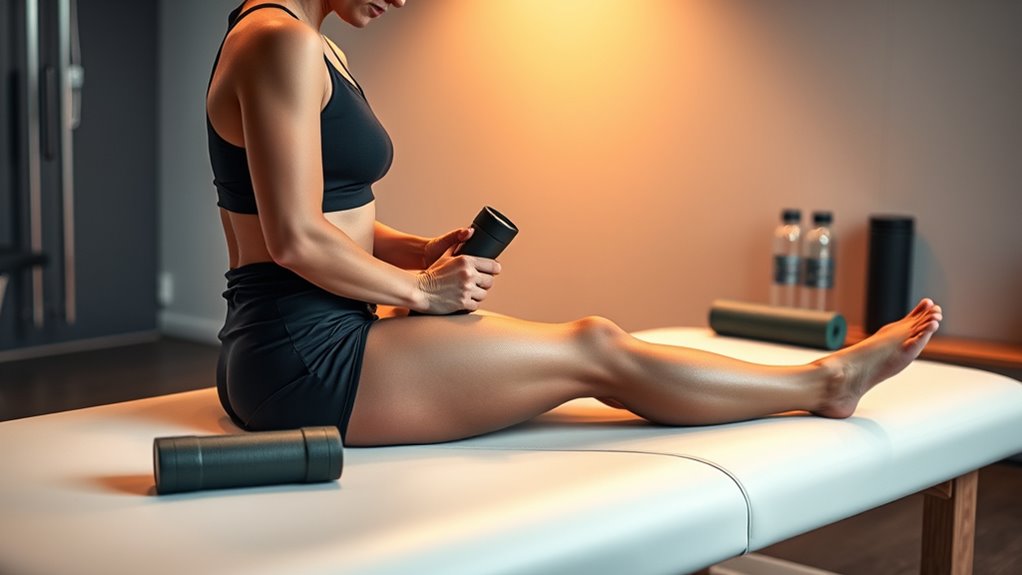
Delayed Onset Muscle Soreness (DOMS) often strikes after high-intensity interval training (HIIT), leaving you uncomfortable and hindering your recovery. To manage this discomfort effectively, you need to pay attention to recovery nutrition and implement proper foam rolling techniques. Recovery nutrition plays an essential role in reducing soreness and promoting muscle repair. Consuming a balanced mix of protein and carbohydrates within 30 to 60 minutes after your workout supplies your muscles with the nutrients they need to recover faster. Protein, in particular, helps repair micro-tears in muscle fibers caused by intense activity, while carbs replenish glycogen stores depleted during HIIT sessions. Hydration is also indispensable; drinking plenty of water supports nutrient transport and flushes out metabolic waste, which can contribute to soreness.
In addition to proper nutrition, foam rolling techniques are indispensable for alleviating DOMS. Foam rolling, also known as self-myofascial release, helps break down adhesions and tightness in muscle fascia, improving blood flow and flexibility. When you use foam rolling after HIIT, focus on the major muscle groups you targeted during your workout, such as your quads, hamstrings, calves, and glutes. Roll slowly over each area, applying moderate pressure, and pause on tender spots to release knots. Consistency is key—incorporate foam rolling into your post-exercise routine to prevent excessive soreness and speed up recovery.
Using percussive therapy devices can complement foam rolling techniques by providing targeted, rapid pulses that penetrate deeper into muscle tissues. These devices help reduce muscle tension more efficiently and can be used immediately after your workout or during recovery days. When applying percussive therapy, start with a lower intensity and gradually increase it to avoid overstimulation. Focus on muscles that feel particularly tight or sore, and use short, controlled sessions to avoid fatigue. Combining foam rolling with percussive therapy creates a thorough approach to managing DOMS, allowing you to return to training sooner and with less discomfort.
Ultimately, managing DOMS after HIIT requires a combination of strategic recovery nutrition, consistent foam rolling techniques, and possibly percussive therapy. These practices work together to enhance circulation, reduce muscle tightness, and support faster recovery. By paying close attention to these details, you’ll minimize soreness, improve your mobility, and optimize your overall training performance. Remember, recovery isn’t just about resting; it’s about actively supporting your muscles so you can push harder and recover smarter.
percussive therapy device for muscle recovery
As an affiliate, we earn on qualifying purchases.
As an affiliate, we earn on qualifying purchases.
Frequently Asked Questions
Can Percussive Therapy Prevent DOMS From Occurring?
You might wonder if percussive therapy can prevent DOMS. While it doesn’t guarantee prevention, it can support muscle recovery and reduce soreness by increasing blood flow and loosening tight muscles. Regular use may help you recover faster and lower injury risk, but don’t rely solely on it. Combine with proper hydration, stretching, and rest for the best results in managing DOMS and promoting overall muscle health.
How Quickly Can I Expect Relief Using Percussive Therapy?
When using percussive therapy, you can often notice pain reduction within minutes, but the full recovery timeline varies. Some users report feeling relief in as little as 10-15 minutes, while others see gradual improvements over several sessions. Consistent use helps accelerate recovery, so you should expect faster pain reduction and enhanced muscle relaxation with regular application, ultimately supporting your overall recovery process from intense workouts.
Are There Specific Percussion Device Settings for DOMS?
You should adjust the percussion intensity to a comfortable level, avoiding excessive pressure that causes pain. For DOMS, start with a moderate intensity and gradually increase if tolerated. Use the device for about 30-60 seconds per muscle group, focusing on tender areas. Keep the sessions consistent, and listen to your body to prevent overstimulation. Proper device duration and suitable percussion intensity help optimize recovery without causing discomfort.
Is Percussive Therapy Safe for All Muscle Groups?
Percussive therapy can generally be safe for most muscle groups if you prioritize muscle safety and verify device compatibility. You should avoid sensitive areas like bones, joints, or the neck, and always follow the manufacturer’s instructions. If you experience pain or discomfort, stop immediately. It’s wise to consult a healthcare professional if you’re unsure about using percussive therapy on certain muscles, especially if you have underlying health conditions.
How Does Percussive Therapy Compare to Traditional Stretching?
Imagine riding a chariot through ancient streets—percussive therapy is like that powerful, rhythmic ride. Compared to traditional stretching, it offers deeper muscle relaxation, improving flexibility and aiding injury prevention. Unlike stretching, which is static, percussive therapy actively targets tight muscles, reducing soreness more effectively. You get quicker relief and enhanced muscle flexibility, making it a dynamic tool for recovery. It’s a modern chariot for your muscles’ health journey.
foam roller for post-workout recovery
As an affiliate, we earn on qualifying purchases.
As an affiliate, we earn on qualifying purchases.
Conclusion
To effectively manage DOMS after HIIT, prioritize active recovery, use percussive therapy, and stay hydrated. By embracing these strategies, you support your muscles, reduce soreness, and enhance your progress. Consistency is key—consistently warm up, consistently cool down, and consistently care for your body. When you listen to your muscles, when you nourish your body, when you recover properly, you set yourself up for better performance and faster recovery.
muscle recovery nutrition supplements
As an affiliate, we earn on qualifying purchases.
As an affiliate, we earn on qualifying purchases.
As an affiliate, we earn on qualifying purchases.
Fall Picks
fall essentials
As an affiliate, we earn on qualifying purchases.