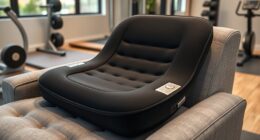
Slant boards have become essential because they let you target calf muscles and improve ankle mobility effectively. By adjusting the angle, you can customize your stretch and strengthen your lower legs. This not only boosts flexibility but also helps prevent injuries like ankle sprains and Achilles tendinitis. Plus, they’re easy to incorporate into your routine, whether warming up or cooling down. Stay with us to discover more ways these versatile tools can boost your mobility and support your fitness goals.

Get workout gear delivered free — and shop member deals
- Fast, free delivery on millions of items
- Access to Prime Big Deal Days deals on October 6–7
- Prime Video, Amazon Music and more included
Key Takeaways
- They enable targeted stretching to improve calf flexibility and ankle mobility effectively.
- Adjustable angles allow customization for different fitness levels and injury prevention needs.
- They support combined stretching and strengthening exercises, enhancing lower-leg stability.
- Compact and versatile, making them easy to incorporate into daily routines at home or gym.
- Regular use reduces injury risk and boosts performance in athletic and daily activities.

If you’re looking to improve your calf and ankle strength, slant boards can be a highly effective tool. They are becoming increasingly popular among athletes, rehab patients, and fitness enthusiasts alike. One of the main reasons people turn to slant boards is because they facilitate targeted stretching routines that effectively lengthen the calf muscles and improve ankle mobility. By adjusting the angle of the board, you can customize your stretches, making them more intense or gentle depending on your needs. Proper stretching routines are essential for maintaining flexibility, reducing muscle tightness, and preventing injuries down the line. Using a slant board for stretching helps you achieve a full range of motion, which is *vital* for activities that demand quick direction changes or jumping.
Beyond flexibility, slant boards are highly valued for their role in injury prevention. Tight calf muscles and limited ankle mobility are common culprits behind Achilles tendinitis, shin splints, and ankle sprains. Incorporating slant board exercises into your routine helps loosen tight muscles and strengthen stabilizing muscles around the ankle joint, making injuries less likely. Regular use trains your ankle to withstand the stresses of dynamic movements, whether you’re running, jumping, or even walking on uneven terrain. This proactive approach to injury prevention not only keeps you safe but also boosts overall athletic performance.
Using a slant board isn’t just about passive stretching; it’s also about active engagement. When you perform calf raises or balance exercises on the board, you’re strengthening the muscles that support your ankle joint. This combination of stretching and strengthening makes the slant board a versatile tool for *all-encompassing* lower-leg conditioning. The angle of the board encourages proper alignment and technique, which helps you avoid improper movements that could lead to strains or overuse injuries. As you build strength and flexibility, you’ll notice improved stability and confidence during physical activities.
Furthermore, slant boards are easy to incorporate into your daily routine. They’re compact, adjustable, and simple to use at home or in a gym setting. Whether you’re warming up before exercise or cooling down afterward, adding slant board exercises can enhance your overall lower-leg health. Consistency is key, and over time, you’ll likely see a reduction in muscle tightness and a lower risk of common injuries. *Essentially*, investing in a slant board isn’t just about quick fixes; it’s about creating sustainable habits that support your athletic longevity and everyday mobility.
adjustable slant board for calf stretching
As an affiliate, we earn on qualifying purchases.
As an affiliate, we earn on qualifying purchases.
Frequently Asked Questions
Can Slant Boards Prevent Ankle Injuries During Workouts?
Yes, slant boards can help prevent ankle injuries during workouts by improving ankle stability. They encourage proper stretching and strengthening of the calf and ankle muscles, which support joint integrity. When you use slant boards regularly, you enhance your balance and control, reducing the risk of sprains or strains. Incorporating them into your routine promotes injury prevention, making your workouts safer and more effective.
Are Slant Boards Suitable for All Fitness Levels?
Yes, slant boards are suitable for all fitness levels. They offer an excellent way to incorporate alternative stretching and improve balance enhancement, making them versatile tools. Beginners can use them gently to increase flexibility, while advanced users can challenge themselves further. Regardless of your experience, slant boards help you safely deepen stretches and build strength, making them a beneficial addition to any workout routine.
How Often Should I Incorporate Slant Board Exercises?
You should incorporate slant board exercises 3-4 times a week for maximum benefits. But don’t just stick to a schedule—pay attention to how your calves and ankles respond. Too much too soon could lead to strain, while too little might slow progress. Find the right balance, gradually increase your exercise frequency, and listen to your body. Consistency is key, but so is giving your muscles time to recover.
Do Slant Boards Help With Achilles Tendon Issues?
Yes, slant boards can help with Achilles tendon issues by improving Achilles flexibility and aiding in tendon strengthening. When you use a slant board, you stretch your calf muscles and Achilles tendons safely, which can reduce tightness and promote healing. Regularly incorporating these exercises helps increase flexibility, decrease pain, and strengthen the tendon, making slant boards a valuable tool in managing and preventing Achilles tendinitis or similar problems.
Can I Use a Slant Board for Rehabilitation Purposes?
Think of a slant board as your personal bridge to recovery. Yes, you can use it for rehabilitation—it’s like a gentle path that guides your muscles back to strength. It aids in balance training and flexibility improvement, both vital during rehab. By gradually increasing incline and duration, you help your Achilles and calves adapt safely, making your recovery more effective and less painful.
As an affiliate, we earn on qualifying purchases.
Conclusion
Incorporating a slant board into your routine transforms your calf and ankle workouts, making them more effective and safer. Just like the trusty quill of a Renaissance scribe, it becomes an essential tool that sharpens your progress. Whether you’re recovering from an injury or aiming for better performance, this simple device helps you build strength and flexibility with ease. So, don’t overlook it—embrace the slant board and watch your ankle and calf gains unfold.
slant board for injury prevention
As an affiliate, we earn on qualifying purchases.
As an affiliate, we earn on qualifying purchases.
lower leg strengthening balance board
As an affiliate, we earn on qualifying purchases.
As an affiliate, we earn on qualifying purchases.
Fall Picks
fall essentials
As an affiliate, we earn on qualifying purchases.