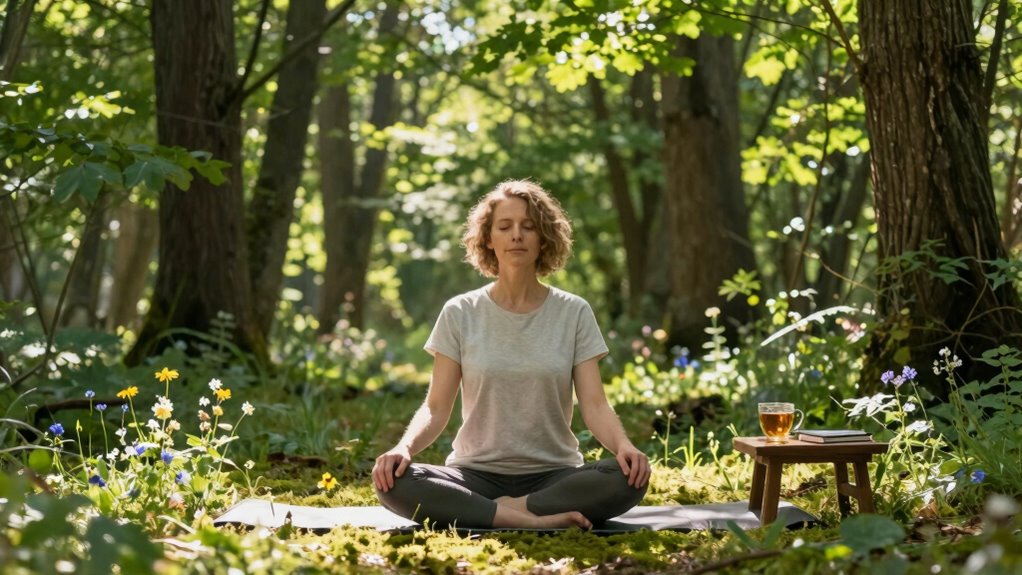

To recover better without making it your full-time job, focus on simple, mindful practices and gentle movements that fit into your daily routine. Incorporate short meditations or deep breathing exercises to calm your nervous system, and perform slow stretches to improve flexibility and reduce tension. Pay attention to your environment and health, avoiding toxins and stressors. By blending mindful awareness with gentle movement, you create effective recovery habits that feel manageable—keep exploring to discover even more helpful tips.

Get workout gear delivered free with Prime
- Fast, free delivery on millions of items
- Prime Video, Amazon Music and more included
- Member-only deals all year
Key Takeaways
- Incorporate brief daily mindfulness practices like meditation to support mental clarity without consuming much time.
- Use gentle stretching routines focused on neck, shoulders, and legs to enhance circulation and reduce tension.
- Prioritize environmental awareness, such as water damage and pollution, to prevent setbacks in recovery.
- Combine mindful breathing with movement to promote relaxation and reduce stress during healing.
- Keep routines simple, effective, and time-efficient to avoid overwhelm and maintain consistent progress.

Recovering effectively doesn’t have to consume all your free time or turn into a stressful, full-time job. The key is to find simple, efficient methods that support your body’s healing process without overwhelming you. Incorporating mindfulness techniques into your routine can make a significant difference. Instead of obsessing over every minor ache or pain, you learn to observe your sensations with non-judgmental awareness. This helps reduce stress and prevents you from overreacting to discomfort, allowing you to stay calm and focused on recovery. Mindfulness techniques, such as deep breathing or guided meditation, help regulate your nervous system, making it easier for your body to heal naturally. You don’t need hours of practice; even a few minutes a day can promote mental clarity and emotional balance, which are essential during recovery. Additionally, paying attention to proper water damage mitigation can prevent setbacks and support your overall recovery process. Recognizing the importance of proper recovery techniques can also improve your progress and reduce frustration. Incorporating knowledge about pollution impact can further protect your health during recovery by minimizing exposure to environmental toxins. Being aware of how technology affects health can help you make better choices for your environment and lifestyle during this time. Incorporating healing environments that promote comfort and reduce stress can further accelerate your recovery process.
Complementing mindfulness with gentle stretching can further enhance your recuperation. Gentle stretching encourages blood flow, improves flexibility, and reduces muscle tension, all of which support tissue repair. You don’t have to stretch aggressively or hold complicated poses—simple, slow movements are often the most effective. For example, stretching your neck, shoulders, or legs gently can prevent stiffness and soreness, especially if you’ve been resting for a while. The goal is to listen to your body and avoid pushing beyond your comfort zone, which could cause setbacks. Keep your stretches smooth and controlled, focusing on breath and awareness during each movement. This combination of mindful breathing and gentle stretching creates a calming routine that promotes relaxation and recovery without demanding too much time or effort.
Products Worth Considering

Levoit Eleva 300X Air Purifier with Sealed HEPA Filtration

Fitbit Charge 6 Activity Tracker – Obsidian/Black

Fitbit Charge 6 Fitness Tracker Bundle – Black/Obsidian
As an affiliate, we earn on qualifying purchases.
Frequently Asked Questions
Can Recovery Techniques Be Customized for Individual Needs?
Yes, recovery techniques can be customized for your individual needs through personalized approaches. You should focus on creating a custom recovery plan that considers your unique health, lifestyle, and goals. By tailoring methods like exercise, nutrition, and rest, you’ll find what works best for you, making your recovery more effective and sustainable. This personalized approach helps you stay motivated and achieve better results without feeling overwhelmed or overwhelmed.
How Long Should Recovery Periods Last?
Recovery periods are like a well-timed pause in a song—crucial for harmony. Typically, they should last 24 to 72 hours, depending on the intensity of your workout. Don’t fall for recovery myths that suggest longer is always better; exercise timing and individual needs matter most. Listen to your body, and give yourself enough time to recover without overdoing it. Properly timed recovery helps you improve faster and reduces injury risk.
Are There Specific Foods That Aid Recovery?
Yes, certain foods can help your recovery. Focus on nutrient timing by consuming protein-rich foods like lean meats, eggs, or dairy soon after exercise to repair muscles. Incorporate anti-inflammatory foods such as berries, cherries, and leafy greens. Stay on top of hydration strategies by drinking plenty of water, and consider adding electrolytes to replenish lost minerals. These choices support faster recovery and reduce soreness effectively.
Is Professional Help Necessary for Effective Recovery?
You might think professional help isn’t necessary, but addressing stress management and sleep hygiene often benefits from expert guidance. While you can improve recovery on your own, a professional can personalize strategies, helping you manage stress effectively and establish better sleep routines. If you find your recovery stalled or stress overwhelming, seeking help guarantees you’re not missing essential support, making your recovery more efficient and sustainable.
Can Recovery Methods Prevent Future Setbacks?
Yes, recovery methods like alternative therapies and mindfulness practices can help prevent future setbacks. By incorporating these strategies into your routine, you build resilience and develop healthier coping mechanisms. Regular use of mindfulness enhances self-awareness, while alternative therapies address underlying issues holistically. Together, they strengthen your recovery foundation, making setbacks less likely and supporting sustained progress without overwhelming your schedule.
Conclusion
Remember, recovery isn’t a race or a burden—it’s your journey. By integrating simple, mindful habits into your daily routine, you can heal without letting it consume your life. Think of recovery as a gentle tide, ebbing and flowing—never rushing, always restoring. Embrace patience and self-compassion, for they’re your most faithful allies. Ultimately, when you treat yourself with kindness, you’ll find that healing becomes not just possible, but beautifully sustainable.