Using a massage gun with your physical therapy homework can boost your recovery by relaxing tight muscles, reducing soreness, and increasing blood flow. It helps break down knots and adhesions, making your exercises more effective. Just be sure to follow proper technique: avoid excessive pressure, start with low settings, and keep the device moving. Keep exploring, and you’ll discover even more ways to maximize its benefits for your healing process.
Key Takeaways
- Use the massage gun to target specific muscle groups as advised by your physical therapist.
- Incorporate the device after therapy sessions to enhance recovery and reduce soreness.
- Start with low speed and pressure, gradually increasing as your muscles adapt, to prevent overstimulation.
- Avoid using the massage gun on inflamed or tender areas unless approved by your therapist.
- Follow your therapist’s guidance on timing and duration to safely integrate the massage gun into your homework routine.
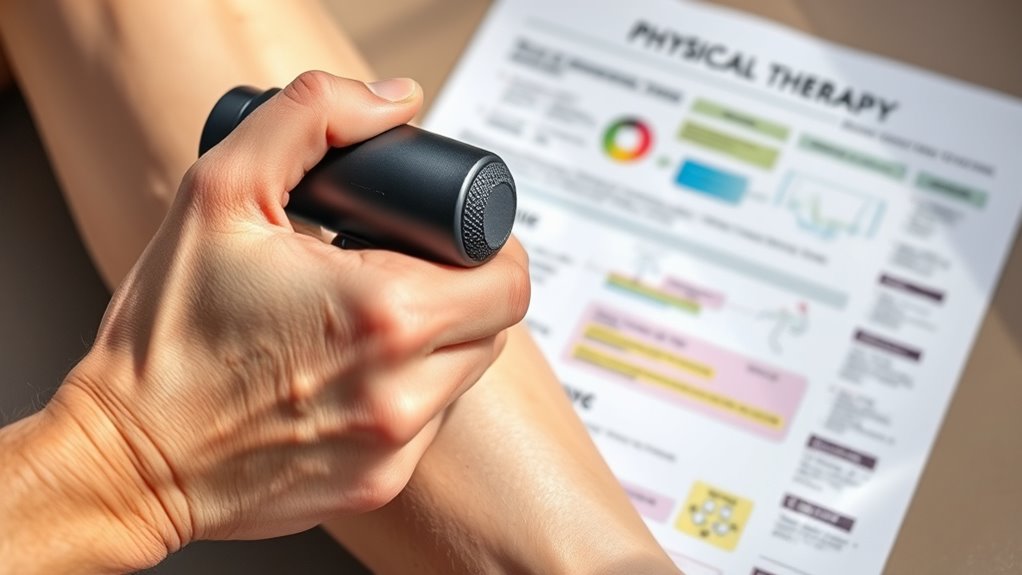
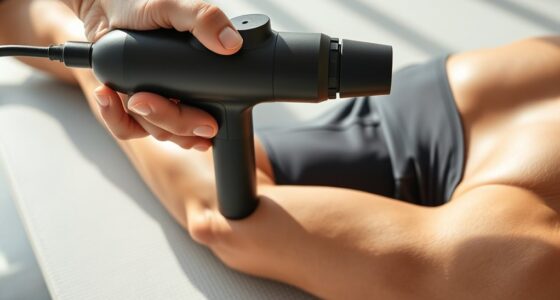
Incorporating a massage gun into your physical therapy homework can enhance recovery and alleviate soreness. When used correctly, a massage gun becomes a powerful tool for promoting muscle recovery and delivering effective pain relief. After a workout or a physical therapy session, muscles can become tight, tender, and prone to fatigue. A massage gun helps break down knots and adhesions, encouraging blood flow to the affected areas. This increased circulation accelerates the delivery of oxygen and nutrients to muscles, supporting faster repair and reducing discomfort. As a result, you’ll notice less stiffness and soreness, making it easier to stick to your routine and progress steadily.
Using a massage gun regularly can also prevent muscle tightness from becoming a bigger issue. When muscles stay relaxed and well-maintained, you’re less likely to experience spasms or pain that could hinder your recovery. By incorporating it into your daily or post-therapy routine, you can maintain better muscle flexibility and reduce the risk of reinjury. Plus, many devices come with adjustable speed and intensity settings, allowing you to customize the massage based on your specific needs and sensitivity. This means you can target problem areas more precisely, whether you’re dealing with deep tissue pain or superficial soreness.
Regular use prevents muscle tightness, promoting flexibility and reducing reinjury risk.
Pain relief is one of the most immediate benefits of using a massage gun alongside your physical therapy homework. When you apply the device to sore muscles, you stimulate nerve endings and activate the body’s natural pain-relief mechanisms. This can help diminish discomfort without relying solely on medication or other interventions. The gentle percussive therapy provided by the massage gun can also loosen up tight muscles, relieve tension, and improve your overall sense of well-being. If you’re experiencing localized pain, focusing the massage gun on those areas can provide quick and noticeable relief, helping you stay motivated and consistent with your therapy exercises.
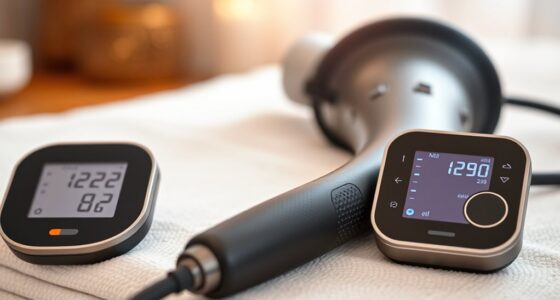
Additionally, integrating a massage gun with advanced AI-powered features, as seen in recent models, allows for more personalized and effective treatment sessions, optimizing recovery outcomes.
It’s essential, however, to use the massage gun with proper technique. Avoid applying excessive pressure and never use it on injured or inflamed areas unless advised by your healthcare provider. Start with the lowest setting and gradually increase intensity as tolerated. Remember to keep the device moving to prevent overstimulation of any particular spot. When integrated thoughtfully into your routine, a massage gun becomes a valuable partner in your recovery process, supporting muscle recovery and pain relief, so you can get back to feeling your best faster.
Frequently Asked Questions
Can I Use a Massage Gun on All Muscle Groups During Homework?
Yes, you can use a massage gun on most muscle groups during homework, but it’s important to target muscles carefully. Focus on specific areas to avoid overuse or discomfort, and use the massage gun as a therapy complement rather than a replacement. Avoid sensitive or injured areas, and follow your therapist’s guidance. Proper muscle targeting helps maximize benefits while preventing strain or injury during your physical therapy routine.
How Often Should I Use a Massage Gun Between Therapy Sessions?
Wondering how often to use your massage gun between therapy sessions? Keep your Massage frequency balanced—using it 1 to 3 times daily should do the trick. Focus on specific muscle targeting, especially sore or tight areas, but avoid overdoing it. If you notice increased pain or discomfort, cut back. Listening to your body is key; consistency will help your muscles relax and recover, accelerating your progress.
Are There Any Risks of Overusing a Massage Gun During Therapy?
Yes, overusing a massage gun can cause muscle soreness and skin irritation. If you use it too frequently or apply excessive pressure, you risk inflaming your muscles or irritating your skin. To prevent these risks, limit your sessions, listen to your body’s responses, and avoid prolonged use on the same area. Always follow your physical therapist’s guidelines to ensure safe and effective therapy.
Should I Avoid Using a Massage Gun Before or After Physical Therapy?
You should avoid using a massage gun immediately before physical therapy, as it might warm up muscles too much or cause discomfort. Instead, use it after your session to enhance post-therapy recovery, reduce soreness, and improve circulation. Incorporating pre-therapy benefits and post therapy recovery techniques ensures you get the most from your treatment while minimizing risks. Always follow your therapist’s guidance for ideal results.
Is It Safe to Use a Massage Gun if I Have Underlying Health Conditions?
Think of your body as a delicate garden—using a massage gun with underlying health conditions is like adding water to fragile plants. You should check health considerations, contraindications, and precautions first. If you have conditions like blood clotting issues or nerve damage, consult your healthcare provider before using a massage gun. It’s safer to get personalized advice to avoid causing more harm than good.
Conclusion
So, next time you’re tempted to skip your physical therapy homework, just grab your massage gun instead. It’s funny how a device meant to ease pain can turn your routine into a chaotic dance of muscle knots and squeaks. Ironically, what’s supposed to help might leave you more tangled than before, making you wish you’d just stuck to the boring exercises. But hey, at least your muscles will be well “massaged” in the chaos.