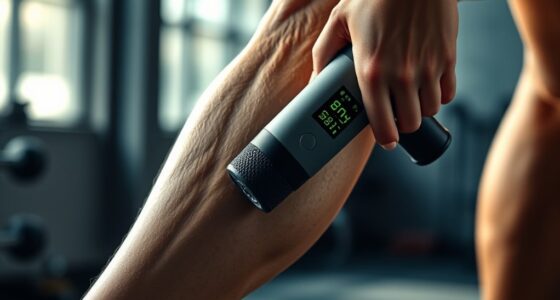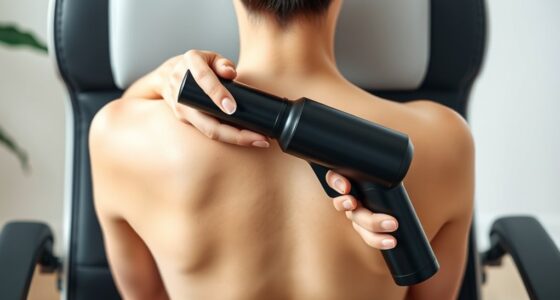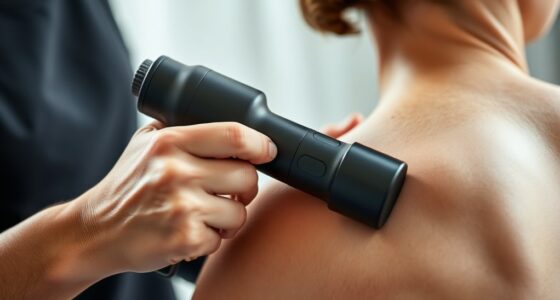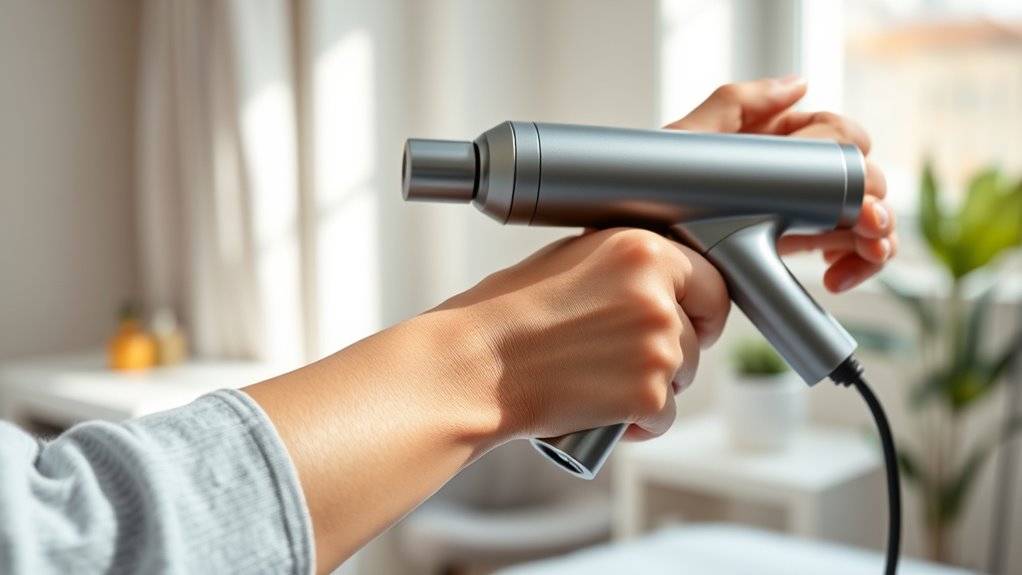

Before using a massage gun after surgery, consult your healthcare provider for personalized advice. It’s important to follow their guidance on when and how to use it, avoiding contact with stitches, incisions, or swollen areas. Start with low settings and short sessions, targeting surrounding muscles—not the surgical site—to promote circulation and recovery. Continuing this conversation will help you understand safe practices and ensure you recover smoothly.
Key Takeaways
- Always consult your healthcare provider before using a massage gun post-surgery.
- Follow your doctor’s or therapist’s specific guidance on timing and technique.
- Avoid applying massage guns directly on incisions, stitches, or swollen areas without medical approval.
- Use the device cautiously, starting with low intensity and short sessions, as recommended by your physician.
- Report any unusual pain, swelling, or discomfort to your healthcare provider immediately.
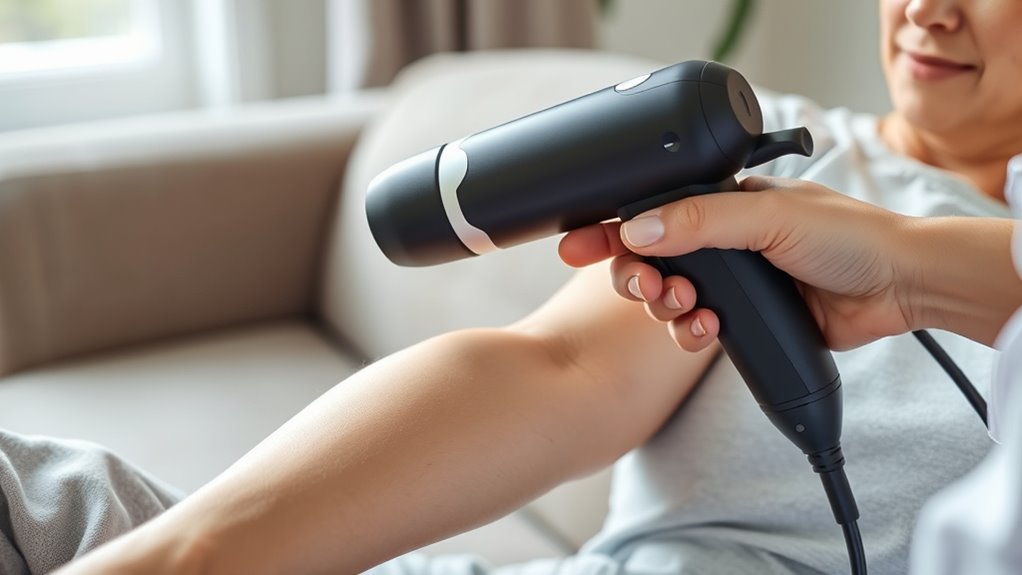
After surgery, using a massage gun can help promote blood flow and reduce muscle tension, but it’s essential to approach this therapy carefully. Your body is healing, and while a massage gun might seem like a helpful tool, it’s vital to understand how it fits into your recovery plan. When dealing with post operative pain, you need to be cautious. Applying too much pressure or using the device too soon can hinder healing or cause complications. Always follow your doctor’s advice before incorporating a massage gun into your recovery routine.
Your surgeon or physical therapist can determine when it’s safe to start gentle massage therapy. They consider factors like the type of surgery you had, your healing progress, and any specific instructions for avoiding certain areas. Using a massage gun prematurely might aggravate swelling, cause bruising, or even disrupt surgical sites. It’s not just about reducing discomfort; it’s about supporting your body’s natural healing process without risking setbacks.
When your healthcare provider gives the go-ahead, start with very low intensity and short sessions. Use the massage gun on larger muscle groups surrounding your surgical area, avoiding direct contact with stitches, incisions, or swollen tissues. The goal is to stimulate blood circulation and encourage muscle recovery without overloading your tissues. Improving blood flow can help deliver essential nutrients and oxygen to healing tissues, which may speed up recovery and reduce post operative pain over time. Additionally, understanding potential risks in new technologies can help you make informed decisions about your recovery tools. However, every individual heals at their own pace, so listen to your body and stop if you experience increased pain or discomfort.
It’s also important to communicate any sensations you feel during and after use. Persistent pain, unusual swelling, or warmth could indicate inflammation or other issues that require immediate medical attention. Remember, a massage gun isn’t a substitute for professional treatment or medication prescribed for pain management. Instead, think of it as a supplementary tool that, under proper guidance, can support your muscle recovery and enhance comfort during recovery.
Frequently Asked Questions
Can Massage Guns Be Used Immediately After Surgery?
You shouldn’t use a massage gun immediately after surgery because of surgical considerations. Your doctor likely advises waiting until your tissues heal properly to prevent complications. Immediate application could cause swelling, bleeding, or damage to delicate tissues. Always follow your physician’s guidelines and wait until they give you the green light. Using a massage gun prematurely can interfere with recovery and might do more harm than good.
Are There Specific Massage Gun Settings Recommended Post-Surgery?
You should avoid using massage guns immediately after surgery without your doctor’s approval. If your physician agrees, use gentle setting adjustments and guarantee proper device calibration to prevent tissue damage. Start with low intensity and short sessions, gradually increasing as recommended. Always follow your doctor’s instructions, and never push the device to uncomfortable levels—safety comes first to support your recovery process effectively.
How Long Should I Wait Before Using a Massage Gun After Surgery?
You should wait until your doctor clears you before using a massage gun after surgery. Typically, during post-surgery recovery, you need to allow your body to heal fully to avoid complications. Always prioritize massage gun safety by starting with gentle settings and short sessions once you get the go-ahead. Rushing too soon can hinder healing, so follow your physician’s advice to guarantee a safe and effective recovery process.
Can Massage Guns Replace Physical Therapy After Surgery?
A massage gun isn’t a magic wand to replace physical therapy; it’s more like a helpful sidekick. While it can be an effective alternative therapy to ease muscle tension, it shouldn’t substitute professional guidance. You need to prioritize device safety and follow your healthcare provider’s advice. Think of it as a tool to complement your recovery, not a standalone solution. Always check with your doctor before making any changes.
What Signs Indicate I Should Stop Using a Massage Gun Post-Surgery?
You should stop using a massage gun if you notice pain indicators or swelling signs worsening or persisting. If the area becomes increasingly tender, shows unusual redness, or the pain intensifies, these are red flags. Also, if you experience numbness or tingling, discontinue use immediately. Always listen to your body and consult your physician before resuming massage gun treatments after surgery to guarantee proper healing.
Conclusion
Remember, always consult your physician before using a massage gun after surgery. Studies show that early gentle massage can reduce swelling and improve healing, with over 60% of patients reporting less discomfort when properly guided. However, misusing the device can cause setbacks. So, follow your doctor’s advice closely to guarantee safe recovery. A little caution now can make a big difference in your healing process. Prioritize professional guidance for the best results.