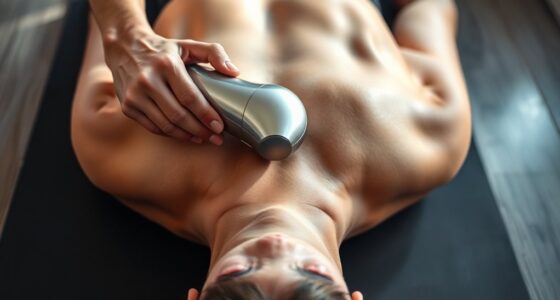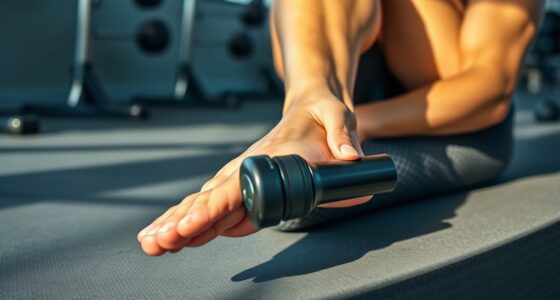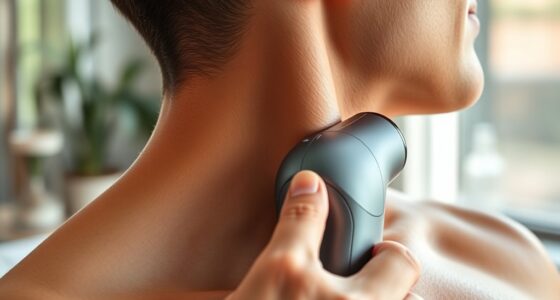
Using a massage gun as part of your routine can substantially reduce injury risk by easing muscle tightness and enhancing circulation. Incorporate it into warm-ups to activate muscles and improve flexibility, or use post-workout to help flush out metabolic waste and relax tight areas. Regular use supports muscle health, resilience, and performance, making injuries less likely over time. To discover more smart strategies that keep you injury-free, look deeper into what a massage gun can do.
Key Takeaways
- Incorporate massage guns into warm-up routines to activate muscles and improve flexibility, reducing injury risk.
- Use targeted massage to address tightness in common injury-prone areas like hamstrings and shoulders.
- Apply moderate settings and slow movements to prevent overstimulation and promote safe muscle preparation.
- Post-workout massage helps flush metabolic waste and relax muscles, decreasing soreness and overuse injuries.
- Regular use enhances muscle resilience and flexibility, supporting long-term injury prevention and athletic performance.
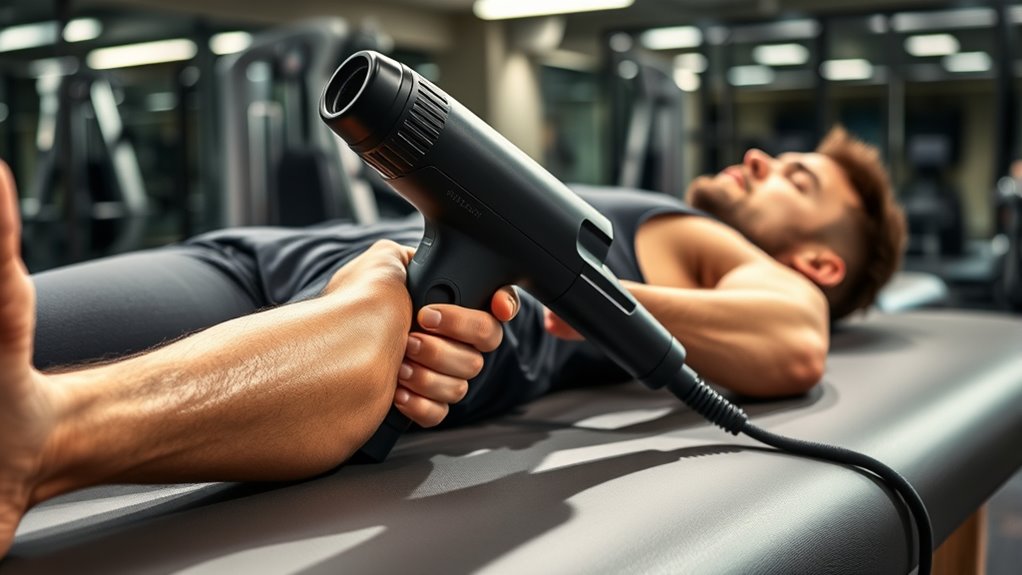
Massage guns have become popular tools for muscle recovery, but they also play a crucial role in injury prevention when used correctly. If you want to stay healthy and perform at your best, understanding how to incorporate massage guns into your routine is essential. One key area where they shine is during muscle recovery, helping to reduce soreness and improve circulation after intense workouts. But equally important is using them as part of your warm-up routines. Properly warming up with a massage gun can prepare your muscles, increase flexibility, and decrease the risk of strains and other injuries.
When you include a massage gun in your warm-up, you activate your muscles in a way that’s both effective and efficient. Instead of static stretching alone, using the device on specific muscle groups helps improve blood flow and break down any tight knots or adhesions. This process primes your muscles for activity, making them more pliable and less prone to overstretching or tearing during exercise. It’s like giving your body a head start, ensuring your muscles are ready to handle the demands of your workout.
To maximize injury prevention, focus on targeted areas that are prone to tightness or previous injuries. For example, spend a few minutes on your hamstrings, calves, quads, or shoulders before you hit the gym or field. Use the massage gun on a moderate setting, moving it slowly over each muscle group for about 30 seconds to a minute. This active preparation not only enhances your warm-up but also helps identify any areas that may need extra attention. If you notice persistent tightness or discomfort, you can spend additional time working those spots to loosen them up before starting your activity.
In addition to warm-up routines, incorporating massage guns into your muscle recovery process is equally important. After workouts, using the device helps flush out metabolic waste, relaxes tight muscles, and reduces soreness. This faster recovery enables you to get back to training sooner and lowers your injury risk over time. Remember, muscle health is fundamental to athletic performance and injury prevention. Regular use, especially as part of your pre- and post-exercise routines, keeps your muscles healthy and resilient.
Frequently Asked Questions
Are Massage Guns Safe for Children or Elderly Individuals?
You wonder if massage guns are safe for children or elderly individuals. Child safety is a priority, and their sensitive skin and developing muscles require gentle treatment. For elderly health, cautious use helps prevent injuries and supports recovery. Always consult a healthcare professional before using massage guns on children or seniors. Proper technique and lower intensity settings ensure safe, effective relief without risking harm, making these devices a helpful addition to health routines when used wisely.
Can Massage Guns Replace Professional Physiotherapy Treatments?
You might think a massage gun can replace professional physiotherapy, but don’t be fooled. While massage gun effectiveness is impressive for temporary relief, it’s no substitute for tailored physiotherapy treatments that address root causes. Physiotherapy vs massage guns highlights that the former offers expert guidance, personalized plans, and long-term healing. Relying solely on a massage gun can overlook underlying issues, risking more injury rather than preventing it.
How Often Should Athletes Use Massage Guns During Training?
You should use your massage gun during training based on your training frequency and how your body feels. For ideal usage, consider applying it after workouts or during rest days, but avoid overdoing it—limit sessions to 10-15 minutes per area. Listen to your body’s signals and adjust frequency accordingly. This helps promote recovery without risking overstimulation or injury, ensuring you’re ready for your next session.
What Are the Signs of Overuse or Misuse of Massage Guns?
Think of overusing your massage gun as crossing a line from relief to risk. You might notice increased muscle strain or joint pain, signaling misuse. If your muscles feel tender or sore after use, or if joint discomfort worsens, it’s a sign to stop. Using the device too intensely or for too long can cause more harm than good, so listen to your body and adjust accordingly.
Do Massage Guns Help Prevent Specific Sports Injuries?
You wonder if massage guns can help prevent specific sports injuries. While they aren’t a cure-all, they do support muscle recovery, which is key to injury prevention. Using a massage gun properly can reduce muscle tension and improve circulation, lowering the risk of strains and overuse injuries. Just remember to follow recommended guidelines and avoid overusing them to make sure they benefit your training and help prevent injuries.
Conclusion
Incorporate massage guns into your routine to relax your muscles, reduce soreness, and prevent injuries. Use them wisely to warm up your body, recover after workouts, and maintain flexibility. Listen to your body, adjust your pressure, and stay consistent. By doing so, you’ll boost your performance, minimize setbacks, and stay injury-free. Make massage guns a smart part of your training plan, and enjoy a healthier, more resilient athletic journey.