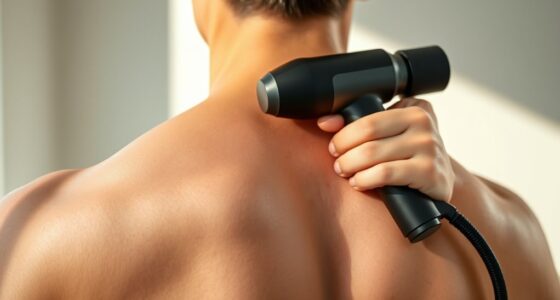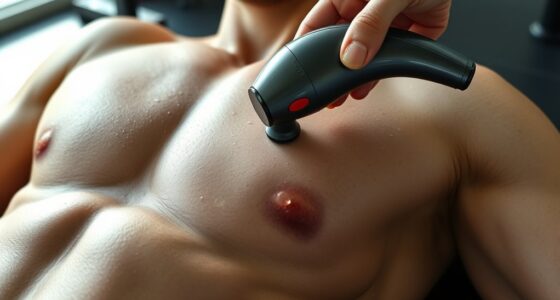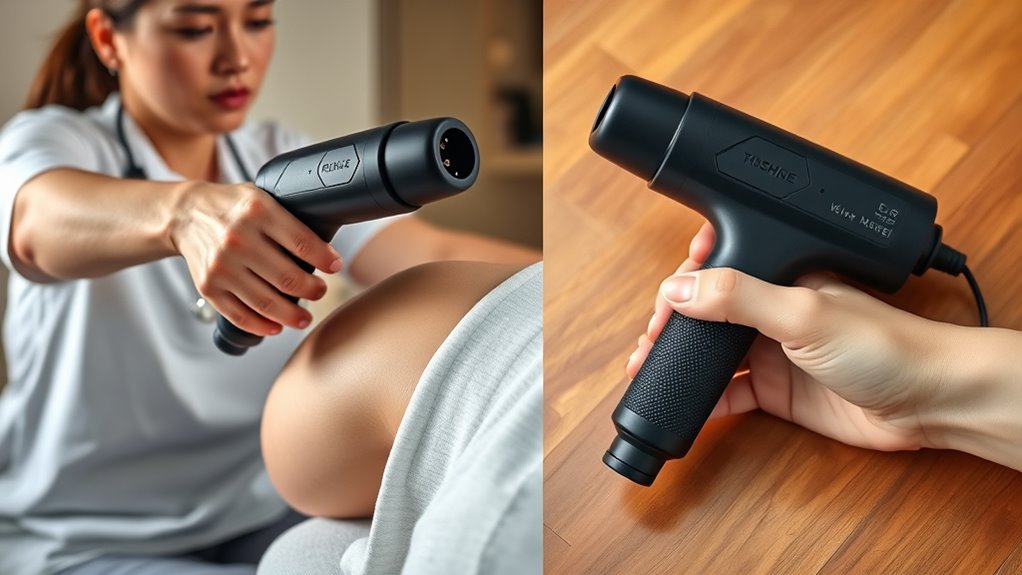

When deciding between dynamic and static use of a massage gun, you move the device continuously over larger areas for warmth and circulation, or hold it steady on tight spots for deep relief. Dynamic techniques are great for warming up muscles and preventing discomfort, while static application targets specific knots for intense release. Both methods have their benefits, and understanding when to use each can maximize your results—keep exploring to open more tips.
Key Takeaways
- Dynamic use involves moving the massage gun across muscles, ideal for warming up and promoting blood flow.
- Static use requires holding the gun on one spot to target trigger points and break down adhesions.
- Dynamic techniques are safer for general muscle relaxation and preventing overstimulation.
- Static methods are best for addressing specific knots and deep tissue release.
- Alternating between dynamic and static use maximizes muscle relief and overall effectiveness.
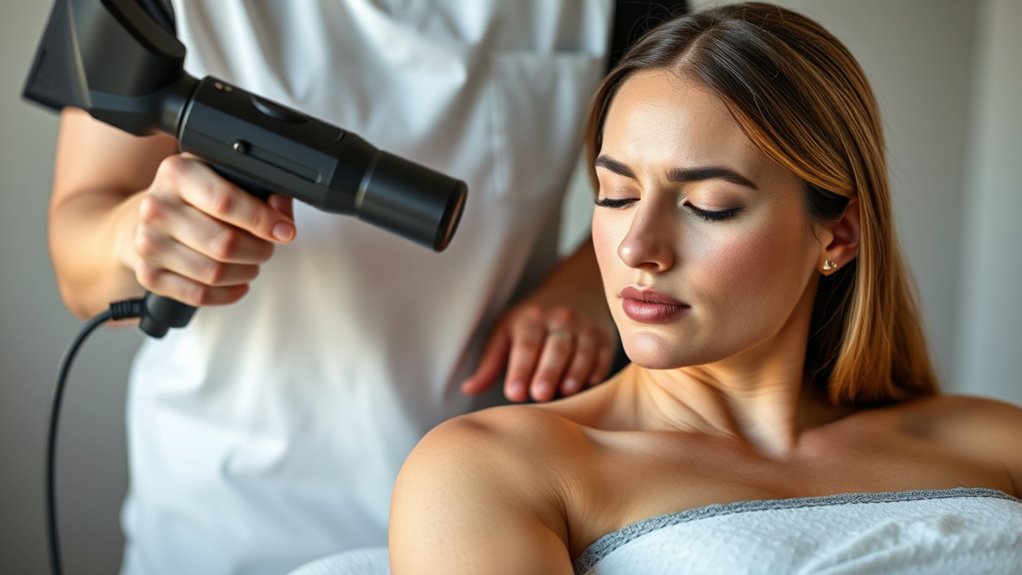
Have you ever wondered whether to use dynamic or static methods in your programming? When it comes to using a massage gun, this question takes on a whole new dimension. Choosing between moving the device continuously or holding it in one spot can substantially impact your results. In the world of trigger point therapy and muscle activation, this decision isn’t just about comfort — it’s about effectiveness.
Dynamic use involves moving the massage gun across the target area, which is ideal for warming up muscles and promoting overall blood flow. When you use the device dynamically, you’re actively engaging in muscle activation, encouraging your muscles to respond and loosen up. This approach helps break down adhesions and reduces tension gradually, making it suitable for larger muscle groups like the quads or hamstrings. It’s especially effective for warming muscles before a workout or for ongoing recovery sessions. By continuously moving the gun, you avoid overstimulating one spot, which can sometimes cause discomfort or bruising. Instead, the constant motion fosters a gentle, effective release, making it easier to achieve a relaxed, flexible state.
Moving the massage gun promotes blood flow and muscle relaxation for larger areas.
On the other hand, static use involves holding the massage gun in one spot for a few seconds or longer. This technique is often employed in trigger point therapy, where pinpointing specific knots or tight spots is necessary. Holding the device steady over a trigger point allows the therapy to target that precise area, helping to break down stubborn adhesions and promote muscle relaxation. Static application is beneficial when you need to address specific tension, such as a tight knot in your shoulder or a sore spot in your back. It can deliver a deep, focused treatment that encourages muscle activation by stimulating nerve endings and improving local blood flow. However, it’s vital not to overdo static pressure, as prolonged holding can cause discomfort or even aggravate the issue if not done carefully. Using proper technique ensures safety and effectiveness during static application.
Both techniques have their place and can be used interchangeably depending on your needs. Dynamic methods are generally safer for general muscle warm-up and recovery, while static methods excel at targeting specific problem areas. Understanding when to apply each approach will help you get the most out of your massage gun, whether you’re trying to loosen tight muscles, activate muscles before exercise, or address trigger points. Ultimately, listening to your body and adjusting your technique accordingly will lead to better results, ensuring your muscle health stays in excellent condition.
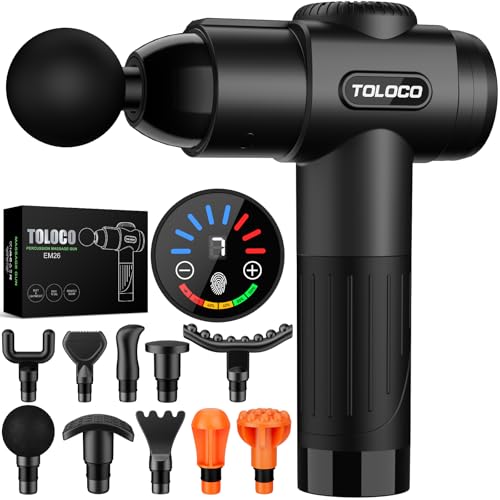
TOLOCO Massage Gun, Deep Tissue Back Massage for Athletes for Pain Relief, Percussion Massager with 10 Massages Heads & Silent Brushless Motor, Fathers Day Dad Gifts, Black
Quick Pain Relief: The TOLOCO deep tissue massage gun has a high penetration force of 12mm, up to…
As an affiliate, we earn on qualifying purchases.
As an affiliate, we earn on qualifying purchases.
Frequently Asked Questions
Can Static Massage Techniques Cause Muscle Stiffness?
Yes, static massage techniques can cause muscle stiffness if overused. Holding the massage gun in one spot may lead to muscle tension rather than relaxation, hindering blood circulation. To promote muscle relaxation and improve blood circulation effectively, you should incorporate movement with the massage gun. This dynamic approach helps prevent stiffness, reduces soreness, and guarantees you get the most benefit from your massage sessions.
Which Method Is Better for Injury Recovery?
For injury recovery, moving the massage gun is better because it promotes muscle relaxation and circulation enhancement. Imagine someone recovering from a hamstring strain; by using dynamic techniques, they can reduce tightness and improve blood flow, speeding healing. Static holds might cause stiffness or irritation. So, you should focus on controlled, gentle movements to support your recovery effectively and avoid further injury.
How Does User Experience Differ Between Dynamic and Static Use?
You’ll notice that dynamic use enhances muscle relaxation and boosts blood circulation by actively moving the massage gun across your muscles. It feels more invigorating and targets larger areas effectively. Static use, where you hold the device in one spot, provides deeper relief and helps release tension in specific points. Your experience varies based on your needs—dynamic for overall relaxation, static for focused tension relief.
Are There Specific Muscles That Respond Better to Static or Dynamic Massage?
You know what they say, “a stitch in time saves nine.” Muscles with tightness or low flexibility often respond better to static massage, helping tension release and lengthening. Conversely, dynamic massage suits muscles needing increased blood flow or warmth, like larger groups such as quads or hamstrings. For ideal results, target muscles based on your needs, switching between static and dynamic techniques to improve flexibility and ease tension efficiently.
Is One Technique More Suitable for Athletes Than the Other?
You’ll find dynamic massage techniques more suitable for athletes because they actively promote muscle relaxation and increase blood flow. Moving the massage gun helps break up tension and enhances circulation, speeding recovery after intense activity. Static holds can be useful for targeting specific tight spots, but for overall muscle relaxation and ideal blood flow, dynamic use is more effective. This approach supports quicker recovery and improved performance.
TOLOCO Massage Gun, Deep Tissue Back Massage for Athletes for Pain Relief, Percussion Massager with 10 Massages Heads & Silent Brushless Motor, Fathers Day Dad Gifts, Black
Quick Pain Relief: The TOLOCO deep tissue massage gun has a high penetration force of 12mm, up to…
As an affiliate, we earn on qualifying purchases.
As an affiliate, we earn on qualifying purchases.
Conclusion
Think of your massage gun as a dance partner—sometimes you move smoothly across your muscles, like a flowing waltz, to warm up and loosen tight spots. Other times, you hold steady, like a gentle embrace, to target specific knots. Both dynamic and static techniques work together like a well-choreographed routine, helping your muscles recover and relax. So, switch between moving and holding, and let your massage be a harmonious rhythm that keeps you feeling your best.
TOLOCO Massage Gun, Deep Tissue Back Massage for Athletes for Pain Relief, Percussion Massager with 10 Massages Heads & Silent Brushless Motor, Fathers Day Dad Gifts, Black
Quick Pain Relief: The TOLOCO deep tissue massage gun has a high penetration force of 12mm, up to…
As an affiliate, we earn on qualifying purchases.
As an affiliate, we earn on qualifying purchases.
TOLOCO Massage Gun, Deep Tissue Back Massage for Athletes for Pain Relief, Percussion Massager with 10 Massages Heads & Silent Brushless Motor, Fathers Day Dad Gifts, Black
Quick Pain Relief: The TOLOCO deep tissue massage gun has a high penetration force of 12mm, up to…
As an affiliate, we earn on qualifying purchases.
As an affiliate, we earn on qualifying purchases.