
When massaging deep muscles, you apply firm, sustained pressure to target inner tissues, often using slow, deliberate movements to release trigger points and break adhesions. Superficial massage involves gentle, gliding strokes that promote relaxation and improve circulation without penetrating too deeply. Your choice depends on whether you want to ease chronic pain or simply relax. Keep exploring to discover more about how these techniques can benefit your specific needs.
Key Takeaways
- Deep massage uses firm, sustained pressure to target inner muscles and trigger points, while superficial massage employs gentle, gliding strokes for relaxation.
- Deep techniques aim to break up adhesions and relieve chronic pain, whereas superficial methods focus on improving circulation and reducing surface tension.
- Deep massage is slower and more deliberate, requiring skill to avoid discomfort, unlike the faster, fluid movements of superficial massage.
- Deep work targets specific tight or tender areas, while superficial massage broadly promotes relaxation and stress relief.
- Choice of technique depends on goals: pain relief and muscle tightness versus general relaxation and skin sensitivity.
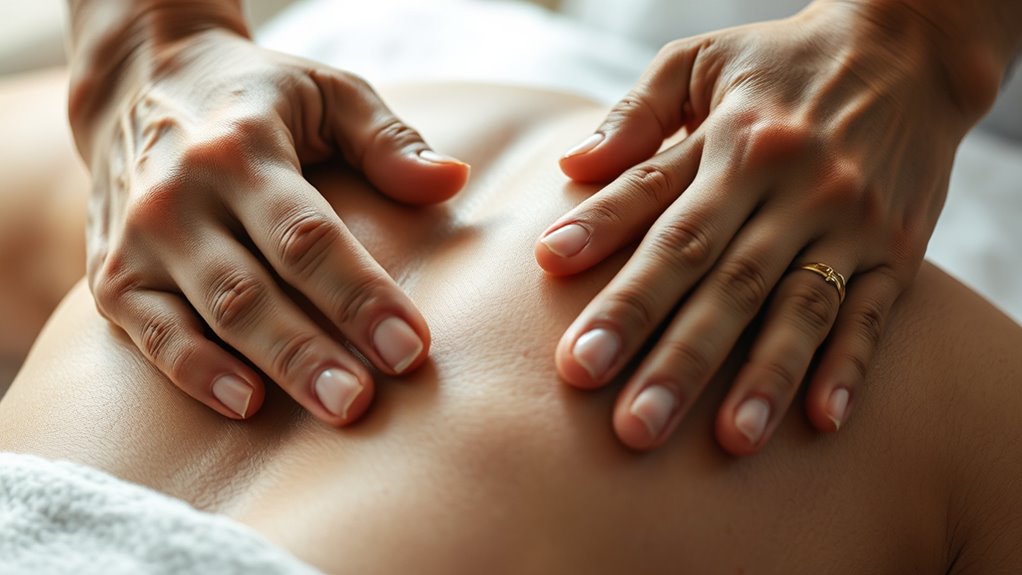
When it comes to massage therapy, understanding the difference between massaging deep muscles and superficial muscles can considerably impact your results. Knowing how to target each layer effectively allows you to tailor your approach, whether you’re seeking relief from chronic pain, muscle tension, or simply relaxation. Deep muscle massage involves applying firm pressure to reach the inner layers of muscle tissue, often focusing on areas with persistent tightness or trigger points. Trigger points are hyperirritable spots that can cause referred pain and discomfort, making them a common target during deep tissue work. To release these points, you need to use specific muscle relaxation techniques, such as sustained pressure, myofascial release, or deep finger pressure. These techniques help to break up adhesions, improve blood flow, and reduce muscle spasms, providing long-term relief.
Deep muscle massage targets inner layers with firm pressure and trigger point techniques for long-term relief.
In contrast, superficial muscles are closer to the skin’s surface and generally respond well to lighter, more gentle massage strokes. When working on these muscles, your goal is often relaxation, improving circulation, and easing minor tension. Techniques like effleurage (long, gliding strokes) or superficial kneading help to warm up the muscles and prepare them for deeper work if needed. While superficial massage might seem less intense, it plays a pivotal role in promoting overall muscle relaxation and reducing stress. It’s particularly effective for individuals new to massage therapy or those with sensitive skin.
Targeting deep muscles requires a different set of skills and awareness. You need to gauge the client’s response carefully, applying enough pressure without causing discomfort. The use of trigger point therapy is common here, where you locate a knot or tender area and apply sustained pressure until you feel it release. This approach not only alleviates localized pain but also prevents the formation of future trigger points. The key is understanding that deep muscle techniques are more precise, often involving slow, deliberate movements to access hard-to-reach tissues. Meanwhile, superficial techniques tend to be faster and more fluid, encouraging relaxation and a sense of well-being.
Ultimately, the choice between deep and superficial massage techniques depends on your goals. If you’re dealing with chronic pain, muscle tightness, or trigger points, deep work with targeted muscle relaxation techniques will be more effective. For general relaxation or light tension relief, working on superficial muscles with gentle strokes will suffice. Knowing when and how to employ each approach allows you to optimize your massage therapy sessions, ensuring you get the most benefit whether you’re targeting deep-seated issues or just unwinding.
Frequently Asked Questions
How Do I Tell if a Muscle Needs Deep or Superficial Massage?
You can tell if a muscle needs a deep or superficial massage through muscle assessment. If the muscle feels tight, tender, or has knots, it likely needs a deeper massage with increased pressure. For areas that are sore or sensitive on the surface, a superficial approach is best. Pay attention to the client’s feedback and adjust your massage pressure accordingly to target the right layer of muscle effectively.
Can Deep Massage Cause More Soreness Than Superficial Techniques?
Yep, deep massage can definitely cause more soreness, but isn’t that just part of the fun? When you use trigger point therapy or fascia release techniques, you target those stubborn knots and tight fascia, which can lead to some post-massage soreness. It’s a sign you’re really working those deep layers. Just remember, a bit of soreness often means progress—so embrace the ache and enjoy your recovery!
Are There Risks Associated With Massaging Deep Muscles?
Yes, there are risks associated with massaging deep muscles, especially if you don’t focus on technique accuracy. You might increase your injury risk if pressure is too intense or if you target the wrong areas. To avoid this, make sure you apply appropriate pressure, use correct techniques, and listen to your body’s responses. Proper training and awareness help minimize potential discomfort or injury during deep tissue massage.
How Long Should Each Type of Massage Be Applied?
Think of massage like watering a plant—you don’t want to overdo it. For superficial muscles, keep the massage to about 10-15 minutes with gentle, consistent pressure. For deep muscles, limit it to 20-30 minutes, focusing on controlled, firm pressure to avoid discomfort. Longer durations or excessive pressure can cause soreness. Adjust the massage duration based on pressure intensity to make certain effective, safe results without over-stimulating tissues.
Is Special Training Required to Perform Deep Muscle Massage?
Yes, special training is recommended to perform deep muscle massage safely and effectively. You’ll need training requirements that cover proper technique adjustments, anatomy, and safety precautions. Without proper training, you risk applying too much pressure or causing injury. By completing specialized courses, you’ll learn how to target deeper muscles correctly, ensuring your massage benefits clients without discomfort or harm. Always prioritize professional training before performing deep muscle techniques.
Conclusion
Whether you’re targeting deep or superficial muscles, remember that each technique has its place—like a wise old scribe choosing between a quill and a feather. Deep massage digs in for lasting relief, while superficial strokes offer quick comfort. Know your goals, and adjust accordingly. With patience and practice, you’ll master the art of massage, transforming your hands into tools of healing—no need for a magic wand, just a touch that’s both gentle and firm.