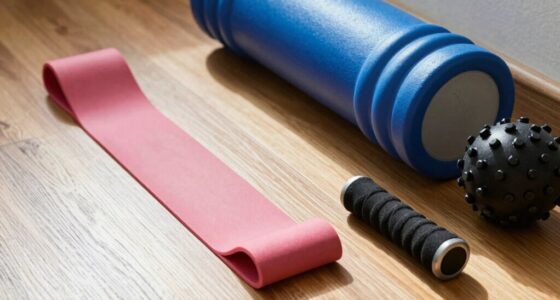

You might notice that tight and weak muscles feel similar because both sensations stem from neuromuscular fatigue and communication issues. When muscles get tired from overuse, they tend to contract involuntarily, creating a feeling of tightness. At the same time, fatigue can impair their ability to produce force, leading to weakness. Because these reactions are linked to how your nervous system controls muscle function, understanding the connections can help you better manage and recover from these sensations.

Get workout gear delivered free with Prime
- Fast, free delivery on millions of items
- Prime Video, Amazon Music and more included
- Member-only deals all year
Key Takeaways
- Both sensations can result from muscle fatigue, causing over-contraction and reduced force production.
- Fatigue-induced involuntary contractions create tightness while impairing muscle strength.
- Altered neuromuscular communication can produce similar feelings of tightness and weakness.
- Exhausted muscles may feel tight due to over-contraction but lack strength to perform movements.
- Recovery strategies like rest and stretching help differentiate and address these overlapping sensations.

Have you ever felt both tightness and weakness in the same muscle, wondering if they’re the same thing? It’s a common experience, and it can be confusing because these sensations often feel similar, yet they stem from different issues. When a muscle feels tight, it’s usually a sign of tension or overuse, where the fibers are contracted and resistant to movement. On the other hand, a weak muscle lacks strength and may struggle to generate the expected force. But sometimes, these feelings overlap, making it hard to tell which is which. That’s where understanding muscle fatigue and the neuromuscular connection helps clarify what’s really happening. Recognizing the signs of muscle fatigue can guide you to appropriate recovery methods and prevent further strain.
Muscle fatigue plays a big role here. When you push your muscles too hard or sustain activity for too long, the muscle fibers become exhausted. This fatigue can cause a sensation of tightness because the muscles are over-contracted, trying to keep up but unable to sustain the effort. At the same time, fatigue can impair your muscle’s ability to generate force, making it feel weak. The two sensations often occur together during intense or prolonged activity, highlighting how closely tightness and weakness are linked through fatigue. Additionally, neuromuscular communication can become less efficient under fatigue, further complicating these sensations. Changes in neuromuscular control can lead to altered movement patterns that contribute to these feelings, emphasizing the importance of proper recovery. An understanding of muscle physiology can help you better interpret these signals and respond appropriately. Understanding this connection helps you see why muscles might feel tight and weak at the same time. They’re not necessarily injured in the traditional sense but are responding to the way your nervous system communicates with them. When you’re fatigued or your neuromuscular connection is compromised, your muscles may contract involuntarily, creating tightness, while simultaneously losing their ability to generate power, leading to weakness. Recognizing these clues allows you to tailor your recovery strategies—rest, proper hydration, and targeted stretching—to restore both the muscle’s flexibility and strength. In brief, what feels like a simple sensation often has a complex neurological and physiological background, making awareness and proper care essential.
As an affiliate, we earn on qualifying purchases.
Frequently Asked Questions
Can Emotional Stress Cause Physical Sensations of Tightness or Weakness?
Yes, emotional stress can cause physical sensations of tightness or weakness. When you’re stressed, your mind-body connection triggers a stress response, releasing hormones like adrenaline. This response can lead to muscle tension, making you feel tight, or cause fatigue, leading to weakness. Your body reacts to emotional stress as if it’s preparing for action, which can manifest as these physical sensations, even when there’s no actual physical threat.
How Do Mental Health Issues Influence Physical Feelings of Strength or Tension?
When your mind triggers stress, it can blur the line between emotional and physical states, creating sensations of tension or weakness you can’t easily explain. The mind-body connection means your mental health directly influences how strong or tense you feel. As tension builds, you might sense your body tightening, or feel surprisingly weak—both signals of emotional stress manifesting physically. Stay alert; your mental state whispers truths about your physical feelings.
Are There Specific Medical Conditions That Mimic Both Tightness and Weakness?
Yes, certain medical conditions can mimic both tightness and weakness. For example, muscle spasms cause sudden, involuntary contractions that feel tight and weak, confusing your perception. Conditions affecting the nervous system, like multiple sclerosis or neuropathy, disrupt nerve signals, leading to muscle weakness and tension. These issues can make your muscles feel simultaneously tight and weak, highlighting how interconnected nerve health and muscle sensations truly are.
What Role Does Fatigue Play in the Perception of Muscle Tightness or Weakness?
Think of fatigue like a fog settling over your muscles, blurring the line between tightness and weakness. When you’re muscle fatigued or experiencing nerve exhaustion, your perception of tightness or weakness can become heightened. Muscle fatigue drains your strength, making muscles feel stiff or heavy, while nerve exhaustion can cause a similar sensation, making you feel weak or tight. This overlap tricks your mind into perceiving both sensations as the same.
Can Hydration Levels Impact Feelings of Muscle Tightness or Weakness?
Hydration levels substantially impact how you feel muscle tightness or weakness. Proper hydration supports electrolyte balance, which is essential for muscle function. Dehydration can cause muscles to feel tight or weak, leading to cramps or fatigue. Hydration therapy helps replenish lost fluids and electrolytes, restoring balance. Staying well-hydrated ensures your muscles work efficiently, reducing discomfort and preventing the misleading sensations of tightness or weakness.
muscle tension relief massage ball
As an affiliate, we earn on qualifying purchases.
As an affiliate, we earn on qualifying purchases.
Conclusion
Next time you feel “tight” and “weak,” remember they’re like two sides of the same coin—both can leave you feeling stuck and powerless. I once watched a dancer struggle to loosen up, her muscles as stiff as a board, yet her mind felt just as drained. It’s a reminder that your body’s tension and fatigue are intertwined, often tricking you into thinking you’re weak, when in reality, your strength just needs a little release.
neuromuscular stimulation device
As an affiliate, we earn on qualifying purchases.
As an affiliate, we earn on qualifying purchases.
muscle fatigue recovery supplements
As an affiliate, we earn on qualifying purchases.
As an affiliate, we earn on qualifying purchases.
Fall Picks
fall essentials
As an affiliate, we earn on qualifying purchases.