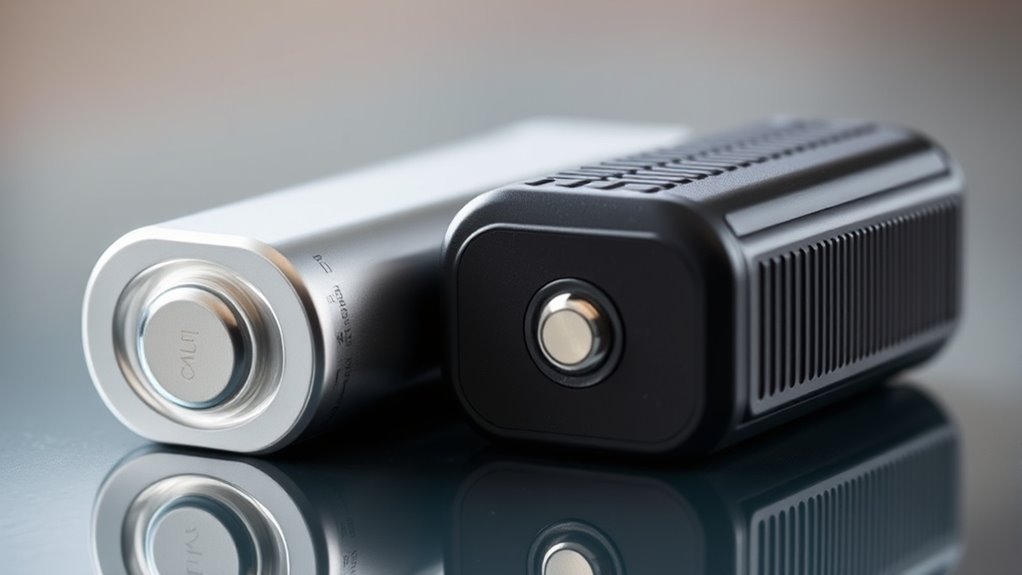

If you’re choosing power sources for your massage gun, lithium-ion batteries are the smarter option. They last longer, charge faster, and provide more consistent power during use, making them ideal for regular or intense sessions. NiMH batteries tend to lose capacity quickly and take longer to charge, which might leave you frustrated. Want to discover how these differences can impact your experience and which battery type suits your needs best? Keep exploring to find out more.
Key Takeaways
- Lithium-ion batteries last longer and retain capacity over more charge cycles than NiMH batteries.
- They charge faster and are more efficient, reducing downtime for massage guns.
- Lithium-ion provides more consistent power output, ensuring smoother operation during use.
- They are better suited for frequent, heavy use, offering greater reliability and longer lifespan.
- Overall, lithium-ion batteries are more advanced, reliable, and convenient for powering massage guns.
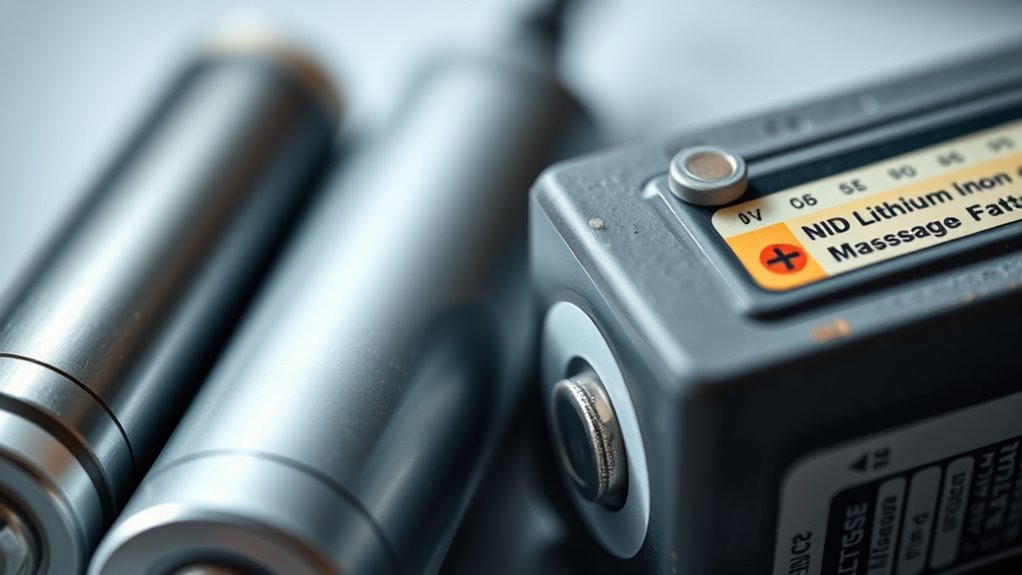
Are lithium-ion and nickel-metal hydride (NiMH) batteries truly different in performance and applications? When it comes to powering your massage gun, understanding these differences can help you choose the right battery type for your needs. One of the most noticeable distinctions lies in their battery lifespan. Lithium-ion batteries generally last longer than NiMH batteries. They tend to retain their capacity over more charge cycles, meaning you won’t have to replace them as often. If you use your massage gun frequently, a lithium-ion battery could save you money and hassle over time. NiMH batteries, on the other hand, typically have a shorter lifespan. They lose their capacity more quickly and require more frequent replacements. This shorter lifespan makes them less ideal for heavy or prolonged use, especially if you rely on your massage gun daily. Battery technology continues to advance, making lithium-ion batteries increasingly more efficient and reliable. Charging efficiency is another key factor that sets these batteries apart. Lithium-ion batteries are known for their superior charging efficiency. They can be charged quickly and hold their charge better, which means less downtime between uses. This rapid charging capability is especially beneficial if you need to use your massage gun frequently or on tight schedules. NiMH batteries, however, are less efficient when it comes to charging. They take longer to charge fully and tend to lose their charge faster when not in use. This can be frustrating if you’re trying to get quick sessions or need your device ready at a moment’s notice. Additionally, NiMH batteries are more susceptible to memory effect, which can reduce their overall capacity if not fully discharged before recharging. Lithium-ion batteries, in contrast, don’t suffer from this problem, further contributing to their better charging efficiency.
The performance of these batteries also impacts how well your massage gun operates. Lithium-ion batteries deliver more consistent power output, ensuring your device runs smoothly throughout the session. NiMH batteries might experience a drop in voltage as they discharge, which can lead to uneven performance or shorter effective run times. For users who want a reliable, long-lasting power source, lithium-ion batteries are typically the better choice. They combine longer battery lifespan with high charging efficiency, making them more suitable for frequent, demanding use. While NiMH batteries can work well for lighter or occasional use, they tend to fall short when it comes to the demands of daily, intense sessions. So, if you’re serious about performance, longevity, and convenience, opting for a lithium-ion battery will likely serve you better in the long run.

21.6v 2500mAh Massage Gun Battery Lithium-ion 18650 6S1P Rechargeable Battery for Percussion Muscle Fascia Gun
- Voltage: 21.6V
- Capacity: 2500mAh
- Battery Type: Lithium-ion 18650
As an affiliate, we earn on qualifying purchases.
As an affiliate, we earn on qualifying purchases.
Frequently Asked Questions
How Do Charging Times Compare Between Lithium-Ion and Nimh Batteries?
You’ll find that lithium-ion batteries typically charge faster than NiMH batteries, thanks to their superior charging speed and power efficiency. When you plug in your massage gun, lithium-ion packs often reach full capacity quicker, reducing downtime. NiMH batteries, however, take longer to charge and may be less efficient, meaning you spend more time waiting before you can use your device again. This faster charging makes lithium-ion batteries more convenient overall.
Which Battery Type Is More Environmentally Friendly?
You’ll find lithium-ion batteries are generally more environmentally friendly because they contain lower toxicity levels and benefit from established recycling programs. Nimh batteries, while recyclable, have higher toxicity and can be more challenging to dispose of safely. Opting for lithium-ion reduces environmental impact, especially if you participate in proper recycling efforts. By choosing the right battery and recycling responsibly, you help minimize pollution and support sustainability.
What Is the Typical Lifespan of Each Battery?
You might worry about battery lifespan, but both types last quite a while if you care for them properly. Lithium-ion batteries typically last 2-3 years, thanks to their high energy density, while NiMH batteries usually hold up for 1-2 years. Recycling your batteries extends their life cycle and benefits the environment. With proper maintenance, you can enjoy longer-lasting power and make the most of each charge.
Are There Safety Concerns With Either Battery Type?
You should know that both battery types have safety concerns. Lithium-ion batteries can overheat if subjected to high battery temperatures, increasing the risk of fire or explosion. Nimh batteries are less prone to overheating but may leak electrolyte if damaged or improperly handled. Always follow manufacturer guidelines to prevent battery leakage, and avoid exposing batteries to extreme temperatures to guarantee safe use.
How Do Temperature Sensitivities Differ Between Lithium-Ion and Nimh?
Imagine a delicate dance where each partner must stay perfectly in step; lithium-ion batteries are like this due to their higher thermal stability. They handle temperature fluctuations better and require precise temperature regulation to prevent overheating. Nimh batteries, on the other hand, are more sensitive, akin to a dancer who stumbles with temperature swings. They demand careful temperature management to avoid performance issues or damage.

Clearon Massage Gun Battery Replacement Massage Gun – 25.2 V / 2500 mAh up to 12 Hours of use. NOT Compatible with HYPERVOLT
- Battery Capacity: 6×2500 mAh, 25.2 V
- Compatibility Note: Not compatible with Hypervolt
- Usage Time: Up to 12 hours of use
As an affiliate, we earn on qualifying purchases.
As an affiliate, we earn on qualifying purchases.
Conclusion
When choosing between lithium-ion and NiMH batteries for your massage gun, consider their differences in power and longevity. Did you know lithium-ion batteries typically last 2-3 times longer than NiMH ones? This means fewer replacements and more consistent performance. If you want reliable, long-lasting power, lithium-ion is the better choice. So, think about your needs and enjoy a smoother, more effective massage experience with the right battery type by your side.
Clearon Massage Gun Battery Replacement Massage Gun – 25.2 V / 2500 mAh up to 12 Hours of use. NOT Compatible with HYPERVOLT
- Battery Capacity: 6×2500 mAh, 25.2 V
- Compatibility Note: Not compatible with Hypervolt
- Usage Time: Up to 12 hours of use
As an affiliate, we earn on qualifying purchases.
As an affiliate, we earn on qualifying purchases.
Clearon Massage Gun Battery Replacement Massage Gun – 25.2 V / 2500 mAh up to 12 Hours of use. NOT Compatible with HYPERVOLT
- Battery Capacity: 6×2500 mAh, 25.2 V
- Compatibility Note: Not compatible with Hypervolt
- Usage Time: Up to 12 hours of use
As an affiliate, we earn on qualifying purchases.
As an affiliate, we earn on qualifying purchases.