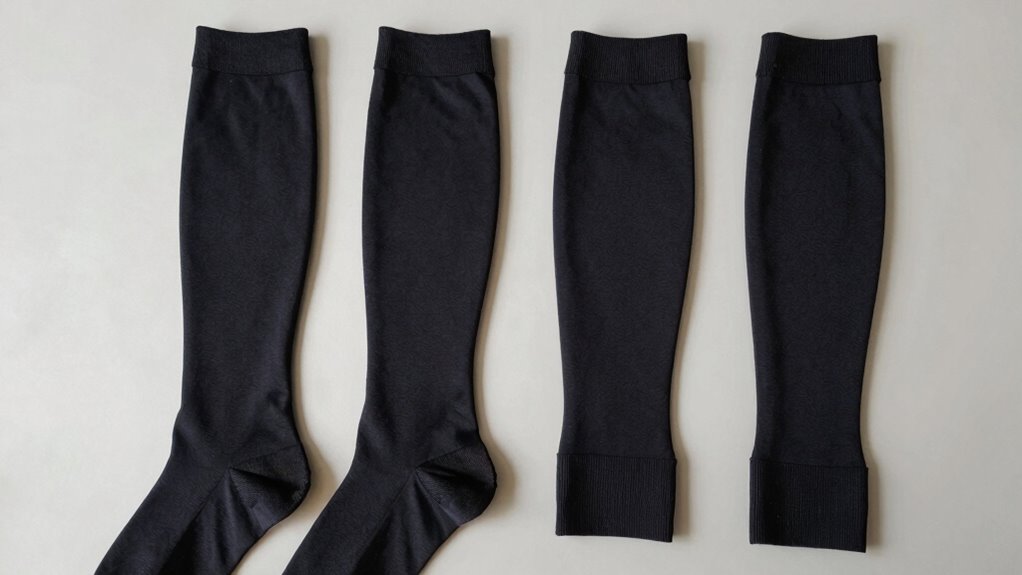

Choosing between compression socks and sleeves depends on your specific needs. Socks offer full coverage from foot to knee, providing support during intense workouts or medical conditions like varicose veins. Sleeves cover only the calves or arms, offering targeted support and more breathability. Your choice affects comfort and effectiveness, whether for athletic performance or medical recovery. Want to discover which option suits your activity or health goals better? Keep exploring for the details.
Key Takeaways
- Compression socks cover the foot, ankle, and calf, offering full support; sleeves target specific muscles like calves or arms.
- Socks provide full coverage and support during intense physical activity; sleeves are more breathable and easier to wear for targeted relief.
- Medical applications favor socks for circulation issues; sleeves are used for localized muscle support or injury recovery.
- Socks tend to be snug and restrictive, while sleeves offer less constriction and greater breathability.
- Proper sizing and material choice are essential for effectiveness and comfort in both options.
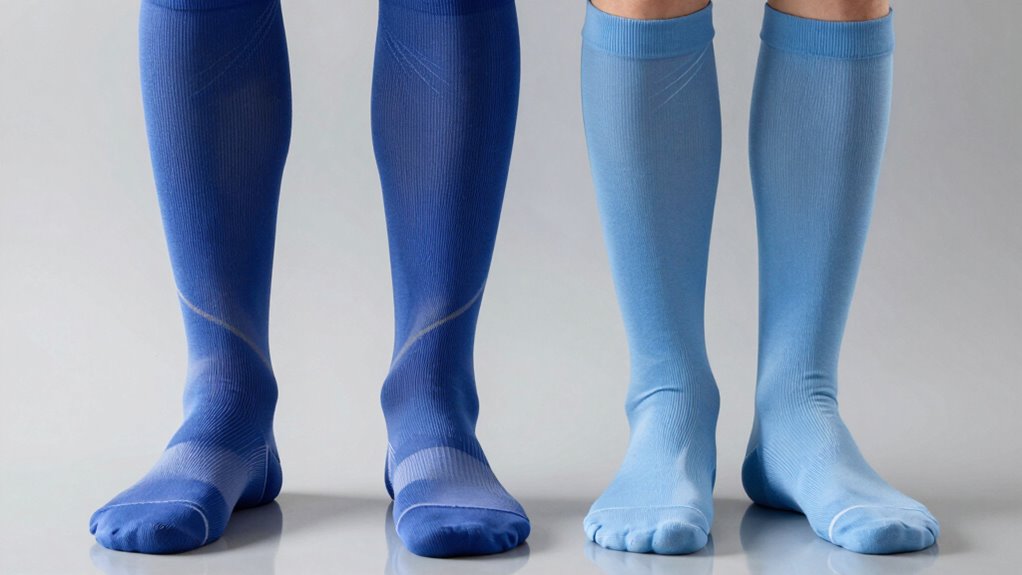
When choosing between compression socks and compression sleeves, understanding their differences can help you make an informed decision. Both serve to improve circulation and reduce muscle fatigue, but they’re designed for different needs and preferences. If you’re focused on athletic performance, compression socks can provide full coverage from your foot up to your knee, supporting your calves and ankles during intense workouts. They help enhance blood flow, reduce muscle vibration, and speed up recovery, making them popular among runners, cyclists, and athletes who push their limits. On the other hand, compression sleeves cover only your calves or arms, offering targeted compression where you need it most, whether for specific muscle support or pain relief. They’re easier to put on and take off, making them a convenient choice for daily wear or post-exercise recovery. Additionally, medical-grade compression ensures that the level of compression is appropriate for health-related needs, which can be crucial for effective treatment and comfort.
Choosing between compression socks and sleeves depends on your activity, needs, and preference for full coverage or targeted support.
Medical applications also influence the choice between the two. Compression socks are often recommended for medical conditions such as varicose veins, deep vein thrombosis (DVT), or swelling in the legs. They provide graduated compression that encourages blood flow back to the heart, which is *essential* for managing circulation issues. Compression sleeves are sometimes used in medical settings as well, especially for arm-related conditions or post-surgical recovery, but they’re less common for *all-encompassing* leg support. Your healthcare provider might prescribe compression socks if you need to manage chronic venous issues or prevent blood clots, while sleeves could be suggested for localized muscle support or injury recovery. Additionally, compression gear comes in various compression levels to suit different needs and comfort preferences.
Comfort and fit are key factors in your decision. Compression socks tend to be more snug because they cover your entire foot, ankle, and calf, which can feel restrictive at first but offers *full-spectrum* support. They’re ideal if you want a seamless, one-piece solution for athletic activities or medical needs. Compression sleeves, however, are less restrictive, allow for more breathability, and are easier to remove, which can be a big plus if you prefer quick changes or have sensitive skin. Both come in various compression levels, so you need to choose the right amount of pressure based on your activity level or medical advice. Furthermore, proper sizing is critical to ensure that you receive the intended benefits without discomfort or circulation issues.
Choosing the right compression gear also involves considering material properties, such as moisture-wicking and breathability, which can significantly impact comfort during prolonged wear. Ultimately, your choice hinges on your specific goals. If you want maximum coverage to improve athletic performance or address medical conditions, compression socks are generally the better option. If you prefer targeted support, ease of use, or a less restrictive fit, compression sleeves might suit you better. Recognizing these tiny differences can make a big difference in how effectively you use compression gear to meet your needs.
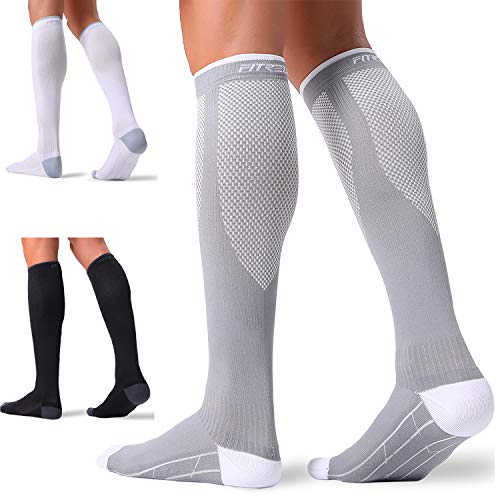
FITRELL 3 Pairs Compression Socks for Women and Men 20-30mmHg- Circulation and Muscle Support Socks for Travel, Running, Nurse, Knee High, Medical Black+White+Grey Small-Medium
【Size Tips】: Choose according to your CALF size first as for 20-30 mmHg. One size smaller if need…
As an affiliate, we earn on qualifying purchases.
As an affiliate, we earn on qualifying purchases.
Frequently Asked Questions
Can Compression Sleeves Be Used With Compression Socks Simultaneously?
Yes, you can wear compression sleeves with compression socks simultaneously. Just keep in mind layerings techniques and fashion considerations. Wearing both provides extra support, especially for athletes or those with circulation issues. Make sure the compression levels are suitable for each piece to avoid discomfort. Opt for seamless designs if you’re concerned about appearance or chafing. Ultimately, layering compression gear can enhance performance and comfort when done thoughtfully.
Are Compression Sleeves Suitable for Upper Arm Injuries?
Sure, compression sleeves are perfect for upper arm injuries. Who knew that wrapping your arms could speed up upper arm recovery? The benefits of compression sleeves include improved circulation, reduced swelling, and support for muscles, making them ideal for recovery. So, if you’re seeking compression sleeve benefits, don’t hesitate—wear them confidently to give your upper arms the support they deserve and hopefully, speedy relief.
Do Compression Socks Help With Circulation Issues Beyond Athletes?
Yes, compression socks can improve circulation beyond athletic use. They offer medical benefits like reducing swelling and enhancing blood flow, making them suitable for daily wear, especially if you spend long hours on your feet or have circulation issues. Wearing compression socks regularly helps prevent discomfort, varicose veins, and other circulation problems, providing ongoing support for your legs and promoting overall vascular health.
How Do Compression Socks and Sleeves Differ in Material Breathability?
Imagine a gentle breeze passing through your gear—compression socks often use thicker, durable materials that prioritize support but can trap heat. Sleeves, meanwhile, are usually made from lighter, more breathable fabrics that wick moisture away, keeping your skin cool and dry. So, if you want better material durability and moisture management, socks might be firmer, whereas sleeves offer superior breathability for comfort during extended wear.
Can Compression Sleeves Be Worn During Sleep?
Yes, you can wear compression sleeves during sleep, but it’s not always recommended. For sleep comfort and nightly wear, compression sleeves might feel restrictive and could interfere with your circulation if worn too tightly overnight. If you have circulation issues or specific medical advice, consult your doctor before wearing them while sleeping. Generally, most people find it more comfortable to remove compression gear at bedtime for better rest.
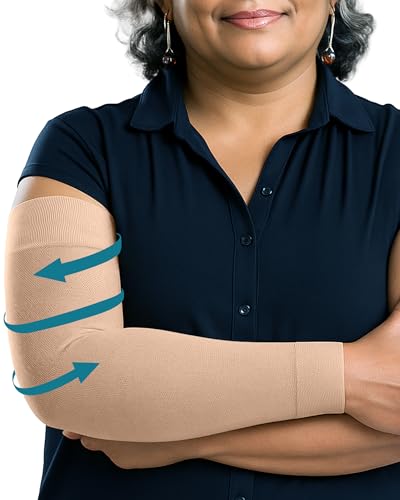
KEMFORD Compression Lymphedema Arm Sleeves for Women – 15-20 mmHg, Silicone Grip, 1 Pair, Beige, S/M – Medical Full Arm Support for Swelling, Circulation & Edema
𝗗𝗼𝘂𝗯𝗹𝗲-𝗖𝗵𝗲𝗰𝗸 𝗕𝗲𝗳𝗼𝗿𝗲 𝗢𝗿𝗱𝗲𝗿𝗶𝗻𝗴: Compression sleeves are designed for a snug, medical-grade fit, so if you are between sizes…
As an affiliate, we earn on qualifying purchases.
As an affiliate, we earn on qualifying purchases.
Conclusion
Whether you choose compression socks or sleeves, think of them as your trusted teammates on every run or recovery. Picture your muscles as a well-oiled machine, with each piece supported and energized, ready to conquer the next mile. The tiny difference in design becomes a big decision in how you feel and perform. So, pick your gear and step into your journey with confidence—because the right compression can turn a good day into a great one.

BLITZU Calf Compression Sleeves for Men and Women. Footless Compression Socks Support for Varicose Vein, Nursing, Running. Leg Sleeve Brace for Shin Splints, Pain Relief & Reduces Swelling Black L-XL
Calf Compression Sleeve Sizing Information: For the best fit of your sizes, please refer to our sizing chart….
As an affiliate, we earn on qualifying purchases.
As an affiliate, we earn on qualifying purchases.
FITRELL 3 Pairs Compression Socks for Women and Men 20-30mmHg- Circulation and Muscle Support Socks for Travel, Running, Nurse, Knee High, Medical Black+White+Grey Small-Medium
【Size Tips】: Choose according to your CALF size first as for 20-30 mmHg. One size smaller if need…
As an affiliate, we earn on qualifying purchases.
As an affiliate, we earn on qualifying purchases.