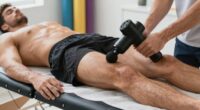
When comparing recovery gear for athletes versus desk workers, focus on material quality, durability, and ergonomic design. Athletes need gear that can withstand intense, frequent use and targets specific muscle groups, while desk workers benefit from supportive, ergonomic products that promote proper posture and relieve tension during long hours. Consider how each product conforms to body contours and suits your active or sedentary lifestyle. If you want to understand the key differences and how to choose the best gear, there’s more to explore.
Key Takeaways
- Assess material durability and quality to ensure gear withstands intensive use for athletes and prolonged, daily use for desk workers.
- Evaluate ergonomic design and body conformity for targeted muscle relief versus ergonomic support for posture.
- Match gear features to specific use cases: recovery and performance for athletes, comfort and tension relief for desk workers.
- Consider environmental and outdoor suitability if gear is intended for outdoor recovery routines or eco-conscious lifestyles.
- Check customization options and long-term performance to ensure the gear maintains support and effectiveness over time for both users.
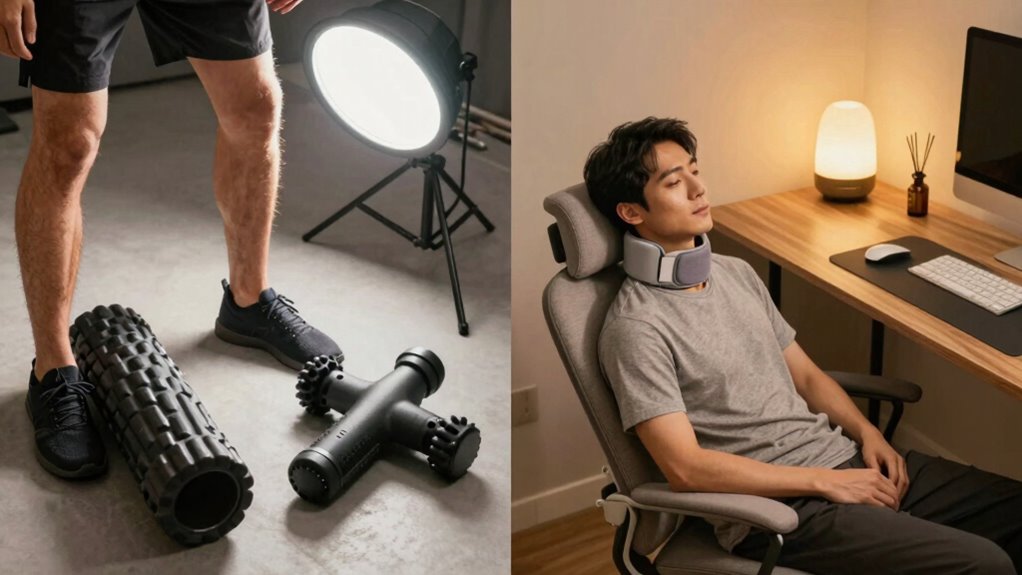
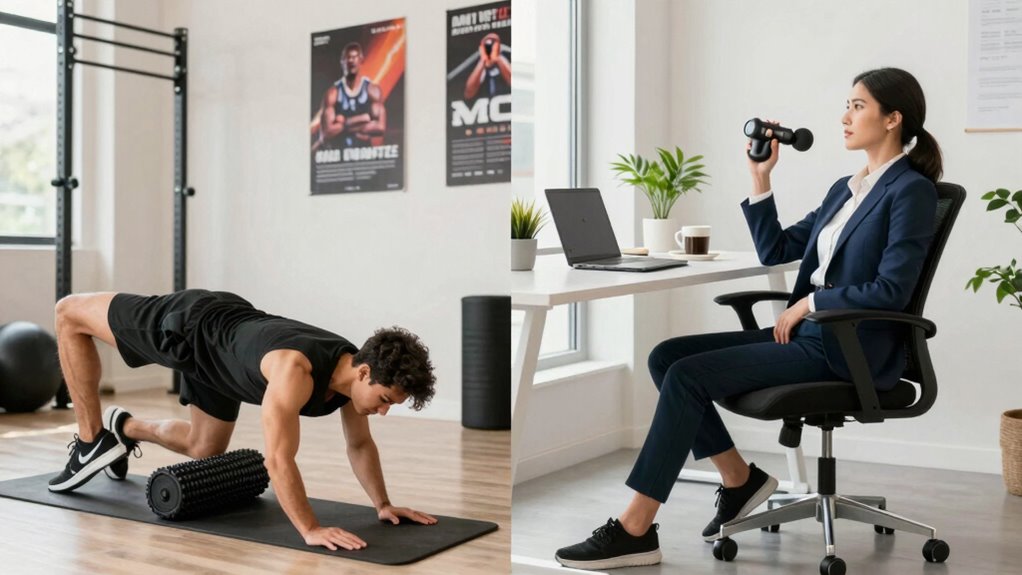
For athletes, recovery gear often emphasizes performance and resilience. Look for items crafted with high-quality materials that undergo rigorous durability testing—such as foam rollers, massage balls, or compression sleeves—to ensure they won’t break down after repeated use. An ergonomic design is equally critical here; gear should conform to your body’s contours, allowing for effective pressure application and muscle relief without causing discomfort. For example, foam rollers with ergonomic shapes help target specific muscle groups more precisely, making your recovery sessions more effective. Incorporating material quality into your selection process guarantees that your gear can withstand the demands of frequent use and maintain its effectiveness over time.
In contrast, if you spend most of your day seated at a desk, your recovery gear should prioritize ergonomic design to promote proper posture and reduce discomfort. Products like lumbar support cushions, sit-stand mats, or ergonomic kneeling chairs should be adjustable and shaped to support natural spinal alignment. Durability testing remains important, especially for items subjected to daily wear and tear. You want gear that retains its supportive qualities over time without losing comfort or structural integrity. For instance, an ergonomic cushion made from durable, high-density foam will hold its shape longer, providing consistent relief throughout your workday. Additionally, considering outdoor-friendly designs can be beneficial if you prefer to combine recovery routines with time spent in nature, aligning with sustainable backyard transformation ideas.
Furthermore, understanding the importance of natural environments in enhancing recovery can help you choose gear that complements outdoor activities or outdoor-friendly designs, especially if you prefer to combine recovery routines with time spent in nature. Incorporating environmental considerations into your selection process can help ensure your gear aligns with sustainable choices and outdoor use. When comparing recovery gear for either group, pay close attention to the materials used and the results of durability testing—this tells you how well the product will hold up in your routine. An athletic recovery tool must endure frequent, intense use, so durability is non-negotiable. Conversely, desk workers benefit from gear that maintains its supportive properties over extended periods of daily use. Moreover, considering product customization options can ensure the gear fits your unique needs and enhances overall recovery effectiveness.
Ultimately, your choice hinges on matching the gear’s design and durability to your lifestyle. Athletes should seek robust, ergonomically designed products that facilitate muscle recovery after strenuous workouts. Desk workers need supportive, ergonomic gear that alleviates tension and maintains comfort during long hours at a desk. By focusing on these factors, you ensure your recovery gear effectively serves its purpose and stands the test of time.

IEUDNS Foam Roller Exercise Muscle Relief Myofascial Release Massage Roller Wavy Shape Ergonomic Expanded Polypropylene Suitable for Stretching Athletes Gym Use, Blue, Hardness 55
- Spinal Support: Decompresses back and neck gently
- Versatile Use: Ideal for athletes and runners
- Deep Tissue Massage: Targets knots and muscle tension
As an affiliate, we earn on qualifying purchases.
As an affiliate, we earn on qualifying purchases.
Frequently Asked Questions
What Are the Most Overlooked Recovery Tools for Desk Workers?
You might overlook ergonomic accessories like footrests or adjustable keyboard stands, which can considerably reduce strain. Don’t forget mental relaxation tools such as guided meditation apps or stress-relief techniques, as they help manage the mental fatigue from prolonged sitting. These recovery tools are essential for desk workers to prevent discomfort and boost productivity, yet often go unnoticed. Incorporating both physical and mental recovery strategies can make a substantial difference in your daily comfort.
How Often Should Athletes and Desk Workers Replace Their Recovery Gear?
You should replace your recovery gear based on its durability lifespan, which varies by item and use. For example, foam rollers may last 1-2 years with regular maintenance, like cleaning and inspecting for cracks. Keep an eye on wear and tear—if your gear feels less effective or shows visible damage, it’s time for a replacement. Regular maintenance tips prolong lifespan, ensuring your recovery tools stay effective and safe.
Are There Any Recovery Gear Options Suitable for Both Groups?
Yes, there are multi-use equipment and universal accessories suitable for both athletes and desk workers. Foam rollers, massage balls, and resistance bands work well for everyone, helping relieve muscle tension and improve circulation. These versatile tools adapt to different needs, whether you’re post-workout or sitting at a desk all day. Investing in such multi-use recovery gear guarantees you can maintain comfort and flexibility, regardless of your activity level.
How Does Budget Impact Recovery Gear Choices for Athletes Versus Desk Workers?
Budget constraints greatly influence your recovery gear choices, whether you’re an athlete or a desk worker. For athletes, gear affordability might mean prioritizing essential items like foam rollers or massage sticks, while avoiding high-end tech. Desk workers may focus on affordable ergonomic accessories. Your budget determines what recovery tools you can access, so compare options carefully to get the best value, ensuring you support recovery without overspending.
Can Recovery Gear Prevent Injuries in Both Athletes and Desk Workers?
They say an ounce of prevention is worth a pound of cure, and recovery gear can help prevent injuries for both athletes and desk workers. Using ergonomic solutions and targeted recovery tools, you can address strain and reduce injury risks. While gear can’t eliminate all dangers, it promotes injury prevention by supporting proper posture and muscle recovery, keeping you healthier and more comfortable in your daily activities.

Lumbar Support Pillow for Office Chair, Office Home Essentials,Gifts for Mom,Dad, Back Support Pillow for Car, Chair Cushions,Back Pain Relief Improve Posture,Mesh Cover Double Adjustable Straps
- Extended, Adjustable Straps: Fits more chairs securely
- Ergonomic Back Support: Relieves back pain and tightness
- Supports Proper Posture: Maintains natural spinal curve
As an affiliate, we earn on qualifying purchases.
As an affiliate, we earn on qualifying purchases.
Conclusion
Think of choosing recovery gear like tending a garden. Athletes’ tools are like sturdy shovels, built to dig deep and break through tough soil, helping them grow stronger. Desk workers’ gear is more like gentle watering cans, nurturing their muscles without overwhelming them. By selecting the right tools for your needs, whether you’re planting roots or cultivating resilience, you’ll foster a healthier, more balanced body—ready to flourish in every aspect of your life.

Massage Lacrosse Balls for Myofascial Release, Trigger Point Therapy, Muscle Knots, and Yoga Therapy. Set of 2 Firm Balls (Blue and Red)
- Immediate Muscle Relief: Eliminates knots and tension quickly
- Easy Self-Massage: Use body weight for relief
- Portable and Versatile: Use anywhere: home, office, gym
As an affiliate, we earn on qualifying purchases.
As an affiliate, we earn on qualifying purchases.
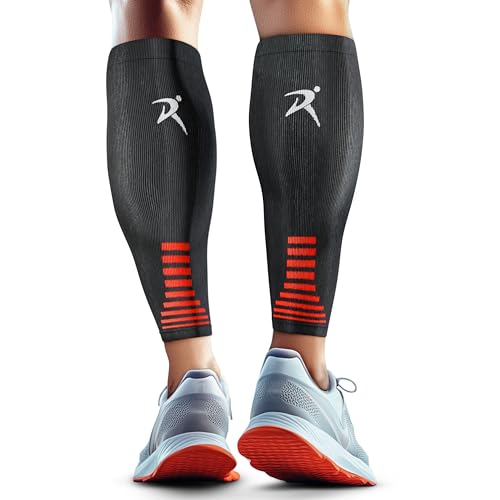
Rymora Calf Compression Sleeves Men Women Shin Splints Running (Pair) (Black) (L)
- Size Guide: Check size chart for best fit
- Calf Support: Provides instant, snug support
- Enhanced Circulation: Graduated compression encourages blood flow
As an affiliate, we earn on qualifying purchases.
As an affiliate, we earn on qualifying purchases.