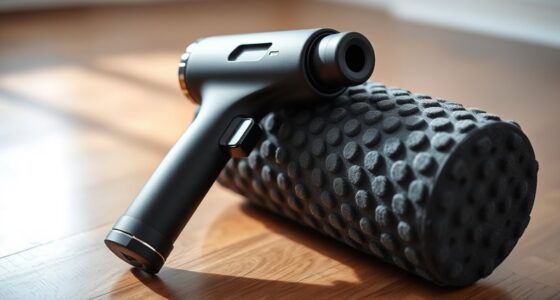
You can measure changes in muscle tissue stiffness after percussion therapy by using tools like myometry or palpation, which assess muscle resistance and elasticity. These methods track improvements in flexibility and reduced tension, providing tangible evidence of progress. Monitoring these changes helps you understand how effectively the therapy relaxes muscles and breaks adhesions. Keep exploring to discover more techniques and how they can optimize your recovery and mobility outcomes.
Key Takeaways
- Changes in muscle tissue stiffness can be assessed using instruments like myometers or elastometers before and after percussion therapy.
- Imaging techniques such as ultrasound elastography provide visual measurements of tissue elasticity to evaluate stiffness reduction.
- Subjective assessments like range of motion tests and pain scales help gauge improvements following percussion treatment.
- Quantitative data on stiffness decrease can be obtained by comparing pre- and post-therapy measurements with specialized devices.
- Consistent measurement protocols enable tracking of tissue response and effectiveness of percussion therapy over multiple sessions.

Muscle tissue stiffness refers to the resistance of muscles to stretch or movement, often resulting from changes in muscle properties or underlying conditions. When you experience stiffness, it can limit your range of motion and cause discomfort, making daily activities more challenging. To address this, various therapies aim to reduce muscle tightness and improve flexibility. Two effective techniques are myofascial release and ultrasound therapy, both of which target the underlying causes of stiffness and help restore normal muscle function.
Muscle stiffness limits movement and causes discomfort, but targeted therapies like myofascial release and ultrasound restore flexibility.
Myofascial release is a manual therapy that involves applying gentle, sustained pressure to the fascia—the connective tissue surrounding muscles. By releasing restrictions in the fascia, this technique helps decrease muscle tension and enhances mobility. When you receive myofascial release, you might notice immediate relief from tightness and improved movement, especially if your stiffness stems from fascial adhesions or chronic tension. This therapy is particularly useful after percussion therapy sessions, as it helps maintain and prolong the benefits by addressing superficial and deep tissue restrictions. Incorporating essential oils for muscle relief, such as lavender or eucalyptus, during massage sessions can further enhance relaxation and recovery.
Ultrasound therapy, on the other hand, uses high-frequency sound waves to penetrate deep into the muscle tissue. This process increases local circulation, promotes tissue relaxation, and accelerates healing of any underlying injuries that contribute to stiffness. By applying ultrasound therapy, you can experience a reduction in muscle tightness and pain, especially in chronic conditions or after intense physical activity. When combined with percussion therapy, ultrasound helps prepare the muscles for stretching or manual treatments, making subsequent therapies more effective.
Both myofascial release and ultrasound therapy are often integrated into treatment plans after percussion therapy to optimize outcomes. Percussion therapy uses rapid taps or vibrations to loosen muscles and break down adhesions, providing immediate relief from stiffness. Following this initial step, myofascial release can target any remaining fascial restrictions, while ultrasound therapy enhances tissue healing and relaxation. Together, these modalities address different aspects of muscle stiffness—mechanical restrictions and tissue health—offering a holistic approach to restoring mobility.
As you undergo these therapies, you might notice a gradual improvement in muscle flexibility and a decrease in discomfort. Regular sessions can also prevent stiffness from returning, especially when combined with proper stretching and strengthening exercises. Understanding how these treatments work together allows you to actively participate in your recovery, ensuring better long-term results. Whether you’re recovering from injury or managing chronic tightness, combining myofascial release, ultrasound therapy, and percussion techniques provides a powerful strategy to measure and improve changes in muscle tissue stiffness effectively.

Tens Unit Machine Pulse Massager for Pain Relief, 24 Massage Modes, Rechargeable Muscle Stimulator Device with 10 Pads
THIS PRODUCT INCLUDES; 1x NueMedics Tens 24 Controller, 6 Large Electrodes ( Pads ), 2 Electrodes Cables, User's…
As an affiliate, we earn on qualifying purchases.
As an affiliate, we earn on qualifying purchases.
Frequently Asked Questions
How Quickly Does Muscle Stiffness Typically Change After Percussion Therapy?
You’ll notice muscle stiffness can change within minutes after percussion therapy, but the timing accuracy varies depending on your body’s response. Typically, measurements show decreased stiffness shortly after treatment, yet consistency can differ due to factors like technique and individual variability. To track these changes reliably, guarantee measurement consistency by using calibrated tools and standardized timing. This helps you accurately monitor how quickly your muscle tissue responds to percussion therapy.
Are There Specific Muscles More Responsive to Percussion-Induced Stiffness Changes?
Oh, absolutely—your calves and back are probably the superstar muscles when it comes to percussion sensitivity and muscle response. They tend to respond more quickly and noticeably to percussion therapy, thanks to their larger size and frequent use. So, if you’re hoping for rapid stiffness relief, target those areas. Other muscles might be a bit more stubborn, but hey, persistence pays off, right?
Can Measuring Stiffness Predict Injury Risk or Recovery Progress?
Measuring stiffness can help predict injury risk and monitor recovery effectively. When you track changes over time, you can spot areas that are unusually stiff or soft, indicating potential issues or progress. This data allows you to adjust your training or therapy plans proactively, reducing injury chances and ensuring you’re on the right path to recovery. Regular stiffness assessments give you a clearer picture of your muscle health and readiness.
What Are the Long-Term Effects of Repeated Percussion on Muscle Tissue?
Repeated percussion can lead to muscle adaptation and tissue remodeling over time. You might notice improved flexibility and reduced stiffness as your muscles respond positively. However, excessive or aggressive percussion could cause overstimulation or damage, hindering recovery. It’s essential to use percussion judiciously, allowing your tissues to adapt gradually. Consistent, moderate treatment supports healthy remodeling, but overdoing it may impair long-term muscle function.
How Does Individual Variability Affect Stiffness Measurement Accuracy?
Your individual variability, like differences in muscle fiber composition and connective tissue density, impacts stiffness measurement accuracy. You might find that tighter connective tissue or more elastic muscle fibers skew results. To improve precision, consider customizing assessments based on personal muscle and connective tissue characteristics. This way, you account for natural differences, ensuring your measurements truly reflect changes in muscle stiffness rather than individual anatomical variations.
ultrasound elastography for muscle
As an affiliate, we earn on qualifying purchases.
As an affiliate, we earn on qualifying purchases.
Conclusion
As you feel the gentle tap of percussion, imagine your muscle tissue softening like a pliable rope. That subtle shift in stiffness reveals how your muscles respond and adapt, opening a window into their hidden resilience. With each measured tap, you get closer to understanding the unseen waves of tension and relief coursing through you. It’s a quiet dance of change, where your muscles tell a story of strength, flexibility, and healing in every gentle percussion.
myometry muscle tension meter
As an affiliate, we earn on qualifying purchases.
As an affiliate, we earn on qualifying purchases.

APSWUDR Mugwort Massage Hammer, Back Massager Hammer, Pain Relief Massager for Neck, Back, Shoulder & Body – Handheld Percussion Therapy Tool with US Design Patent,(Blue and Yellow…)
💖TRADITIONAL MUGWORT WORKSHOP PRODUCTION: This manual massage hammer is a health product protected by a US patent. It…
As an affiliate, we earn on qualifying purchases.
As an affiliate, we earn on qualifying purchases.