Percussive therapy stimulates your nervous system by activating sensory receptors in your skin and muscles, which enhances muscle fiber recruitment and improves neural communication. It also modulates pain signals through the gate control theory, reducing discomfort and tightness. The rapid vibrations send signals to your spinal cord and brain, triggering reflexes and neuroplastic changes that boost overall neuromuscular function. If you want to understand how these responses help your performance and recovery, there’s more to discover.
Key Takeaways
- Rapid vibrations stimulate nerve endings, activating reflexes that enhance muscle recruitment and improve motor function.
- Vibrations interfere with pain signals via the gate control theory, providing immediate pain relief.
- Stimulation triggers neurophysiological responses in the spinal cord and brain, promoting increased blood flow and tissue repair.
- Continuous stimulation induces neuroplastic changes, refining nervous system regulation of muscle activity over time.
- Combined effects of vibration promote resilience, faster recovery, and improved sensory processing through neurophysiological adaptation.
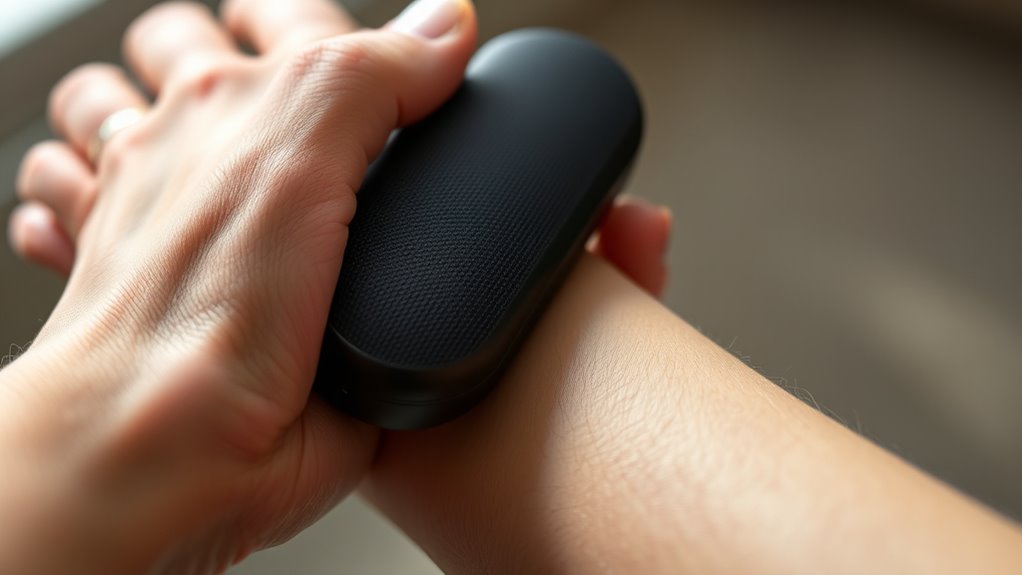
Percussive therapy, a popular technique for muscle relief and recovery, works by delivering rapid, targeted vibrations to the body’s tissues. When you use a percussive device, these vibrations penetrate deep into your muscles, stimulating nerve endings and triggering a cascade of neurophysiological responses. One of the primary effects you experience is muscle activation; the vibrations help recruit muscle fibers more efficiently, encouraging your muscles to engage and respond more effectively. This process can improve overall muscle function, enhance blood flow, and prepare muscles for activity or recovery. By activating the muscles in this way, you may notice a quicker warm-up, increased strength, and better coordination during workouts or daily tasks.
Percussive therapy stimulates muscles with targeted vibrations, enhancing activation, blood flow, and recovery.
At the same time, pain modulation plays a significant role in how percussive therapy helps you feel better. When vibrations are applied, they stimulate specialized nerve fibers in your skin and muscles, which can interfere with the transmission of pain signals to your brain. This is known as the gate control theory of pain, where activating certain nerve pathways can “close the gate” on pain signals, reducing your perception of discomfort. As a result, you often experience a decrease in muscle soreness and tightness following therapy sessions. The vibrations also promote the release of endorphins, your body’s natural painkillers, further helping to alleviate pain and foster a sense of relaxation.
Your nervous system responds quickly to percussive therapy. The rapid vibrations send signals to your spinal cord and brain, which interpret these inputs and initiate reflexive responses. These responses include increased blood flow to the targeted area, which supplies nutrients and oxygen necessary for tissue repair. Additionally, the sensory input from vibrations can dampen the activity of pain pathways, giving you immediate relief. Over time, repeated stimulation can lead to neuroplastic changes, meaning your nervous system becomes more efficient at managing pain and muscle function. Moreover, these neurophysiological responses are influenced by the contrast ratio, which affects how well your brain perceives differences in light and dark areas, supporting overall sensory processing and adaptation. This neurophysiological adaptation can contribute to longer-lasting improvements in muscle health, flexibility, and pain resilience.
In essence, percussive therapy taps into your nervous system’s remarkable ability to adapt and respond. It promotes muscle activation, helping your muscles work more effectively, while simultaneously modulating pain signals to make discomfort more manageable. These neurophysiological effects combine to make percussive therapy a powerful tool for both recovery and performance enhancement. As you continue to use it regularly, you may notice your nervous system becomes better at regulating muscle function and pain, making your body more resilient and responsive over time.

Snailax Cordless Handheld Back Massager with Heat, Deep Tissue Percussion Massager, 3 Sets of Dual Pivoting Heads,Rechargeable Hand Held Massager for Neck,Back Shoulder,Calf,Legs
Dual Percussion Heads: Snailax hand held percussion massager features dual heads operate at up to 3200 pulses per…
As an affiliate, we earn on qualifying purchases.
As an affiliate, we earn on qualifying purchases.
Frequently Asked Questions
Can Percussive Therapy Improve Nerve Regeneration?
Percussive therapy can support nerve repair by stimulating blood flow and reducing muscle tension, which may enhance the regeneration potential. While it doesn’t directly repair nerves, it can create a favorable environment for nerve regeneration by promoting circulation and decreasing inflammation. You might notice improved nerve function over time as these conditions foster healing, but always consult a healthcare professional for targeted nerve repair strategies.
How Does Percussive Therapy Affect Pain Perception?
Percussive therapy reduces your pain perception by engaging pain gating and sensory modulation. When you use it, the rhythmic taps stimulate your sensory nerves, activating the pain gating mechanism in your spinal cord. This process blocks or dampens pain signals before they reach your brain. As a result, you experience less pain, making percussive therapy an effective way to manage discomfort through natural nervous system responses.
Are There Risks of Nerve Damage With Excessive Use?
Yes, excessive use of percussive therapy can increase nerve sensitivity and potentially cause nerve injury. To prevent injury, you should limit session duration and avoid applying excessive force in sensitive areas. Regularly monitor how your body responds, and if you notice pain or tingling, stop immediately. Proper technique and moderation are essential for injury prevention, ensuring you get benefits without risking nerve damage or discomfort.
Does Percussive Therapy Influence Autonomic Nervous System Balance?
You’ll find that percussive therapy can considerably influence autonomic nervous system balance, promoting relaxation or alertness. Studies show that it can enhance autonomic modulation by stimulating mechanoreceptors, which helps regulate stress responses. When you use percussive therapy correctly, it activates your nervous system’s parasympathetic branch, encouraging rest and recovery. This interaction supports overall nervous system health and can improve your physical and mental well-being.
Can It Help With Neurological Conditions Like Neuropathy?
Percussive therapy can potentially help with neurological conditions like neuropathy by promoting muscle relaxation and enhancing blood flow. You might notice reduced nerve pain and improved circulation, which support nerve healing and function. While it’s not a cure, regular use can ease discomfort and improve mobility. Always consult your healthcare provider before starting, but this therapy could be a helpful adjunct in managing neuropathy symptoms.

TOLOCO Massage Gun, Deep Tissue Back Massage for Athletes for Pain Relief, Percussion Massager with 10 Massages Heads & Silent Brushless Motor, Fathers Day Dad Gifts, Carbon
Quick Pain Relief: The TOLOCO deep tissue massage gun has a high penetration force of 12mm, up to…
As an affiliate, we earn on qualifying purchases.
As an affiliate, we earn on qualifying purchases.
Conclusion
So, next time you crank up that percussive device, remember—your nervous system’s just silently judging your obsession. It’s not impressed by your fancy gadgets; it’s reacting in ways you probably don’t even notice. Maybe, just maybe, the real therapy is realizing that all this fuss is just a high-tech way to distract from the fact that sometimes, you’re better off simply listening to your body—and not your latest massage gadget hype. Who knew science could be so cheeky?

HYAKO Pro R1 Therapy Massager – Handheld Deep Tissue Vibration Massager for Full Body Pain Relief & Fascial limitation & Treats Sensitive Areas | Pressure Point Massage Tool (Upgraded)-Blue
Powerful Treatment Power: HYAKO R1 Pro (3.5×3.5×8 inches), weighing just 1.7 lbs, with a vibration frequency of 5500-7500…
As an affiliate, we earn on qualifying purchases.
As an affiliate, we earn on qualifying purchases.

Acupuncture Pen, Premium Stainless Steel Acupressure Pen for Muscle Tension Pain Relief, Trigger Point Massage Pen Manual Reflexology Tool
DEEP TISSUES MASSAGE: Tophld manual acupuncture pen provides deep tissue massage for relieving tension, muscle aches, and pains
As an affiliate, we earn on qualifying purchases.
As an affiliate, we earn on qualifying purchases.