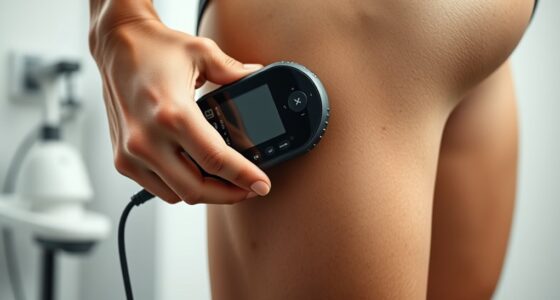
Hyperemia is the increased blood flow to tissues that happens after percussion, which stimulates the underlying tissues. When you perform percussion, your body responds by dilating blood vessels, allowing more blood to flood the area temporarily. This surge in blood flow helps deliver oxygen and nutrients, supporting healing and tissue life-force. Usually lasting minutes to hours, this vascular response offers valuable clues about circulation and health. Continue exploring to understand how this process impacts overall tissue function.

Get workout gear delivered free with Prime
- Fast, free delivery on millions of items
- Prime Video, Amazon Music and more included
- Member-only deals all year
Key Takeaways
- Hyperemia is an increased blood flow to an area following percussion stimulation.
- It results from vasodilation, allowing more blood to reach tissues temporarily.
- The hyperemic response indicates healthy circulation and tissue responsiveness.
- Its presence helps assess vascular health and nerve function during clinical evaluation.
- The blood flow surge typically lasts minutes to hours, aiding in healing and diagnostic processes.

Percussion, a technique commonly used in massage therapy and medical diagnostics, can considerably influence blood flow in targeted areas. When you apply percussion, you’re stimulating the tissues beneath the skin, prompting a series of physiological responses known as the vascular response. This response is essential because it determines how blood vessels react to the mechanical stimulus, either by dilating to increase blood flow or constricting temporarily. Understanding this vascular response helps you appreciate the immediate and longer-term effects percussion can have on circulation. It’s particularly significant in clinical settings, where changes in blood flow can serve as indicators of underlying health conditions.
Percussion stimulates tissues, triggering the vascular response and enhancing blood flow for healing and diagnostic insights.
The vascular response triggered by percussion is often characterized by a phenomenon called hyperemia, which refers to an increase in blood flow to a specific area. When you deliver percussion, you’re essentially signaling the blood vessels to open wider, allowing more blood to reach the tissues. This surge of blood is a natural part of the body’s healing process, delivering oxygen, nutrients, and immune cells to the area. The increased blood flow, or hyperemia, can be temporary, lasting minutes to hours after the stimulus, depending on the intensity and duration of the percussion. Recognizing these changes is key to evaluating tissue health and responsiveness.
In the context of medical diagnostics, the blood flow changes after percussion hold significant diagnostic importance. For instance, a healthy vascular response typically results in a noticeable hyperemic response, indicating good circulation and tissue vitality. Conversely, a muted or absent hyperemic response may point to underlying vascular issues, such as arterial blockages or circulatory impairments. Medical professionals often observe the extent and duration of hyperemia to evaluate vascular health, nerve function, and tissue condition. In massage therapy, understanding this response guides practitioners in customizing treatment to optimize blood flow and promote healing.
Moreover, monitoring blood flow changes after percussion can help identify areas of concern that might not be evident through visual examination alone. For example, if applying percussion doesn’t elicit the expected hyperemic response, it might suggest compromised circulation or nerve damage. This diagnostic significance underscores how percussion isn’t just about relaxation—it’s a valuable tool for evaluating the body’s internal health. By paying close attention to the vascular response and the resulting hyperemia, you can better understand tissue health and tailor treatments accordingly. Additionally, awareness of the body’s natural vasodilation mechanisms enhances your understanding of how blood flow adapts during therapeutic interventions.
percussion massage therapy tools
As an affiliate, we earn on qualifying purchases.
As an affiliate, we earn on qualifying purchases.
Frequently Asked Questions
How Quickly Does Hyperemia Develop After Percussion?
Hyperemia develops quickly after percussion, usually within a few seconds to a minute. The vascular response triggers an immediate increase in blood flow as blood vessels dilate to accommodate the stimulus. The timing of onset varies depending on individual factors and the intensity of percussion. You’ll notice the hyperemic response almost instantly, making it a useful indicator of vascular reactivity and health during clinical assessments.
Can Hyperemia Indicate Underlying Health Issues?
Yes, hyperemia can indicate underlying health issues. When you notice persistent or abnormal blood flow changes, it may signal inflammation, infection, or circulatory problems. While temporary hyperemia after percussion is normal, ongoing or excessive blood flow shifts can serve as health indicators that warrant further medical evaluation. Pay attention to these signs, as they can help identify health concerns early and guide appropriate diagnosis and treatment.
Is Hyperemia Temporary or Persistent?
Hyperemia is typically temporary, resulting from blood vessel dilation during a circulatory response. When your body detects increased demand or injury, blood flow increases as vessels dilate, and this usually subsides once the stimulus ends. Persistent hyperemia may indicate underlying issues, but most often, it’s a short-term response to activities like percussion or inflammation. Keep an eye on symptoms, and consult a healthcare professional if it lasts or worsens.
What Are the Differences Between Hyperemia and Inflammation?
Hyperemia differs from inflammation in that hyperemia is a normal vascular response involving increased blood flow, causing tissue redness, usually due to active processes like exercise or heat. In contrast, inflammation involves hyperemia but also includes additional signs like swelling, pain, and heat caused by immune responses to injury or infection. So, while both involve increased blood flow, hyperemia is a physiological response, and inflammation is a pathological process.
How Can Hyperemia Be Safely Measured in Clinical Settings?
You can safely measure hyperemia in clinical settings by using non-invasive diagnostic techniques like Doppler ultrasound or laser Doppler flowmetry. These methods allow you to assess blood flow dynamics effectively without discomfort or risk to the patient. By monitoring changes in blood flow, you gain valuable insights into tissue health and vascular responses, ensuring accurate diagnosis and management of conditions associated with hyperemia.
As an affiliate, we earn on qualifying purchases.
Conclusion
So, next time you tap gently on someone’s skin, remember—you’re triggering more than just a sound. The blood rushes, shifting in ways you might not see but can feel. What does this mean for health, healing, or even danger? The subtle dance of blood flow after percussion holds secrets yet to be fully uncovered. Stay curious—you never know what your next tap might reveal. The story of hyperemia is waiting to unfold.
As an affiliate, we earn on qualifying purchases.
As an affiliate, we earn on qualifying purchases.
Halloween Picks
halloween
As an affiliate, we earn on qualifying purchases.