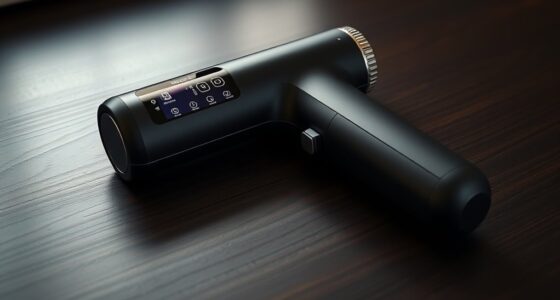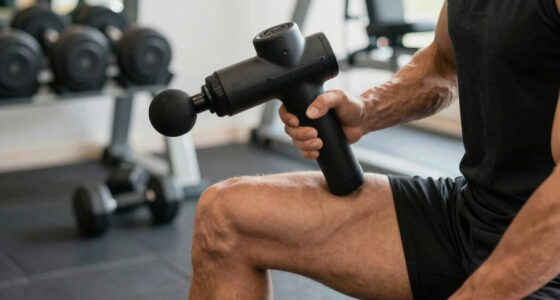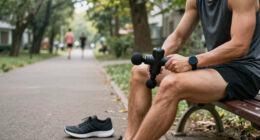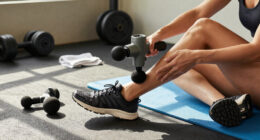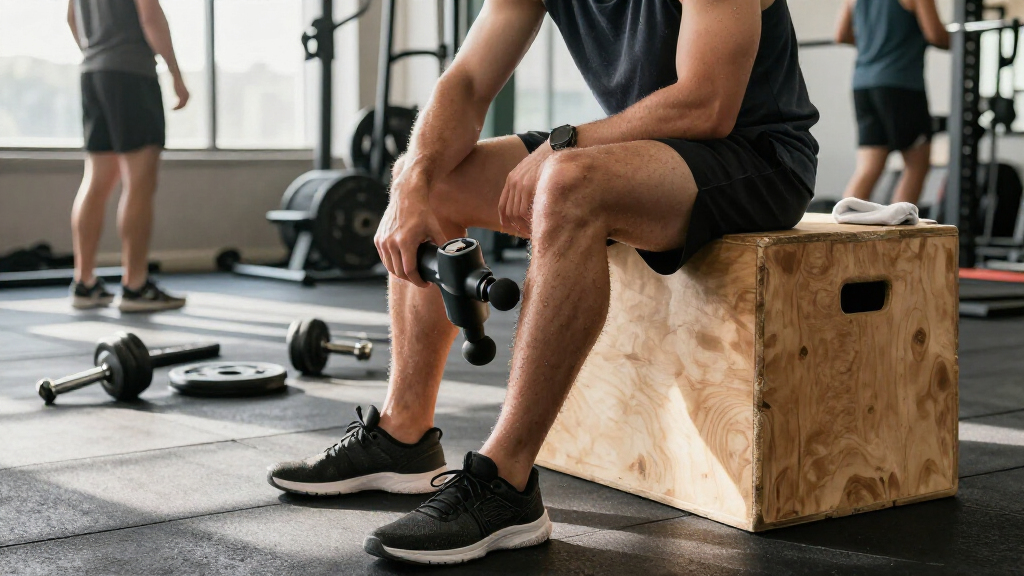

Use this guide to apply a massage gun to large muscle groups before or after training, with moderate pressure and clear limits. It is written for athletes who are new to percussive massage or want a safer, repeatable routine. Allow 5-10 minutes per session; you do not need to treat every muscle or use the gun every day.

Get workout gear delivered free with Prime
- Fast, free delivery on millions of items
- Prime Video, Amazon Music and more included
- Member-only deals all year

TOLOCO Massage Gun with 10 Heads, Silent Brushless Motor, and LED Touch Screen
- ✔ Amplitude: 12mm
- ✔ Maximum speed: Up to 3,200 rpm
- ✔ Battery life: Up to 6 hours; varies by speed

RENPHO Active Thermacool 2 Massage Gun with Heat and Cold Control
- ✔ Model: Active Thermacool 2
- ✔ Motor: Brushless
- ✔ Percussion speed: 3,200 RPM
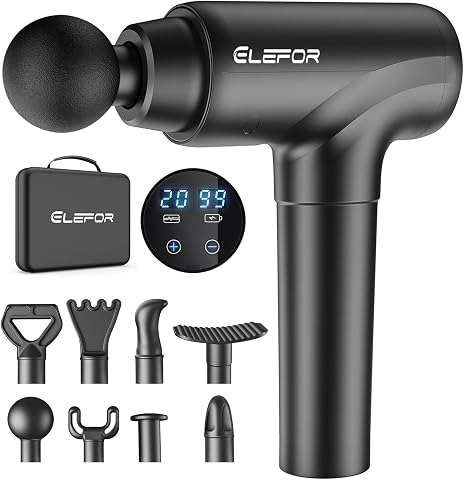
Elefor Deep Tissue Massage Gun with 8 Massage Heads and 20 Speeds, Matte Black
- ✔ Massage heads: 8
- ✔ Speed settings: 20
- ✔ Strike frequency: 1,200–3,200 strikes per minute
Difficulty: Beginner | Time: 5-10 minutes per session
What You’ll Need
Tools & Materials:
- Massage gun with a charged battery
- Manufacturer’s instructions and any supplied attachments
- Timer or clock
Knowledge:
- Basic familiarity with the muscles you plan to treat
- Ability to distinguish ordinary muscle tension from sharp, unusual, or worsening pain
Read the device instructions first, since speed controls and attachments differ by model. Do not use a massage gun on an injury, broken or irritated skin, or an area with reduced sensation. If you have a medical condition, take blood-thinning medication, are pregnant, or have questions about a specific condition, ask a qualified clinician before use.
TOLOCO Massage Gun with 10 Heads, Silent Brushless Motor, and LED Touch Screen
For athletes who want a conventional percussion tool with a clearly stated reach, TOLOCO is the strongest all-around fit in this lineup. Its 12mm amplitude is longer than the 10mm listed for RENPHO, and its maximum speed of 3,200 rpm matches the stated ceiling of the other two picks. That gives buyers a concrete reason to choose it when deeper-feeling percussion matters more than temperature options or a particularly fine-grained speed dial.The ten included heads provide the broadest attachment selection here, compared with eight on Elefor. That can help athletes choose a shape that suits different muscle areas, though more attachments also mean more pieces to store and keep track of. The LED touch screen displays battery information, and the listed runtime of up to six hours gives a clearer planning reference than Elefor provides. Actual runtime varies with speed, so frequent high-intensity use may shorten it.TOLOCO’s claimed noise range of 40–50dB suggests it can be used in shared spaces, though RENPHO’s listing gives a lower single figure of 40dB. The practical drawback is charging: the USB plug is not included, so buyers need a compatible plug already available. We would choose this over RENPHO for the longer stated amplitude and over Elefor for the clearer runtime and extra heads; athletes wanting integrated heat or cold should look to RENPHO instead.
Pros:
- 12mm amplitude is the longest stated in this comparison.
- Ten interchangeable heads offer more attachment choices than either competitor.
- Listed battery life of up to six hours and an LED battery display help with session planning.
- Noise is specified at 40–50dB, with a brushless motor.
Cons:
- USB charging plug is not included.
- Actual battery life varies by selected speed.
- The 40–50dB range is less specific than RENPHO’s stated 40dB.
Best for: Athletes who want a broad set of massage heads, a stated 12mm amplitude, and a listed battery runtime for planning regular sessions.
Not ideal for: Buyers who want heat or cold functions, need a charging plug included, or prefer fewer attachments to manage.
Bottom line: We rank TOLOCO first for its combination of the longest listed amplitude, ten heads, and a stated runtime, provided buyers are comfortable supplying their own charging plug.
“We rank TOLOCO first for its combination of the longest listed amplitude, ten heads, and a stated runtime, provided buyers are comfortable supplying their own charging plug.”
RENPHO Active Thermacool 2 Massage Gun with Heat and Cold Control
RENPHO takes a different route from the other two picks: its defining feature is dual-temperature control, with four heat levels reaching 113°F and four cold levels down to 46°F. For athletes who already use warming or cooling as part of their post-training routine, having those options built into the massage gun may make this the most versatile choice. TOLOCO and Elefor focus on percussion settings and attachments, so neither offers the same temperature-led distinction.As a percussion tool, RENPHO lists 3,200 RPM and 10mm amplitude, plus 45 pounds of stall force. The RPM ceiling matches TOLOCO and Elefor, but the stated amplitude is shorter than TOLOCO’s 12mm. Athletes prioritizing the longest listed stroke may therefore prefer TOLOCO. RENPHO’s 40dB operating level is clearly stated and lower than TOLOCO’s listed range, while the VA display provides real-time monitoring. A 2,500mAh battery is specified, but the supplied details do not give a runtime in hours, making direct planning harder than with TOLOCO.One routine constraint deserves attention: the 10-minute auto-off ends each activation, so longer sessions require restarting the device. That may suit athletes who prefer brief, bounded use, but it is less convenient for uninterrupted treatment of several areas. We put RENPHO second because temperature control is a meaningful advantage for a specific kind of athlete, while the shorter amplitude and session limit keep it behind TOLOCO as the general pick.
Pros:
- Four heat levels reach 113°F and four cold levels reach 46°F.
- 45 pounds of stall force and a 3,200 RPM maximum are specified.
- Listed operating noise is 40dB, with a VA display for monitoring.
- The 2,500mAh battery capacity is stated.
Cons:
- 10mm amplitude is shorter than TOLOCO’s listed 12mm.
- The 10-minute auto-off limits each uninterrupted activation.
- Battery capacity is given, but the description does not specify runtime in hours.
Best for: Athletes who want heat and cold settings integrated with percussion and are comfortable using the device in sessions capped at ten minutes per activation.
Not ideal for: Those seeking the longest listed amplitude, uninterrupted longer sessions, or a clearly stated runtime in hours.
Bottom line: We recommend RENPHO for athletes who value integrated heat and cold more than maximum listed amplitude or longer uninterrupted sessions.
“We recommend RENPHO for athletes who value integrated heat and cold more than maximum listed amplitude or longer uninterrupted sessions.”
Elefor Deep Tissue Massage Gun with 8 Massage Heads and 20 Speeds, Matte Black
Elefor is the adjustment-focused pick. Its 20 speed settings give athletes more listed steps to work through than the other products’ descriptions specify, across a stated range of 1,200–3,200 strikes per minute. That makes it appealing to buyers who want to tune intensity gradually rather than choose from a small number of broad settings. The listed maximum is in line with TOLOCO and RENPHO, so the main difference is the number of settings, not a higher top speed.Eight interchangeable heads offer useful variety, although TOLOCO includes ten. Elefor also comes with a carrying case, a practical advantage for athletes moving between home, training, and travel. Its motor is described as ultra-quiet, but no decibel figure is supplied, so we cannot compare its noise directly with RENPHO’s 40dB or TOLOCO’s 40–50dB range.The main compromise is limited information about everyday fit. The description does not specify weight or battery life, leaving buyers without two details that matter when carrying the device or planning repeated sessions. RENPHO is the clearer choice for temperature features; TOLOCO is more compelling for longer listed amplitude and runtime. Elefor earns a place for its speed granularity and included case, but athletes who need known portability or endurance details should compare those omissions against the other listings before choosing.
Pros:
- Twenty speed settings offer fine adjustment across the stated range.
- Maximum frequency of 3,200 strikes per minute matches the other picks’ listed ceilings.
- Eight interchangeable heads cover different muscle groups.
- A carrying case is included.
Cons:
- The description does not specify battery life.
- Device weight is not listed, limiting portability comparisons.
- No decibel figure is provided for its quiet motor.
Best for: Athletes who want many incremental speed settings and an included case for keeping the massage gun and accessories together.
Not ideal for: Buyers who need confirmed weight, battery runtime, a stated noise level, or more than eight massage heads.
Bottom line: We place Elefor third for athletes who value speed adjustment and a carrying case, while its missing weight and runtime details make it harder to assess as an everyday training companion.
“We place Elefor third for athletes who value speed adjustment and a carrying case, while its missing weight and runtime details make it harder to assess as an everyday training companion.”
As an Amazon Associate we earn from qualifying purchases.
Before You Start
Use the gun only on soft muscle tissue. Avoid the head, neck, spine, joints, bones, the front or side of the throat, and areas where nerves or blood vessels sit close to the surface. Do not use it over a fresh injury, significant bruising, swelling, a suspected blood clot, or unexplained pain. Stop if you feel sharp pain, numbness, tingling, dizziness, or unusual discomfort. A massage gun can temporarily ease muscle tightness, but it does not diagnose or treat an injury.
Start on the lowest setting with a soft or general-purpose attachment. Keep the device moving lightly; more force and longer treatment do not mean better results. For a pre-workout warm-up, use a brief pass and then perform your normal dynamic warm-up. After training, use it only if it feels comfortable.
Step-by-Step Instructions
Step 1: Choose a suitable muscle area
Pick one large muscle group that feels tight or that you plan to use, such as the quadriceps, hamstrings, calves, glutes, or upper back muscles beside the spine. Expose the area so the attachment can contact skin or thin clothing without catching.
Tip:Do not target the spine, kneecap, shin bone, Achilles tendon, or any other hard or bony point. For the upper back, stay on the broad muscles to either side of the spine.
Check: You have selected a soft, accessible muscle area with no wound, bruising, swelling, or sharp pain.
Step 2: Set up the massage gun
Fit a soft or general-purpose attachment according to the manufacturer’s instructions. Turn the device on at its lowest speed and check that the attachment is secure before placing it against your body.
Tip:Use a broad, soft attachment for larger muscle groups. Avoid narrow or pointed attachments unless the manufacturer describes a specific suitable use and you know how to apply them safely.
Check: The attachment is secure, the gun runs smoothly, and the low setting feels comfortable against your palm.
Step 3: Apply a brief, light pass
Rest the attachment gently on the muscle and glide it slowly across the area. Cover a section for about 30-60 seconds, then lift the gun and reassess how it feels. Keep your grip relaxed and let the device’s weight provide the contact.
Tip:Do not press hard, hold the gun in one spot for a prolonged period, or try to push through pain. Reduce the speed or stop if the sensation becomes unpleasant.
Check: The muscle feels relaxed or unchanged, with no sharp pain, tingling, numbness, or skin irritation.
Step 4: Adjust only if the first pass feels comfortable
If the low setting feels too gentle and the area remains comfortable, increase the speed by one level. Make another short pass over the muscle, keeping the gun moving. Treat each muscle group for roughly 30-90 seconds; keep total use brief, around 5-10 minutes.
Tip:Use less time and pressure on sensitive areas. Do not raise the setting to mask pain or treat a suspected injury.
Check: You feel mild, tolerable pressure rather than pain, and the skin remains comfortable.
Step 5: Repeat on other suitable muscles if needed
Turn off or lift the gun before moving to another muscle group. Repeat the same brief, light approach on one or two additional areas if they feel tight. Skip any area that is tender, injured, numb, or otherwise concerning.
Tip:Athletes do not need to treat the whole body. Focus on the areas relevant to that day’s activity and stop once the muscles feel comfortable.
Check: Each treated area feels comfortable, and no new symptoms have appeared.
Step 6: Finish with movement and check your response
Turn off the device, remove the attachment if needed for storage, and follow the manufacturer’s cleaning and charging instructions. Before exercise, complete your usual dynamic warm-up. After exercise, walk gently or do comfortable mobility work, then notice how the treated area feels over the next several hours.
Tip:Do not use the gun to replace an appropriate warm-up, rest, hydration, or medical evaluation when symptoms call for care.
Check: You can move the area normally, with no worsening pain, unusual soreness, bruising, numbness, or tingling.
Common Mistakes to Avoid
- Pressing hard or treating one spot for too long — Use light contact, keep the gun moving, and limit each muscle area to about 30-90 seconds.
- Using the gun directly on bones, joints, or the spine — Target broad, soft muscle tissue and steer around bony landmarks and sensitive areas.
- Treating sharp pain or an injury as ordinary tightness — Stop and avoid the affected area. Seek clinical advice if pain is severe, persists, worsens, or follows a significant injury.
- Using a massage gun as the entire warm-up — Follow any brief pre-exercise use with your normal dynamic movements and activity-specific preparation.
Troubleshooting
Problem: The treatment feels painful or too intense
Solution: Lift the gun, lower the speed, use a softer attachment, or stop. Do not press harder to try to force the muscle to relax.
Problem: The area becomes numb, tingly, bruised, or more painful
Solution: Stop using the device on that area. If symptoms do not settle, worsen, or are severe, contact a qualified clinician.
Problem: The gun stalls or becomes unusually hot
Solution: Turn it off and consult the manufacturer’s instructions. Let it cool if directed, check the attachment and battery, and do not continue if the device appears damaged.
Problem: You feel no change after a short session
Solution: Do not increase pressure or extend treatment excessively. A massage gun does not work for everyone; use comfortable movement and recovery measures, and seek advice if a persistent problem affects training.
What Success Looks Like
A successful session is brief and comfortable. You have treated only soft muscle tissue, used light pressure, and stopped without triggering pain, numbness, tingling, bruising, or worsening symptoms. Normal movement remains comfortable afterward. A massage gun may provide temporary relief, but lack of a noticeable effect does not mean you should increase force or treat longer.
Next Steps
Clean and store the device as its manufacturer directs. Note which settings and areas felt comfortable, then adjust future sessions based on your response. Stop using it if symptoms worsen or keep returning; ask a sports medicine clinician or physiotherapist to assess persistent pain or a suspected injury.
Frequently Asked Questions
Should I use a massage gun before or after a workout?
You can use a brief, comfortable pass before exercise, followed by your usual dynamic warm-up. After training, a short session may ease tightness for some people. Choose the timing that feels comfortable and does not interfere with training.
How long should I use a massage gun on each muscle?
Start with about 30-60 seconds and reassess. Keep treatment to roughly 30-90 seconds per muscle area and avoid prolonged pressure in one spot.
Can a massage gun help with an injury?
Do not use it over a fresh injury, swelling, significant bruising, or sharp pain. Percussive massage is not a diagnosis or a substitute for care. Get a qualified assessment when an injury is suspected or symptoms persist.
Can I use a massage gun every day?
Some athletes use brief sessions regularly, but daily use is not necessary. Use it only when comfortable, keep sessions short, and take a break if the area becomes sore or irritated.
What should I do if the area hurts after using the gun?
Stop using the device on that area and let symptoms settle. Avoid another session while it is painful. Seek clinical advice if pain is severe, worsening, persistent, or accompanied by swelling, numbness, or weakness.
Black Friday Picks

Fitbit Charge 6 Fitness Tracker – Obsidian/Black
As an affiliate, we earn on qualifying purchases.