TL;DR
Percussive massage guns are handheld devices with a motorized head that repeatedly taps muscle tissue. Small studies suggest they may temporarily ease the feeling of soreness or improve flexibility for some people, but evidence for faster muscle repair, injury prevention, or improved performance remains limited. Use light pressure on healthy muscle, avoid sensitive or injured areas, and ask a healthcare professional first if a health condition could affect safe use.
A massage gun can sound like a tiny power tool and feel like a fast, soft thudding against your thigh. Percussive massage guns may offer short-term comfort after a workout, but the dramatic promises on some boxes can make it hard to tell what the device actually does.

Get workout gear delivered free with Prime
- Fast, free delivery on millions of items
- Prime Video, Amazon Music and more included
- Member-only deals all year
These handheld devices use a motorized head that repeatedly taps the body. In this guide, you’ll learn what the evidence suggests, how to use one with care, where to keep it away from, and what matters when you shop. You’ll also see why a soothing sensation doesn’t automatically mean your muscles are healing faster.
Say you finish a long run with tight calves and a massage gun feels pleasant for a few minutes. That may make it a useful comfort tool for you. It still doesn’t replace a gradual warm-up, sleep, sensible training, or professional advice when pain or injury needs attention.
Massage guns may temporarily ease perceived soreness or improve flexibility, but evidence for faster repair and injury prevention is limited.
Start on a low setting, use light pressure, keep the head moving over healthy muscle, and stop if symptoms worsen.
Avoid the head, front of the neck, spine, bones, joints, wounds, significant bruises, suspected clots, and unexplained swelling.
Ask a healthcare professional first if you are pregnant, take blood thinners, have reduced sensation or a bleeding disorder, have a clot history, or are recove…
Choose a device for grip, weight, noise, battery, warranty, and service support; extra speeds and attachments do not guarantee better results.
What a massage gun does—and what it doesn’t
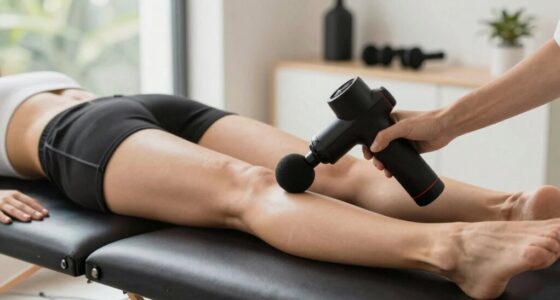
A percussive massage gun is a handheld device with a motorized head that repeatedly taps muscles and nearby soft tissue. You guide it across an area while the head moves back and forth, often choosing from several speeds and attachments. Most models are rechargeable, and some fold into a small travel case.
Manufacturers often promote these devices for warm-ups, post-workout recovery, and muscle tension. A massage gun can feel soothing, and small studies suggest percussion may temporarily improve flexibility or reduce how sore you feel. That experience is different from proof that it speeds muscle repair, prevents injuries, or makes you perform better.
For example, after a hilly bike ride, you might use a low setting over your thigh and feel less stiff when you walk upstairs. That change in comfort can be useful, but it doesn’t tell you whether the muscle has recovered fully. Think of the tool as one optional way to make a tight muscle feel more comfortable, not a repair button.
Feeling looser is not the same as healing faster. Keep your expectations focused on temporary comfort and mobility, where the evidence is more encouraging.
Products Worth Considering

Levoit Eleva 300X Air Purifier with Fully Sealed HEPA Filtration and Smart Control

Philips Sonicare DiamondClean 9500 Electric Toothbrush, Black, with 3 Brush Heads

Withings BPM Vision Blood Pressure Monitor
As an affiliate, we earn on qualifying purchases.
What the research can—and can’t—tell you
Percussive massage guns may briefly help some people feel less sore or move a little more freely, but research remains limited. Small studies offer clues rather than a broad guarantee, and they do not settle whether these devices improve training results or shorten recovery for everyone.
That distinction matters after a hard workout. If your shoulders feel stiff the next morning, a few gentle passes might make reaching for a mug more comfortable. But the available evidence does not show that the gun reliably repairs muscle sooner or prevents the next strain. Soreness can shift while the underlying tissue still needs time.
Some marketing uses words such as “recovery” broadly, even when the evidence concerns a short-term change in flexibility or perceived soreness. A feature like app-guided routines, heat, or a cooling attachment may make a device easier to use, yet a new feature doesn’t establish a better result. You can treat comfort as a personal response and medical or performance claims with caution.
Research in this area is still developing. If you like the sensation and use the tool safely, it may fit your routine; if it leaves you bruised or makes pain worse, stop. For persistent or unexplained symptoms, ask a qualified professional rather than increasing the speed or pressure.
Use it gently with this simple four-step routine
To use a massage gun, start at a low setting, apply light pressure over healthy muscle, keep the device moving, and stop if you feel sharp pain or numbness. Follow the instructions for your model, since speed and recommended use times vary. A harder push or longer session doesn’t guarantee more benefit.
- Pick a muscle, not a joint. Choose a broad area such as your calf or outer thigh after activity.
- Start low and brief. Let the head touch the muscle lightly rather than pressing it in.
- Glide slowly. Move over the muscle instead of holding the head in one spot.
- Check how you feel. Stop if the sensation turns sharp, causes numbness, creates bruising, or worsens symptoms.
Imagine you’ve been sitting at a desk and your upper shoulders feel tight. A few gentle passes over the fleshy muscle may feel pleasant; aiming toward the front of your neck or pressing hard near the spine is a different matter. Keep the device away from the head, front of the neck, spine, bones, joints, wounds, and significant bruises.
There is no universal session length or daily schedule for every device and person. Check the manual, start with a short exposure, and avoid repeated forceful use that irritates tissue. If you are pregnant, take blood thinners, have reduced sensation or a bleeding disorder, have a clot history, or are recovering from surgery or injury, ask a healthcare professional before use.
Choose a model by comfort, not by its biggest number
The best massage gun for you is one you can handle comfortably, store easily, and return or service if it fails. A high maximum speed or a case packed with attachments doesn’t prove that a device works better. Compare ordinary details you’ll notice every time you pick it up.
| What to compare | Why it matters | Example to check |
|---|---|---|
| Weight and grip | A heavy tool can tire your wrist before you reach your legs. | Can you hold it comfortably while aiming at your calf? |
| Noise | A loud motor may be unpleasant in a quiet home. | Listen to it at the speed you’ll actually use. |
| Battery and charging | Frequent charging can make a device less convenient. | Check the maker’s battery estimate and charging setup. |
| Warranty and parts | Support matters if the battery or an attachment wears out. | Read the return window and parts availability. |
For instance, if you plan to use a gun after evening runs in a shared apartment, low noise and a secure grip may matter more than a dozen speed settings. If you travel, a compact shape and a charger you can pack easily could matter more than heat or app controls.
Prices vary widely. Before paying extra, decide which feature solves a real inconvenience for you. A simple model with clear instructions and a useful warranty can make more sense than an expensive device whose extra settings you never use.
Know when soreness needs more than a massage gun
A massage gun is intended for healthy muscle tissue, so pain, swelling, or a possible injury calls for caution. Avoid using one over a suspected blood clot, unexplained swelling, open wounds, significant bruising, bones, joints, or the spine. Don’t use it on the head or front of the neck.
Some people should ask a healthcare professional before trying percussion: people who are pregnant, have a bleeding disorder or reduced sensation, take blood-thinning medicine, have a history of blood clots, or are recovering from an operation or injury. When sensation is reduced, it may be harder to notice that pressure has become too intense.
Suppose your calf is swollen and warm after a long flight. A massage gun is not a way to check what is wrong, and pressing on an area where a clot is suspected could be unsafe. Seek prompt medical advice rather than treating the symptom yourself. Similarly, radiating back pain or sciatica-like symptoms deserve professional guidance; don’t aim the device at your spine or assume it treats the cause.
Stop if you get sharp pain, numbness, bruising, or worsening symptoms. A comfortable buzz over a broad muscle is the goal; pain is not evidence that the tool is working. Use professional care for persistent symptoms, injuries, or concerns about whether the device suits your health history.
Fit the gun into a recovery routine that works
A massage gun can sit alongside a warm-up or recovery routine, but it cannot replace the basics. Some people use one briefly before activity because the sensation helps them feel ready; others prefer it afterward for comfort. Either way, it is optional, and it should not take the place of an appropriate warm-up, gradual training, sleep, or individualized care.
Consider a recreational tennis player who has a match on Saturday. A gentle pass over a tight thigh might feel nice before a warm-up, but it doesn’t prepare the player for quick stops and lunges. Easy movement and sport-specific drills still matter. If the device makes the thigh feel worse, skip it.
After exercise, you may prefer a shower, a meal, rest, stretching, foam rolling, or no extra tool at all. There is no need to stack every recovery product into one routine. Notice whether a brief, comfortable session helps you feel better, and drop it if you don’t find it useful.
Keep the wider picture in view: rest days and appropriate training loads support recovery, while a massage gun only offers a specific sensation. It may temporarily ease perceived soreness for some people, but it is not a substitute for rehabilitation or treatment when an injury needs attention.
Frequently Asked Questions
Do massage guns actually work?
They may temporarily reduce the feeling of tightness or soreness for some people, and small studies suggest a possible short-term flexibility benefit. Evidence that they speed muscle repair, prevent injury, or improve performance is limited.
How long should I use a massage gun on one muscle?
Follow your device’s instructions, start briefly at a low setting, and keep it moving rather than pressing in one place. Stop for sharp pain, numbness, bruising, or worsening symptoms.
Can I use a massage gun every day?
Frequency depends on your device and how your body responds. Repeated or forceful use can irritate tissue, so follow the manual and keep each session comfortable.
Can a massage gun help with knots, sciatica, or back pain?
It may temporarily ease muscle tension, but it does not diagnose or treat the cause of pain. Avoid the spine, and seek professional guidance for radiating pain, persistent symptoms, or a suspected injury.
Are expensive massage guns better?
Not necessarily. A comfortable grip, manageable weight, reasonable noise, reliable battery, warranty, and access to replacement parts may matter more than extra speeds or attachments.
Can I use a massage gun instead of stretching or seeing a therapist?
No single tool replaces an individualized recovery plan or clinical care when you need it. A massage gun can be one optional comfort tool alongside movement, rest, and appropriate professional guidance.
Conclusion
Think of a massage gun as an optional comfort tool, not a shortcut to faster healing. If you try one, use light pressure on healthy muscle, follow the device instructions, and stop when your body gives you a reason to stop.
Let the quiet test be simple: does it leave you feeling comfortable enough to move on with your day? If not, put it down and choose rest, gentle movement, or professional advice.