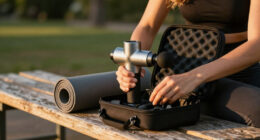
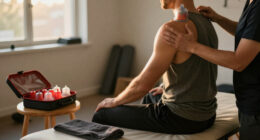
After yard work, percussion therapy can help you recover faster by easing sore muscles, joint pain, and foot discomfort. It stimulates blood flow, loosens tight tissues, and reduces stiffness, making it easier to get back to gardening. Using targeted percussion on your hands, feet, or sore areas offers relief and prevents future issues. If you want to discover how to maximize recovery and stay comfortable, keep exploring options that support your gardening routine.

Get workout gear delivered free with Prime
- Fast, free delivery on millions of items
- Prime Video, Amazon Music and more included
- Member-only deals all year
Key Takeaways
- Percussion therapy boosts blood flow and relieves muscle soreness after gardening activities.
- It targets hand and foot discomfort common from prolonged yard work.
- Regular use helps prevent chronic pain and maintains tissue flexibility.
- Gentle percussion on sore areas accelerates recovery from stiffness and fatigue.
- Incorporating therapy into post-gardening routines supports sustained activity with less discomfort.

Gardening is a rewarding but physically demanding activity that often leads to sore muscles, joint pain, and fatigue. After a long day tending to your plants, you might notice your hands feel weak and shaky, or that your feet ache from standing and digging for hours. These discomforts aren’t just minor annoyances; they can hinder your ability to enjoy gardening and may lead to more serious issues if left unaddressed. That’s where percussion therapy comes in, offering targeted relief for these common post-gardening aches. If you’re experiencing hand muscle fatigue, percussion therapy devices can help stimulate blood flow, loosen tight muscles, and reduce stiffness. Using a percussion massager on your hands after gardening can promote faster recovery, easing the tension that builds from gripping tools or planting in tough soil. Additionally, many gardeners suffer from plantar fascia pain, which manifests as heel or arch pain caused by strain on the connective tissue supporting the foot. This pain can make walking or standing uncomfortable, preventing you from enjoying your outdoor space fully. Percussion therapy can provide plantar fascia relief by breaking up adhesions and improving circulation in the affected area. Applying gentle but firm percussion to the bottom of your feet helps relax the plantar fascia, reducing inflammation and alleviating pain. You don’t need to be a professional athlete to benefit from this; even hobbyist gardeners can see significant improvements in comfort and mobility. The key is to target the areas that feel most tense or sore, and to do so with consistent, moderate sessions. Using a percussion device on your hands and feet after gardening not only reduces immediate discomfort but also helps prevent future issues by maintaining tissue flexibility and promoting recovery. Many devices come with adjustable settings, so you can customize the intensity to match your comfort level. It’s best to start with a gentle setting and gradually increase as your muscles and fascia respond. Remember, proper recovery is essential to keep you gardening longer and feeling better afterward. Incorporating percussion therapy into your post-gardening routine offers a simple, effective way to address hand muscle fatigue and plantar fascia pain. It’s a proactive approach that helps you recover faster, regain mobility, and get back to nurturing your garden with less pain and more enthusiasm. Regular use of percussion therapy can also contribute to maintaining color accuracy in your muscles and fascia, preventing long-term strain and discomfort.
Products Worth Considering

Hyperice Hypervolt 3 Percussion Massage Gun with Heated Head and Carry Case

Oral-B iO5 Rechargeable Electric Toothbrush with 3 Brush Heads and Travel Case

Garmin Forerunner 970 GPS Running and Triathlon Smartwatch
As an affiliate, we earn on qualifying purchases.
Frequently Asked Questions
Is Percussion Therapy Suitable for Beginners?
Yes, percussion therapy is suitable for beginners. You can start with handheld options designed for easy use and comfort. These devices are user-friendly, allowing you to apply gentle pressure and adjust intensity levels as needed. While professional treatments offer expert guidance, beginners can safely incorporate percussion therapy into their recovery routine at home, helping to relieve muscle tension and soreness after yard work. Just follow instructions to avoid overuse.
How Often Should Gardeners Use Percussion Therapy?
They say, “Prevention is better than cure,” so you should use percussion therapy 3-4 times a week for muscle relaxation and pain relief after yard work. This frequency helps your muscles recover faster, reduces soreness, and prevents injuries. Listen to your body—if you feel persistent pain or fatigue, increase your sessions or consult a professional for personalized advice. Consistency is key to staying healthy and active in your gardening pursuits.
Can Percussion Therapy Prevent Yard Work Injuries?
Percussion therapy can help prevent yard work injuries by promoting muscle relaxation and reducing tension, making your muscles less prone to strains and overuse injuries. Regular use before and after gardening tasks keeps your muscles loose and ready, decreasing the risk of pulling or overstressing them. By incorporating percussion therapy into your routine, you actively support injury prevention and maintain healthier muscles during your gardening activities.
Are There Any Side Effects From Percussion Therapy?
You might experience some side effects from percussion therapy, but they’re usually mild. Muscle soreness can temporarily increase after a session, especially if you’re new to it, and skin irritation may occur if the device is used too aggressively or on sensitive skin. To avoid these issues, start with gentle settings and keep the device moving. If you notice persistent soreness or irritation, consult a healthcare professional.
What Types of Percussion Devices Are Recommended for Gardeners?
For gardeners, handheld massagers are highly recommended because they’re easy to use and target specific sore spots. When comparing percussion devices, look for models with adjustable speed settings and ergonomic designs to enhance comfort. A percussion devices comparison helps you choose the best one for your needs, guaranteeing effective recovery after yard work. Opt for reputable brands to ensure durability and safety, and always follow usage instructions.
Conclusion
After a hard day in the yard, percussion therapy is like a gentle rain washing away your gardening fatigue. It relieves aching muscles and restores your energy, turning your sweat and soil-stained hands into a refreshed, blooming version of yourself. Think of it as a soothing symphony for your body, helping you bounce back from the dirt and toil. Embrace this therapy, and let your muscles sing with gratitude, ready for the next garden adventure.